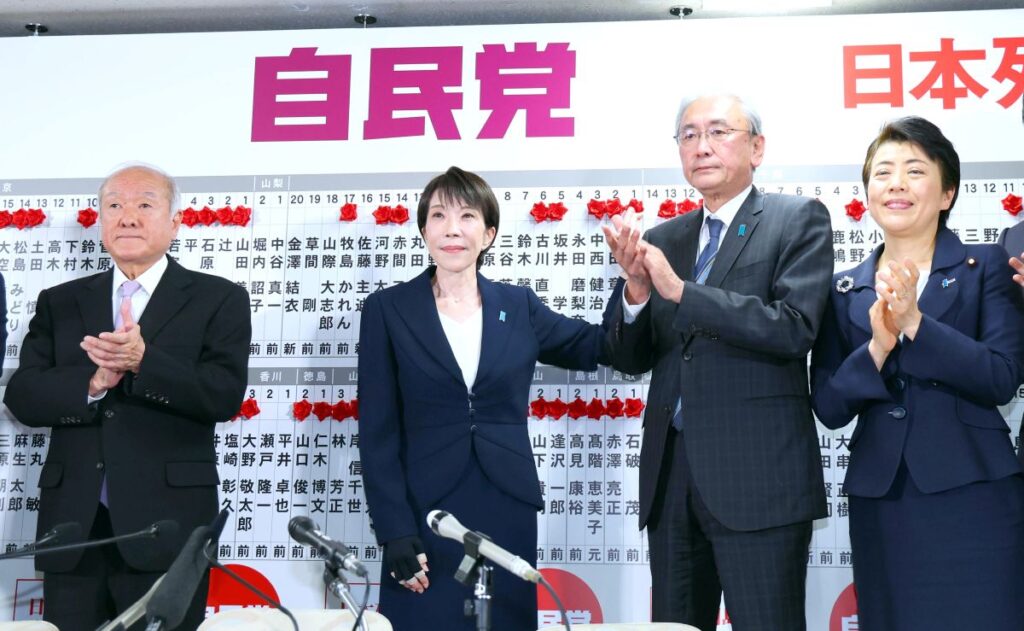
Sanae Takaichi’s sweeping electoral mandate has ended, at least for now, Japan’s familiar cycle of short-lived premierships and incremental policy. That alone changes the strategic atmosphere in Asia. The region has grown accustomed to Tokyo as a capable but cautious actor, influential in finance and technology yet politically constrained, and often hesitant to translate latent power into sustained statecraft. A decisive victory provides something Japan has lacked for years: time. Time to plan, to spend political capital, to bargain inside the ruling coalition, to absorb inevitable backlash, and to pursue a multi-year agenda that blends domestic renewal with regional posture.
Beijing has already reacted with suspicion and warning, framing Japan’s trajectory as a return to militarism and testing Tokyo with coercive pressure. Yet the more revealing story is not China’s displeasure, which is predictable, but the quiet relief elsewhere across Asia. Many governments, including those with no interest in provoking China or joining an anti-China bloc, have been searching for a third anchor in a region increasingly defined by two unstable poles: a more assertive China and an increasingly transactional United States. A stronger Japan offers a form of ballast that is neither revolutionary nor ideological. It is institutional and practical, rooted in money, technology, infrastructure, standards, and a security role that can expand without demanding exclusivity from partners.
That does not mean a resurgent Japan automatically stabilizes Asia. It can also sharpen fault lines, provoke countermeasures, and trigger political fears that Japan itself must manage carefully, particularly in Korea and parts of Southeast Asia. The value of Japan’s resurgence depends on the model Tokyo chooses. If it becomes a nationalist project oriented toward symbolic clashes, historical revisionism, and domestic culture war, Japan will create more friction than deterrence. If it becomes a state-capacity project that strengthens economic resilience, expands credible defense, and builds dense partnerships that help neighbors preserve autonomy, it can widen the region’s room for maneuver without forcing states to choose between Beijing and Washington.
The key question is therefore not whether Japan will be stronger. The question is what kind of strength it will project, and whether that strength can be converted into a regional public good rather than a new source of anxiety.
The Meaning of a Landslide in a High-Debt, Low-Growth State
Takaichi has paired hawkish rhetoric on security with an ambitious domestic economic agenda, including fiscal moves that challenge Japan’s long-standing austerity instincts. The logic is coherent. Japan’s strategic posture cannot be separated from its macroeconomic reality. Defense spending, supply chain resilience, energy security, and technological competitiveness all require sustained investment. In a slow-growth economy with a heavy debt load, investment has to be justified not only as security policy but as industrial policy, and not only as industrial policy but as social policy, because voters must feel that national strategy improves their lives rather than demanding sacrifice without payoff.
The danger is that the political constraints are tighter than the electoral map suggests. Japan can win a large parliamentary majority and still face a hard ceiling imposed by debt dynamics, demographic decline, and bond-market sensitivity. Moves such as temporary tax relief, large-scale public spending, and strategic subsidies can stimulate growth sectors, but if markets perceive fiscal drift without credible long-term discipline, the cost of borrowing can become its own veto.
This tension will shape Takaichi’s room for action more than any single foreign-policy dispute. If her government can persuade investors that spending is targeted, productivity-enhancing, and embedded in a durable fiscal framework, Japan’s resurgence becomes sustainable. If it cannot, Tokyo may be forced into abrupt adjustment later, undermining both domestic legitimacy and regional credibility. For Asian partners evaluating Japan as a long-term balancer, fiscal stability is not a technical detail. It is the foundation of reliability.
Japan’s policy focus on advanced manufacturing and strategic industries, including semiconductors and AI, signals an attempt to rebuild growth through technological sovereignty and reindustrialization. This is not mere economic nationalism. It is a recognition that technology supply chains are now geopolitical terrain, and that the states best positioned in those chains will shape standards, capture rents, and absorb shocks more effectively. For Southeast Asia and India, Japan’s industrial push offers potential benefits through investment, training, and technology transfer, but it also raises questions about whether Tokyo will prioritize domestic capacity over regional production networks. If Japan’s new economic security agenda becomes overly restrictive, partners may experience it as gatekeeping. If it is designed as a platform for shared resilience, it becomes attractive.
Security Normalization, Not Militarization
Much of the anxiety around Japan’s rightward political shift comes from the language of constitutional revision and the symbolism associated with postwar identity. Yet strategic reality is moving regardless of constitutional text. China’s military expansion, North Korea’s capabilities, and Russia’s partnership with China have already pushed Japan toward a more active defense posture. Takaichi’s agenda accelerates that trajectory and attempts to remove remaining restraints, including export limits and institutional fragmentation.
The most consequential element is not an abstract debate about pacifism. It is the construction of a more integrated national security state that can make decisions quickly, share intelligence effectively, and contribute meaningful capabilities to partners. Takaichi has signaled moves toward stronger coordination, including a national intelligence council under her leadership. This points to a classic modernization move: reducing bureaucratic stove-piping so that strategy is not paralyzed by interagency rivalry. If done well, it increases Japan’s capacity for crisis management in the Taiwan contingency space and in the East China Sea. If done poorly, it risks politicizing intelligence and creating new vulnerabilities.
Defense spending targets also matter, not because a single percentage is magical, but because they signal seriousness and create predictable procurement pathways. Reports of accelerating the buildup toward around 2 percent of GDP indicate an ambition to shift from symbolic defense to usable defense. For regional partners, especially those in Southeast Asia that fear abandonment by the United States and coercion by China, what matters is whether Japan can contribute enablers: maritime domain awareness, coast guard cooperation, anti-submarine capabilities, logistics, cyber defense, and capacity-building that improves local independence without demanding alignment.
This is where Beijing’s “militarism” narrative will struggle outside China. Many Asian governments distinguish between Japan rebuilding deterrence in response to current threats and Japan returning to imperial ambitions. They watch behavior, not slogans. A Japan that focuses on defensive resilience, transparent partnerships, and respect for sovereignty will be read differently than a Japan that seeks political theater.
Tokyo’s challenge is to deny China easy propaganda victories. That requires discipline in messaging, restraint in symbolism, and a deliberate effort to frame Japan’s security shift as a regional contribution rather than a nationalistic awakening.
Economic Coercion and the New Japanese Counterplay
China’s likely response to a more confident Japan will not primarily be conventional military confrontation. It will be pressure below the threshold of war: grey-zone activity around disputed waters, intensified air and naval demonstrations, cyber operations, and selective economic coercion. Japan’s vulnerability is not only physical; it is structural. As an advanced manufacturing economy, Japan is exposed to supply chain disruption, rare earth dependencies, and market access risks.
Takaichi’s early emphasis on reducing dependence on specific countries and strengthening economic security indicates a recognition that deterrence now includes industrial inputs and investment screening. Rare earths are one obvious pressure point, and Japan’s interest in coordinating with the United States on development and supply diversification suggests a shift toward building redundancy into strategic materials.
Yet there is a fine line between resilience and decoupling. Japan cannot insulate itself fully from China without significant costs, and a maximalist approach could harm Japanese firms and regional supply chains where Southeast Asian states play intermediary roles. The smarter approach is selective derisking: building alternatives in the most coercion-sensitive sectors while keeping broader trade channels open to avoid a self-inflicted contraction. In this domain, Japan can offer something valuable to the region: a model of how to reduce vulnerability without triggering economic collapse. If Tokyo manages this transition with competence, it creates a template for middle powers facing the same dilemma.
Managing the United States as an Uncertain Ally
Japan’s strategic position still rests on the U.S. alliance, but the alliance now exists in a world where Washington’s behavior has become less predictable and more transactional. For Tokyo, this creates a dual task. Japan must strengthen its own capabilities to reduce dependence, while simultaneously keeping the alliance credible enough to deter China and reassure the region.
A large investment agreement demanded by Washington illustrates the political challenge. When an ally appears to treat another ally as a revenue source, domestic support for alliance commitments erodes. The risk for Tokyo is that it becomes trapped between strategic necessity and public resentment, especially if Japanese voters perceive that their government is paying for protection without receiving durable guarantees.
Takaichi’s ideological proximity to nationalist rhetoric may help her communicate firmness to domestic audiences, but it also creates temptation: she may believe she can handle transactional pressure through personal rapport and symbolism. That would be a mistake. What Japan needs from the United States is not warmth; it needs institutional commitments that survive political swings. The way to obtain that is to embed cooperation in concrete programs that create mutual dependence: joint production, integrated supply chains for defense and critical technologies, intelligence and cyber collaboration, and sustained interoperability that is difficult to unwind.
At the same time, Tokyo should accelerate the thickening of ties among U.S. allies and partners in ways that do not require U.S. leadership at every turn. This is not anti-Americanism. It is insurance. Countries like Australia and the UK are pursuing similar hedging logic, building networks that can function even when Washington is distracted. A Japan that helps knit these networks together becomes more valuable not only to Asia but to the broader coalition of democracies and aligned states.
The Regional Reception: Why Southeast Asia and India Watch Closely
Southeast Asian states are rarely eager to be enlisted into ideological contests. Their overriding objective is autonomy, which means avoiding both domination by China and abandonment by the United States. A stronger Japan can be useful precisely because it does not ask Southeast Asia to transform its identity or choose sides. Japan’s strengths are investment, infrastructure, technology, and quiet security cooperation, delivered over decades with less political drama than many other external actors.
If Tokyo expands maritime security support, coast guard cooperation, and capacity-building in ways that respect local sensitivities, it will be welcomed in capitals that remain cautious about hosting large U.S. forces or formally joining anti-China groupings. The most effective Japanese approach will be to strengthen local capabilities rather than to position Japan as the protagonist. In a region that values sovereignty, the partner that helps you stand on your own feet is often preferred to the partner that offers protection at the price of dependence.
India views Japan through a different lens. For New Delhi, Japan is a high-trust partner in technology, infrastructure, and security alignment without the baggage of alliance entanglement. A more strategically assertive Tokyo complements India’s interest in balancing China while maintaining strategic autonomy. If Japan deepens cooperation with India in defense technology, maritime awareness, and critical minerals, it strengthens the Indo-Pacific’s middle-power spine without requiring every country to adopt the same posture.
The Korea Variable: The Most Fragile Link
Japan’s resurgence becomes a net regional positive only if Tokyo avoids destabilizing its relationship with South Korea. Seoul is strategically central to deterrence in Northeast Asia, and trilateral coordination is vital in any crisis involving North Korea and increasingly in any broader regional conflict. Yet the Japan–Korea relationship remains uniquely sensitive, vulnerable to historical grievances, domestic politics, and symbolic moves that can trigger rapid deterioration.
A Japanese leader associated with nationalist instincts must treat this as a strategic discipline test. Even if Tokyo believes it can absorb diplomatic storms, the region cannot afford repeated breakdowns between two advanced democracies facing common threats. The opportunity for Takaichi is to prove that a strong mandate can be used to stabilize the relationship rather than to inflame it. That means prioritizing practical cooperation, restraining symbolic provocation, and investing in mechanisms that make coordination routine, not episodic.
If Japan and South Korea can maintain a working partnership despite political differences, it sends a powerful signal to the region: that middle powers can coordinate without being driven by domestic nationalist reflexes. If they fail, the beneficiaries will not be the Japanese public. They will be those who profit from disunity.
Avoiding a Downward Spiral With China
A stronger Japan can provide regional balance, but balance is not the same as confrontation. The most dangerous outcome would be a self-reinforcing escalation cycle between Asia’s two largest economies, combining military signaling, economic retaliation, and domestic nationalist politics on both sides. That cycle would force Asian states into more explicit alignment choices and damage regional growth.
Japan’s best approach is dual-track: build deterrence and resilience while keeping diplomatic channels open and emphasizing crisis management. The objective is not trust. It is predictability. Even adversarial relationships can be stabilized if both sides maintain communication, clarify red lines, and create procedures to manage incidents at sea and in the air. Japan should therefore invest in hotlines, incident prevention protocols, and diplomatic engagement that reduces the risk of miscalculation, even while refusing coercion.
This is also where Japan’s domestic rhetoric becomes strategically relevant. If the government frames China as an existential civilizational enemy, it narrows its own options and strengthens hardliners in Beijing. If it frames the problem as specific coercive behaviors that must be deterred, it leaves room for de-escalation without appearing weak. Regional partners will judge Japan not only by its spending, but by its restraint.
What a “Resurgent Japan” Should Actually Mean
Japan’s resurgence is often described in military terms because military change is visible and dramatic, but Japan’s most enduring leverage has always been economic and institutional. The strongest version of a resurgent Japan is a state that combines four elements into one coherent strategy: domestic renewal, credible deterrence, regional capacity-building, and alliance networking that reduces dependency on any single external guarantor.
Domestic renewal means more than stimulus. It means targeted investment that raises productivity, strengthens strategic sectors, and tackles the social conditions that make societies brittle: wage stagnation, regional inequality, and demographic decline. Security policy that is not grounded in domestic legitimacy becomes fragile.
Credible deterrence means capabilities that are usable and sustainable, not just headline commitments. It means resilient logistics, integrated intelligence, robust cyber defense, and procurement that strengthens industrial capacity rather than creating dependency on foreign suppliers.
Regional capacity-building means offering partners tools for autonomy, such as training, coast guard assets, infrastructure finance, technology partnerships, and standards-setting. Japan should be seen as multiplying local agency, not substituting for it.
Alliance networking means binding cooperation among partners and allies so that deterrence does not rest on the mood of any single capital. It means Japan acting as a hub that connects, not as a gatekeeper that demands deference.
A resurgent Japan built on these principles would be good for Asia because it expands the region’s strategic options. It reduces the risk that Asian states become mere objects in a contest between Beijing and Washington. It creates an additional pole of capability and stability in a time when stability is scarce.
Whether Takaichi can deliver that Japan will depend on her ability to treat a landslide not as a license for ideological revenge, but as a mandate for statecraft. The region will welcome a stronger Japan if that strength is predictable, disciplined, and oriented toward shared resilience. If Tokyo confuses strength with provocation, Asia will not become more balanced. It will become more brittle.