The war against Iran encountered a problem that military superiority alone could not solve. Destruction did not reliably convert into Iranian compliance. American and Israeli forces could penetrate Iranian airspace, strike command facilities, kill senior leaders, suppress air defences and interrupt energy exports. Those operations reduced Iranian capabilities. They did not transfer political control over Iranian decision-making to Washington or Tel Aviv. Iran retained a government, a chain of command, functioning armed organisations and enough offensive capacity to widen the conflict beyond its own territory.
That distinction defines the outcome of the forty-day war.
A state has survived strategically when it can still decide whether to fight, negotiate, escalate, rebuild or accept a settlement. Survival therefore means more than the continued existence of ministries and officials. It means the preservation of sovereign choice under coercion.
Iran preserved that choice.
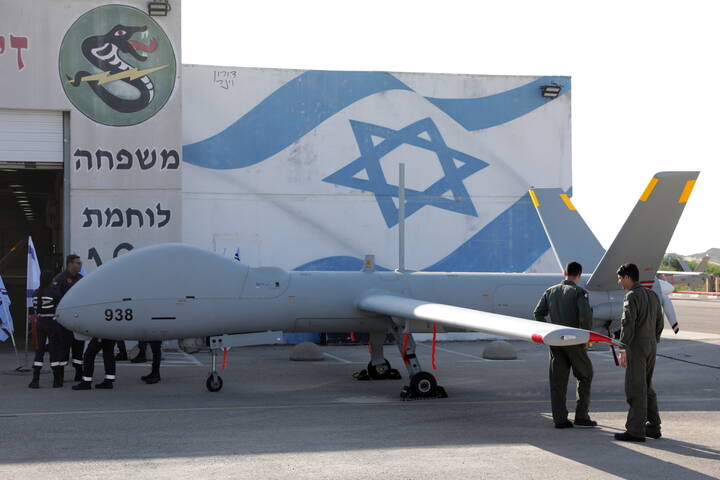
The fighting that began on 28 February 2026 reached a ceasefire on 8 April after forty days, although military operations, maritime pressure and negotiations continued in different forms. A further interim agreement was reached on 17 June. By 8 July, large-scale American strikes and Iranian attacks on American positions in Bahrain and Kuwait had brought the conflict back toward open war. The United States struck more than eighty Iranian targets on 7 July, including air-defence systems, coastal radars, command centres, anti-ship facilities and more than sixty Revolutionary Guard boats. Iran answered with missiles and drones against American sites and announced that it had downed an American MQ-9 aircraft.
The renewed fighting confirms that the earlier campaign had damaged Iran without removing it as an independent military actor.
The reason lies in the structure of Iranian power. Iran is often assessed through visible inventories: aircraft, missile launchers, radars, enrichment facilities, ships and senior commanders. Inventories are important, but they reveal little about how quickly a state can replace equipment, reroute command, finance essential activity and mobilise society after the first inventory has been attacked.
Iran’s strength lies in the systems behind the weapons.
The survival threshold
Governments collapse under external pressure when several failures occur together. Political command fragments. Security institutions divide. The state loses the ability to pay personnel and move resources. Provincial administration becomes independent of the centre. A rival authority acquires enough legitimacy and coercive force to challenge national control.
None of these failures occurred at the level required to break the Iranian state.
The leadership succession took place under wartime conditions. The Revolutionary Guard, the regular armed forces, the presidency, the judiciary and provincial administrations continued to recognise the same sovereign centre. Military attacks continued after senior commanders had been killed. The government remained capable of organising fuel distribution, public ceremonies, internal security, communications restrictions and negotiations with foreign governments.
Economic conditions deteriorated sharply. The state still circulated money, directed strategic imports and maintained its principal coercive organisations. Public dissatisfaction remained visible, yet no competing national government emerged.
Iran therefore remained above what can be called the survival threshold.
The threshold is lower than the standard required for prosperity or efficient administration. A government under war does not need its economy to perform well. It needs enough revenue and administrative reach to keep security forces loyal, maintain basic distribution, prevent provincial separation and preserve national command.
This difference explains why economic weakness can coexist with political durability. Iran has paid a high price for sanctions, isolation and war. Those costs have not automatically produced a breakdown in state authority.
Pressure has accumulated in Iran for decades, but it has rarely attacked every supporting pillar at the same time. Financial sanctions reduced access to foreign capital. Oil sanctions encouraged smuggling and discounted exports. Targeted assassinations removed individuals. Air attacks destroyed physical assets. None of these measures simultaneously dissolved political command, coercive loyalty, fiscal circulation and territorial administration.
The Iranian government has continued because its institutions can perform at reduced quality without ceasing to function.
A state built for hostile conditions
The Islamic Republic was formed through revolution, internal conflict and the Iran-Iraq War. Its institutions developed in an environment where external intervention and military attack were treated as permanent possibilities.
That origin matters.
Governments born under revolutionary conditions tend to build dense political networks around the new state. Security organisations are tied closely to the political order that created them. The officers, administrators and social organisations that emerge from the founding struggle often view the survival of the state and their own institutional survival as the same question.
The Revolutionary Guard illustrates this relationship. It is a military organisation, an intelligence organisation, an economic network and a political community. Its officers do not stand outside the Islamic Republic waiting to serve any government that replaces it. Their authority, careers and organisational identity developed inside the present constitutional order.
This raises the cost of defection during war.
Foreign calls for political transformation may be intended to split the Iranian elite. They can produce the opposite effect when senior officials expect that defeat will bring institutional dissolution, prosecution, loss of status or violence. Internal disagreements remain, but they are contained by a shared interest in preventing foreign powers from determining Iran’s future.
The more openly an external campaign presents the removal of the existing government as an objective, the harder it becomes to offer credible security guarantees to the officials whose cooperation would be required for such a transition.
The Iranian government therefore benefits from an asymmetry in political risk. Foreign powers may see leadership removal as a path toward change. Iranian elites can see it as a threat to the continued existence of the state institutions they control.
This does not eliminate factional competition. It establishes a boundary beyond which competition becomes dangerous to every major faction.
Redundancy reduced the value of decapitation
Iran has several overlapping institutions. It has two main armed structures, several intelligence bodies, elected and appointed institutions, clerical authorities, national ministries, provincial administrations and large foundations with economic and social functions.
This system is often slow and expensive. It has advantages under attack.
A highly centralised organisation may operate efficiently in peacetime while remaining vulnerable to the loss of a small number of headquarters or leaders. Iran’s structure distributes authority across several organisations. Their jurisdictions overlap, which allows one institution to assume part of another’s work during an emergency.
The loss of the supreme leader and senior military figures created severe disruption. It did not leave the country without constitutional procedures, military commands or administrative authority. The state moved through succession while military operations continued. The rapid appointment of a new supreme leader received support from the main security institutions, allowing the government to avoid a prolonged dispute over sovereign authority.
Military redundancy worked in a similar way. The regular armed forces and the Revolutionary Guard maintained separate branches, commands and inventories. Missile units, drone units, naval forces and territorial commands could continue operating even when higher headquarters were under attack.
The effect was uneven. Some operations became less coordinated. Iranian missile launches declined substantially after repeated strikes on launchers and storage facilities. The United States said it had conducted hundreds of attacks on ballistic missile and drone systems.
A reduction in the rate of fire is different from loss of the ability to fire. Iran retained enough systems to resume attacks, change the mixture of weapons and threaten additional theatres.
The state degraded in layers. It did not fail as a single unit.
Iran’s centre of gravity was political coherence
Military planning often seeks a centre of gravity whose destruction will cause the opponent’s wider resistance to collapse.
The obvious candidates in Iran were the supreme leadership, the Revolutionary Guard command, missile forces, nuclear installations and energy exports. All were attacked or pressured. None proved sufficient by itself.
Iran’s effective centre of gravity was the coherence of the state apparatus.
As long as the main institutions recognised a common political authority, losses could be absorbed. Commanders could be replaced. Production could be dispersed. Damaged infrastructure could be repaired. Negotiations could continue.
This explains why leadership strikes produced less political effect than their planners may have expected. Killing a senior leader removes experience, personal authority and accumulated relationships. It does not necessarily remove the institution that trained the leader, selected the replacement and preserved the chain of command.
Iran’s political order had prepared for the death of its supreme leader for years. The process was accelerated by war, but the relevant institutions already existed. The Assembly of Experts, senior clerical networks, the presidency, the judiciary, the Supreme National Security Council and the Revolutionary Guard had recognised procedures and established relationships.
The speed of succession denied foreign powers a period in which several Iranian centres might compete for recognition.
The burial ceremonies then gave the succession a public and religious setting. The government linked grief, national defence and institutional continuity. The funeral became part of wartime statecraft.
The population behind the state
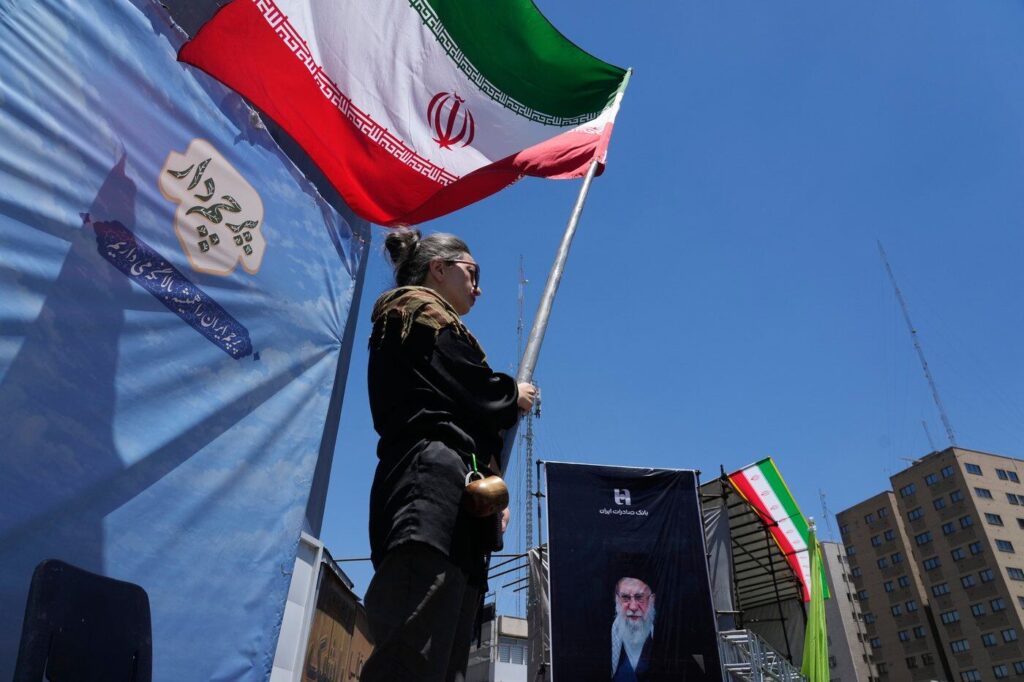
Claims that the Iranian government has no meaningful social foundation are difficult to reconcile with the scale of the mobilization following the death of Ali Khamenei.
The exact attendance cannot be established with precision. Iranian authorities and international news outlets described the Tehran ceremonies as drawing millions, with estimates around fifteen million appearing in reporting on the multi-day events.
Qom authorities reported that more than one million pilgrims had entered the province before the principal procession and prepared facilities for several million participants. The funeral then moved through Najaf and Karbala before returning to Iran for burial in Mashhad, giving the mourning ceremonies a transnational Shia dimension.
Attendance at a funeral does not measure support for every policy of the government. The crowds included committed supporters of the Islamic Republic, religious mourners, ordinary citizens angered by the killing of an Iranian leader, and people drawn by the historical scale of the occasion.
For the study of state survival, the motives do not need to be identical.
The mobilisation showed that the government retains a large organised constituency. It also showed that foreign attack can widen the circle of people prepared to stand with the state in a moment presented as national defence.
Iranian society contains several political layers.
At the centre is a committed constituency linked to revolutionary institutions, religious organisations, the Basij, military families, foundations and the state bureaucracy. Around it is a larger patriotic population whose views of domestic policy vary but whose attachment to Iranian sovereignty is strong. A third group remains politically cautious and adapts to the authority capable of providing order. There is also organised opposition, both inside Iran and abroad, but it lacks a unified command able to replace the national government.
The Islamic Republic can survive without winning the permanent enthusiasm of the entire population. It requires a loyal core, a broader society unwilling to support foreign dismemberment, and armed institutions that continue to recognise the government.
The funeral demonstrated the continued existence of the first two conditions. The war demonstrated the third.
National identity and religious mobilisation
Iranian national identity is older than the Islamic Republic. The government has survived in part because it can place its own defence inside a wider history of Iranian sovereignty.
This creates a political reserve that becomes more available during foreign attack.
A citizen can criticise economic policy and still oppose the bombing of Tehran. A person can disagree with social restrictions and still reject foreign attempts to choose Iran’s leadership. The government can therefore draw temporary support from people who would not ordinarily identify with its full political programme.
The Iran-Iraq War remains the main modern reference. It created a collective memory of invasion, attacks on cities, foreign support for Iraq, chemical warfare and prolonged isolation. State institutions learned that Iran could face severe losses without receiving reliable protection from international powers.
The government has kept that memory active through public ceremonies, veterans’ organisations, education and military culture. In 2026, the history of the earlier war provided a familiar explanation for current sacrifice.
Shia political language added another layer. The concepts of martyrdom, unjust aggression and steadfastness gave military losses a religious interpretation. The funeral route through Tehran, Qom, Najaf, Karbala, and Mashhad connected the martyrdom of the supreme leader to the sacred geography of Shia Islam.
This helped the government prevent the assassination from being understood solely as an intelligence failure. It was recast as sacrifice in the defence of Iran and the wider Shia community.
The symbolism had an operational use. It supported recruitment, discipline, mourning and succession during a period when the state could not conceal the scale of its losses.
Administrative reach inside a large society
Iran has a population of about 92 million, with roughly 77 percent living in urban areas. Its urban population exceeded 70 million by 2024.
This demographic scale complicates both government and foreign coercion.
Iran has several major metropolitan areas rather than a single city containing the entire political and industrial system. Tehran is dominant, but Mashhad, Isfahan, Shiraz, Tabriz, Qom, Ahvaz, Kerman, Karaj and other centres hold universities, industries, military commands and administrative organisations.
The government has direct institutional presence across this urban network. Ministries, provincial offices, police, Basij organisations, religious foundations, municipal structures and state-linked economic entities connect the centre to local society.
This is an example of infrastructural power: the ability of a state to transmit decisions, collect information, distribute resources and organise people across its territory.
In wartime, infrastructural power can compensate for poor economic performance. Fuel can be rationed. public buildings can be converted for emergency use. Transport can be redirected. local organisations can arrange food and accommodation. Military recruitment and public ceremonies can be organised through existing networks.
The funeral mobilisation provided an unusual demonstration of these capabilities. Moving millions of people, opening schools and public facilities, securing long routes and coordinating ceremonies across several cities required more than political messaging. It required administrative machinery.
Iran’s communications controls provide another measure of central reach. Technical research on the 2026 internet shutdowns found that between 96.5 and 97.4 percent of tested Iranian network prefixes could be null-routed through a centrally coordinated mechanism, while selected academic and domestic networks remained available. The shutdown caused severe economic costs, but it showed that the government could prioritise official and protected networks while sharply restricting general external connectivity.
From the narrow perspective of state survival, the government retained control over the information architecture through which national coordination could occur.
Sanctions created a high-friction state
Sanctions have reduced Iran’s growth, investment, trade integration and household purchasing power. The resulting economic damage is extensive. Their political effect has been more complicated.
Decades of restrictions forced Iran to create mechanisms that function without normal access to global finance. These include informal money transfer, barter, non-dollar settlement, layered commercial ownership, indirect procurement, discounted oil sales and extensive use of intermediaries.
Such methods are expensive. They also create experience.
An economy operating under ordinary conditions may react badly when access to payments, shipping and insurance suddenly disappears. Iran had already adapted many state functions to those conditions before the war began.
The result is a high-friction state. Transactions are slower and more costly. Imports pass through longer routes. Revenue is lost to discounts and intermediaries. Yet essential activity continues.
This affects the relationship between sanctions and political collapse.
Sanctions can reduce the resources available to the government. They do not automatically prevent the government from directing the remaining resources toward security, food, fuel and strategic industries. The state can protect organisations it considers essential while passing a large part of the economic cost to households, private firms and future investment.
This allocation may damage long-term development while strengthening short-term political survival.
It also changes the structure of the economy. Firms and institutions with access to state contracts, protected foreign channels and political authority become more important. Organisations linked to the Revolutionary Guard gain influence because they can move money, goods and machinery through networks unavailable to ordinary companies.
The Iranian economy therefore became less efficient and more adapted to coercion at the same time.
Fiscal survival matters more than headline growth
A government at war needs a fiscal circuit. It must obtain revenue, create domestic liquidity, pay security personnel, subsidise essential consumption and finance reconstruction.
Iran has several instruments for maintaining that circuit.
Oil exports remain important, even when volumes fall or discounts widen. Domestic taxation, state-owned enterprises, monetary expansion, controlled exchange rates, banking directives and the financial resources of foundations provide additional channels.
Inflation is a heavy cost for Iranian society. From the government’s perspective, monetary expansion can still finance immediate obligations when foreign revenue is interrupted. A currency crisis damages confidence and household income, but it does not necessarily stop payments made in domestic currency.
This is one reason macroeconomic forecasts alone cannot identify the point at which the state will cease functioning.
The government can remain solvent in rials while becoming poorer in real terms. It can prioritise the armed forces, public employees, food imports and fuel distribution. It can postpone investment and reduce the real value of wages. These choices create public anger and long-term economic damage. They also allow the state to survive a period of blockade.
Iran’s vulnerability grows when inflation, unemployment, electricity shortages, water stress and military spending strike together. The relevant question is whether these pressures interrupt the fiscal circuit that binds the security organisations and provinces to Tehran.
So far, they have not.
Energy provides a permanent recovery base
Iran holds the world’s third-largest proved oil reserves and second-largest proved natural-gas reserves. It also held an estimated average of 71 million barrels of oil in onshore storage at the end of 2025, apart from possible inventories held at sea or in bonded storage abroad.
These resources are different from ordinary financial assets. An air campaign can damage wells, pipelines, refineries and terminals. Sanctions can obstruct buyers and payments. The hydrocarbons beneath Iranian territory remain available for future production.
This gives Iran a recovery option after each period of pressure.
The state can return to the market when enforcement weakens, a waiver is granted or a buyer accepts the risk. The speed with which Iranian exports rose after temporary sanctions easing in June showed that production, storage, tankers and buyers had not disappeared during the earlier interruption.
China is central to this system, but Iran’s energy importance extends beyond one buyer. Asian states have an interest in diversified supply. Iraq depends on Iranian gas and electricity in parts of its power system. Turkey values trade and energy access. Pakistan has long-term energy needs. Persian Gulf states share fields, shipping lanes and environmental exposure with Iran.
These relationships do not form an Iranian alliance. They limit the number of governments willing to support permanent exclusion of Iran from regional commerce.
Iran’s resources therefore weaken the finality of sanctions. Pressure can delay revenue and raise costs. It cannot remove the economic value of the country from the calculations of neighbouring and Asian states.
Industrial depth made replacement possible
Iran’s defence sector rests on a wider industrial economy.
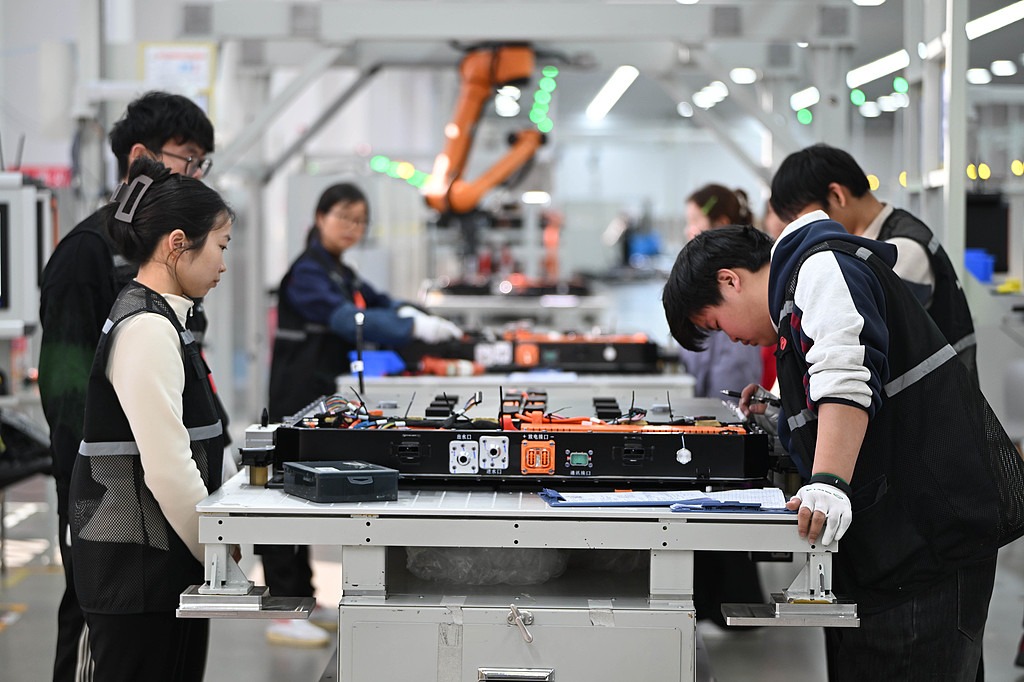
The country produced 31.4 million tonnes of crude steel in 2024, ranking tenth in the world. It has large automotive, petrochemical, cement, copper, aluminium, electrical-equipment and heavy-engineering sectors.
Iran cannot manufacture every advanced component. Precision machine tools, high-performance electronics, sensors, specialised semiconductors and some composite materials remain foreign dependencies.
A missile or drone is made of more than its advanced components.
Iran can produce metal bodies, fuel tanks, airframes, vehicle chassis, launch structures, explosive materials, concrete shelters and many mechanical parts domestically. Imported components can be reserved for guidance, communications and specialised electronics.
This sharply reduces the volume of foreign material required to restore military production.
A country dependent on imported complete systems can lose a capability when the supplier is blocked. Iran can often replace part of the system domestically and search for smaller bottleneck components through indirect trade.
The automotive industry contributes casting, engines, electrical systems, vehicle maintenance and large networks of component suppliers. Petrochemicals supply chemical feedstocks and industrial knowledge. Steel and cement support hardened sites, tunnels and launch infrastructure. Universities provide engineers who can modify commercial systems for military use.
This industrial depth is uneven. Iran can replace simple drones and mechanical structures faster than advanced radars or high-precision guidance systems. Its wartime strategy adjusted accordingly.
The longer the war continued, the more valuable cheap, numerous and replaceable systems became.
The Revolutionary Guard as a mobilisation economy
The Revolutionary Guard links military command to engineering, procurement and construction.
Through its associated companies and foundations, it has access to tunnelling, heavy construction, energy projects, roads, ports, telecommunications and transport. That allows it to draw on resources outside the formal defence sector.
When an underground facility is damaged, a connected construction organisation can clear or rebuild it. When a launch vehicle is destroyed, civilian truck and automotive capacity can support replacement. When military transport routes are attacked, state-linked engineering organisations can restore them.
This arrangement reduces the institutional distance between identifying a military need and mobilising civilian resources.
The same structure has costs. It concentrates economic power and can weaken competition. In wartime, concentration allows the government to direct labour, machinery and contracts toward defence without negotiating with an independent private sector.
Iran therefore possesses a mobilisation economy embedded inside its civilian economy.
The production of military capability does not occur only in official defence plants. It draws from workshops, universities, component manufacturers, chemical facilities, transport companies and engineering contractors.
An assessment based on destroyed military factories may underestimate the amount of production that can move elsewhere.
Geography protects reproduction
Iran covers about 1.65 million square kilometres. Mountain systems divide much of the country, while large desert regions separate population and industrial centres.
This geography does not prevent air attack. It increases the work required to turn air attack into permanent military suppression.
Production, storage and command can be distributed among several provinces. Underground facilities can use mountains for protection. Mobile launchers have large areas in which to disperse. Components can be manufactured separately and brought together late in the assembly process.
Iran also has interior lines of communication. The government controls the territory connecting its major cities and industrial regions. It can move personnel and equipment inside the country without crossing an international border.
Attackers can strike roads, railways and bridges. Permanent isolation of every production cluster would require continuous surveillance and repeated attacks across a large target set. American and Israeli strikes did hit Iranian transport routes during the war, but they did not sever the country into independent regions.
Territorial scale also raises the barrier to occupation. Air power can destroy infrastructure throughout Iran. Establishing political control over a large, mountainous country of around 92 million people would require a different kind of war.
This places an upper limit on the political objectives that can be achieved by air and naval operations alone.
Iran’s leaders know that their adversaries can punish the country more easily than they can govern it. Iranian strategy is designed to survive long enough for that distinction to shape foreign decision-making.
Passive defence replaced the promise of an impenetrable sky
Iran’s active air defences suffered badly. Fixed radars emitted signals, occupied known locations and depended on specialised equipment. Once parts of the network were suppressed, American and Israeli aircraft gained greater freedom of action.
Iran responded through passive defence.
Passive defence includes dispersal, underground construction, camouflage, decoys, mobile systems, redundant communications, emissions control and the separation of production stages. It accepts that attacks will reach Iranian territory and seeks to reduce the strategic value of each successful strike.
A missile production process can be divided among sites. Components can be stored separately. Launch vehicles can remain away from known bases. Tunnel entrances can be damaged while internal chambers survive. Decoys can consume reconnaissance time and munitions.
Passive defence is less visible than interception. It may be more important in a long war.
The purpose is to prevent an attacker from knowing whether destruction is permanent. Uncertainty forces repeated surveillance and restrikes. It also prevents political leaders from confidently declaring that a capability has been eliminated.
Iran lost many fixed systems. Its dispersed and mobile systems kept the war open.
The operational design of the forty-day war
Iran’s wartime conduct followed a recognisable sequence. The sequence was not perfectly coordinated, and some choices were forced by losses. Together, they reveal the logic of Iranian strategy.
Survive the opening blow
The first task was to prevent leadership decapitation from becoming state paralysis.
Iran activated succession mechanisms, dispersed military commands and launched immediate retaliation. Early missile and drone attacks showed that political authority and operational command remained connected.
Speed mattered. A delayed response would have encouraged the belief that the leadership strike had broken the government. Immediate retaliation reassured Iranian units and warned regional states that the conflict would extend beyond Iran.
The first phase therefore had a political purpose before it had a military one. It demonstrated continuity.
Expand the theatre
Iran rapidly targeted American military positions and infrastructure across the Persian Gulf. It also struck or threatened energy and transportation assets in states hosting American forces.
This changed the geography of the war.
A conflict limited to Iranian airspace would have favoured American and Israeli air power. A conflict extending across Bahrain, Kuwait, Qatar, the United Arab Emirates, Saudi Arabia, Iraq, Israel and the Strait of Hormuz imposed political costs on a wider group of governments.
Iran’s operational method sought to make regional support for the war expensive.
The message to Persian Gulf states was not that Iran could defeat every American base. It was that the economic territory surrounding those bases could not remain insulated from the war.
Force the defence to spend
Iran launched large numbers of missiles and drones. The campaign still imposed costs through air-defence expenditure, aircraft sorties, radar operations, airport closures and continuous alerts.
This was magazine warfare.
Iran sought to create a contest between its production of offensive systems and the coalition’s production of interceptors. The exchange ratio varied by weapon, but cheap drones could force expensive defensive responses. Ballistic missiles required high-end interceptors and extensive sensor coverage.
The defending coalition reported intercepting more than 1,500 missiles and 6,000 drones during the conflict. Those figures indicate both the effectiveness of the defence and the scale of the Iranian burden placed on it.
Iran did not need every weapon to penetrate. A weapon destroyed in flight could still consume an interceptor and disrupt civilian activity.
Preserve a reserve
Iran’s launch rate declined as storage sites and launchers were attacked. Tehran increasingly relied on drones, mobile systems and maritime pressure.
This shift reflected necessity and conservation.
Advanced ballistic missiles are harder to replace than basic drones. Iran had an incentive to preserve part of its missile inventory for a later escalation, especially if attacks expanded to national energy infrastructure or leadership targets.
The continued existence of a reserve gave Iranian threats credibility during negotiations.
A state that has expended every weapon has less bargaining power than a state whose remaining capacity is uncertain.
Move the main pressure to Hormuz
Iran’s strongest operation took place at the level of commercial risk.
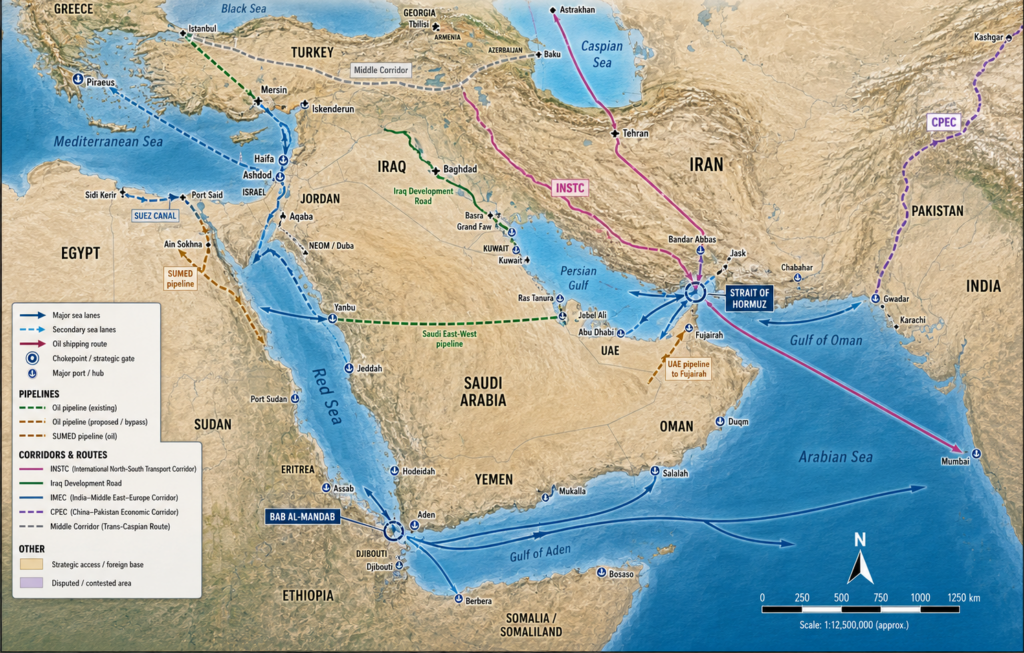
The Strait of Hormuz carried more than one-quarter of global seaborne oil trade in 2024 and early 2025, along with around one-fifth of global liquefied-natural-gas trade.
Iran could not establish conventional naval superiority over the United States. It could make commercial transit dangerous enough to alter the decisions of insurers, crews and shipowners.
Mines, drones, anti-ship missiles, small boats and mobile coastal systems did not have to sink every tanker. The possibility of attack was enough to reduce traffic and raise insurance costs.
During the war, disruption around Hormuz forced Persian Gulf producers to shut in millions of barrels of daily production as storage filled and export routes narrowed. The US Energy Information Administration estimated combined shut-ins by Persian Gulf producers at 7.5 million barrels per day in March, with a possible rise to 9.1 million in April.
This gave Iran leverage far beyond its conventional naval strength.
The United States could strike Iranian naval forces. It could not guarantee that every commercial voyage would remain safe without continuous protection, surveillance and mine-clearing.
Iran transformed geography into a bargaining instrument.
Use negotiation as an operational pause
The ceasefires and interim agreements were part of the war rather than a separate diplomatic process.
A pause allowed Iran to assess damage, move remaining assets, repair facilities, replenish drones, restore commercial networks and study the opposing coalition. It also allowed oil exports and shipping to resume.
Washington used pauses to reduce energy prices and restore navigation. Iran used them to convert military endurance into political concessions.
The fragility of the June agreement showed the limits of this arrangement. Once the United States revoked the permission that had allowed limited Iranian oil sales, Tehran lost a major economic reason for restraint. Renewed maritime attacks produced American strikes, which then produced Iranian attacks on American facilities.
The cycle is likely to repeat because neither side trusts the other to preserve concessions after pressure has been reduced.
The grand strategy behind the operations
Iran’s grand strategy during the war can be understood as sovereign continuity under military asymmetry.
Its first purpose was to deny the coalition a decisive political outcome. Iran could not match American power platform by platform. It could prevent American power from producing obedience at an acceptable price.
The second purpose was to separate the members of the opposing coalition.
Israel, the United States and Persian Gulf governments did not enter the war with identical interests. Israel placed greater weight on destroying Iranian strategic capabilities. Washington had to balance military objectives against oil prices, global commitments and domestic politics. Persian Gulf governments wanted protection while avoiding attacks on their own economic infrastructure.
Iran’s attacks widened these differences.
The third purpose was to externalise the cost of pressure. An attack on Iranian oil exports could be answered through disruption of Persian Gulf exports. Strikes on Iranian military facilities could produce attacks near American bases. Continued war could raise energy and shipping costs for Asian and European economies.
The fourth purpose was to preserve escalation options. Iran retained several possible levels of response, including attacks on bases, maritime disruption, cyber operations, strikes on energy infrastructure and movement toward a more advanced nuclear threshold.
The fifth purpose was to keep diplomacy open without disarming before an agreement became durable. Tehran treated its remaining military capability as the guarantee that concessions would be implemented.
These purposes formed a coherent strategy. Iran tried to make every additional increment of foreign pressure generate a wider set of costs.
Deterrence after deterrence failed
The opening attack showed that Iran’s prewar deterrence had failed to prevent a large campaign. Tehran then shifted from deterrence by threat to deterrence by endurance.
The distinction is important.
Before war, Iran tried to convince its adversaries that an attack would be too costly. After the attack began, the objective changed. Iran had to convince them that continuing would not produce a satisfactory political result.
This is deterrence by denial at the political level.
Iran could not deny access to all of its airspace. It could deny a final settlement imposed without Iranian consent.
Its ability to keep attacking, obstruct shipping and preserve government continuity supported that denial. Each week without political collapse weakened the argument that further strikes would produce a decisive outcome.
The stronger military power faced diminishing returns. Additional targets could be destroyed, but the relationship between another destroyed facility and Iranian political compliance became less certain.
Iran sought to reach that point before its own ability to resist fell below the survival threshold.
The asymmetry of stakes
Iran and the United States were fighting for objectives of different political weight.
For the Iranian government, the war concerned sovereignty, leadership survival, territorial control and the future of the state. Governments generally accept severe costs when they believe these interests are threatened.
For the United States, the objectives included nuclear restrictions, maritime security, protection of allies, reduction of Iranian military power and possibly political transformation inside Iran. These are major interests, but they do not carry the same immediate relationship to American state survival.
This produced an asymmetry of resolve.
Iran could suffer greater physical damage while remaining prepared to continue. Washington needed continuing military expenditure to generate a recognisable political gain.
The gap grew as the war expanded. The United States had to maintain forces, replenish interceptors, reassure Persian Gulf governments, manage oil prices and preserve resources for other theatres.
Iran’s strategy targeted the political sustainability of the campaign, not the total military power of the United States.
Strategic loneliness without isolation
Iran has no alliance equivalent to NATO. Russia and China do not provide automatic military defence. This has often been described as strategic isolation.
The description is incomplete.
Iran does not require foreign states to fight on its behalf. It benefits when they refuse to join a maximal campaign, maintain trade, mediate negotiations or oppose permanent American control of regional security.
China’s purchase of Iranian oil gives Tehran a large external market. Russia has an interest in military and diplomatic cooperation. Pakistan, Oman and Qatar can provide mediation. Iraq cannot separate its politics, energy and religious networks from Iran. Persian Gulf governments have commercial links with Iran and strong reasons to prevent a regional infrastructure war.
This can be called negative alignment. States need not align with Iran. Their unwillingness to align fully against Iran is enough to create diplomatic space.
Iran’s geography strengthens this position. It sits between the Persian Gulf, Central Asia, the Caucasus, Mesopotamia and South Asia. Excluding it from every regional project is difficult.
The government uses this position to survive periods of intense pressure until the interests of outside states begin to diverge.
Where Iran remains exposed
Iran’s survival does not mean that every part of its strategy succeeded.
Its air defences were penetrated. Senior commanders and political figures were killed. Missile launch rates fell under sustained attack. Oil exports proved more vulnerable to physical interdiction than to financial sanctions. Electricity and water systems entered the war under strain. Inflation and currency weakness reduced household resilience.
Iran also depends on foreign access for selected technologies. A long interdiction campaign aimed at machine tools, electronics, sensors and specialised materials could slow the restoration of high-end systems.
The social coalition created by war may weaken when the immediate external threat recedes. Funeral mobilisation cannot substitute indefinitely for economic performance. The government will eventually have to decide how much wartime unity can be converted into political inclusion and material reconstruction.
These are serious constraints. They have not yet combined into a threat to national coherence.
The distinction should remain clear. Iran can be economically weakened, militarily damaged and politically durable at the same time.
Paths from the present conflict
An armed equilibrium
The conflict may settle into repeated cycles of strikes and temporary restraint.
The United States would continue attacking naval, missile and air-defence facilities after incidents around Hormuz. Iran would respond against regional bases, shipping or selected infrastructure. Mediators would then arrange a pause.
Neither side would resolve the larger dispute. The pauses would regulate violence and permit limited trade.
Iran would use the intervals to repair and disperse. Washington would use them to reopen shipping and lower energy prices.
Over time, this arrangement could produce an informal rule: Iran remains under pressure but cannot be excluded from the management of Persian Gulf security.
Recognition of an Iranian role in Hormuz
A more stable arrangement could emerge around navigation.
Iran would accept defined commercial routes and refrain from attacks on compliant vessels. In return, it would receive recognised access for its own exports, participation in maritime discussions and limits on foreign military activity near sensitive Iranian areas.
The agreement might avoid formal language suggesting Iranian control. Its practical operation would acknowledge that Hormuz cannot be secured against Iran indefinitely.
Persian Gulf governments would support such an arrangement because it would reduce threats to ports, refineries, gas facilities and desalination systems.
A reconstruction and interdiction race
The United States and Israel may continue periodic strikes while focusing more heavily on the supply chains that allow Iran to rebuild.
Iran would respond by dividing production into smaller sites, importing bottleneck components through indirect routes and shifting further toward systems that can be manufactured domestically.
The result would be measured by replacement time.
Iran would gain if it can restore launch capacity between campaigns. Its adversaries would gain if they can make each round of destruction more permanent by blocking machinery, electronics and materials.
This contest could last for years without a formal peace.
A wider infrastructure war
Attacks on Kharg Island, major refineries, electricity networks or desalination facilities could move the conflict into a far more destructive phase.
Iran would probably answer by attacking the concentrated infrastructure of Persian Gulf states. Ports, gas plants, pipelines, financial centres and water systems would become exposed.
Iran would suffer heavily under such a campaign. The economic shock would spread rapidly beyond Iran.
The international pressure for a ceasefire would increase because Asian energy importers and Persian Gulf exporters would have a direct interest in stopping the destruction.
A nuclear threshold strategy
The war may persuade Iranian decision-makers that missile forces and regional leverage cannot fully deter attacks on the national leadership.
Iran could move toward a more protected threshold capability, dispersing expertise, equipment and material while avoiding an immediate public test.
The purpose would be to create uncertainty over how close Iran is to an operational weapon and how quickly it could move after another attack.
This path carries the risk of another preventive campaign. It also raises the expected cost of attacking Iran without a durable security settlement.
Political consolidation followed by selective adjustment
The Iranian government may use the war to centralise reconstruction and defence policy while opening limited space in economic or social policy.
The Revolutionary Guard would probably receive a larger role in strategic industries, air defence, ports and infrastructure. The civilian government could seek broader support through subsidies, reconstruction spending and carefully managed political inclusion.
Such a policy would try to preserve national unity after the immediate wartime mobilisation fades.
Its success would depend on whether the government can distribute the costs of reconstruction without exhausting the patriotic middle that supported the state during the war.
A regional security order built around mutual exposure
The most ambitious possibility is a wider Persian Gulf security framework.
Iran, the Arab Persian Gulf states and outside powers could establish rules governing bases, missile deployments, naval exercises, energy infrastructure and crisis communication. Such an order would acknowledge that none of the parties can obtain complete security by making the others permanently insecure.
Iran would enter from a stronger position than before the war because it demonstrated the ability to affect the entire Persian Gulf economy.
The Persian Gulf states would enter with a stronger argument for limiting the use of their territory in offensive campaigns.
The United States would retain a major military presence but would face pressure to treat Iranian security concerns as part of regional stability rather than as an obstacle to it.
The measure of Iranian strength
Iran’s performance should be judged against its actual strategic problem.
It faced opponents with superior air power, surveillance, precision weapons and access to regional bases. Its task was to preserve government continuity, maintain enough retaliation to influence enemy decisions and prevent the war from ending on externally imposed terms.
It achieved those aims during the forty-day campaign.
Its territory allowed dispersion. Institutional overlap preserved command. The Revolutionary Guard connected military activity to civilian engineering and procurement. The industrial economy supported replacement. Energy resources provided a route back to revenue. Sanctions experience allowed trade under friction. National and religious mobilisation widened the government’s wartime constituency. Hormuz carried the cost of war into the global economy.
The system worked because its parts could substitute for one another.
When active air defence failed, passive defence gained importance. When missile inventories came under pressure, drones and maritime coercion carried more of the burden. When formal finance was blocked, informal trade and domestic liquidity supported the state. When ideological support alone was insufficient, Iranian nationalism widened the social coalition.
This capacity to change form is the source of Iranian endurance.
The United States and Israel can continue destroying military assets. The harder task is removing the institutions, skills, territory, resources and political relationships that regenerate them.
Iran’s position on 8 July 2026 therefore differs sharply from the picture suggested by a list of destroyed targets. The country has suffered severe damage, but it remains a sovereign strategic actor. It can still retaliate, negotiate, restrict access to Hormuz, rebuild selected capabilities and refuse terms it regards as incompatible with national independence.
That is the result that matters. The campaign demonstrated the reach of American and Israeli force. It also demonstrated the distance between reaching Iran and deciding Iran’s political future.