On 5 March 2026, drones crossed into Nakhchivan and struck the airport and other civilian sites. Azerbaijan said they had come from Iran. Tehran denied ordering the attack and promised an investigation. President Ilham Aliyev threatened retaliation, cargo traffic across the Iranian border was suspended, and the possibility of an Azerbaijani-Iranian confrontation briefly became real.
Four days later, the crossings reopened.
The reversal was easy to overlook amid the louder military statements. It exposed the material structure beneath them. Azerbaijan could close the Iranian route for several days to make a political point. Keeping it closed would have hurt Nakhchivan, Azerbaijani transit and the north-south freight system on which Baku also earns money. Nakhchivan still receives much of its overland cargo through Iran. The exclave remains vulnerable because its separation from mainland Azerbaijan has never been fully solved.
That dependence has existed since the early 1990s. Iran supplied Nakhchivan when the autonomous republic had lost its Soviet-era connections, hosted or managed Azerbaijani refugees during the first Karabakh war, recognised Azerbaijan’s territorial integrity, mediated with Armenia and later offered its own territory for a new connection between mainland Azerbaijan and Nakhchivan. Baku accepted those benefits. It then built its post-Soviet state around pipelines, military partnerships and transport routes intended to reduce the value of Iranian geography.
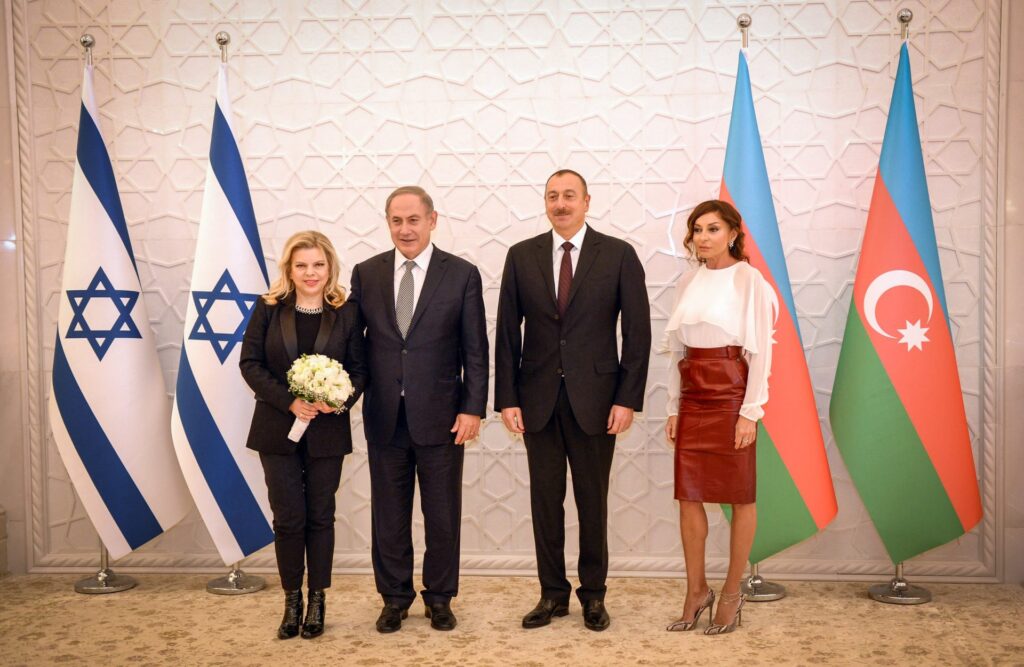
Israel became central to that policy. It gave Azerbaijan the weapons that helped defeat Armenia, bought Azerbaijani oil, supplied intelligence technology and offered access to political circles in Washington. For Israel, Azerbaijan offered energy, a large arms market and a position directly beside northern Iran.
The argument, then, is not that Iran has been consistently benevolent or that Azerbaijan had no reason to seek other partners. Tehran has threatened Baku, conducted exercises near the border, mishandled the security of the Azerbaijani embassy and maintained a close relationship with Armenia. The deeper point is that Iranian policy helped preserve Azerbaijan’s viability during its weakest period, while Azerbaijan’s later foreign policy was designed to make Iran weaker, less necessary and more exposed.
The current corridor contest is the result. Baku wants a direct east-west axis from the Caspian to Turkey and Europe. Tehran wants to prevent that axis from becoming a political barrier across its northern frontier. The disagreement is often presented as a dispute over one road in southern Armenia. It concerns something larger: whether Iran remains a power in the Caucasus or is reduced to watching a Turkish, Azerbaijani, Israeli and American system take shape immediately beyond its border.
The map before the republic
Iranian suspicion of Azerbaijani nationalism did not begin with the Islamic Republic or with Israel.
The territories that now form the Republic of Azerbaijan were incorporated into the Russian Empire after Qajar Iran’s defeats in the Russo-Persian wars. The Treaty of Gulistan in 1813 and the Treaty of Turkmenchay in 1828 transferred a collection of khanates north of the Aras to Russia. The river became an imperial boundary cutting across communities linked by language, religion, trade and family connections.
It would be misleading to project today’s national borders unchanged into that period. A modern Azerbaijani nation-state did not yet exist. The lands north of the Aras included Shirvan, Arran, Karabakh, Ganja, Baku, Quba and other historical regions. Azerbaijan was chiefly the established name of the Iranian region around Tabriz, Ardabil and Urmia. Russian rule, followed by Soviet rule, gradually produced a distinct political society north of the river.
The naming of the Azerbaijan Democratic Republic in 1918 therefore caused alarm in Tehran. Iranian politicians and intellectuals suspected that the Musavat leadership had selected the name with an eventual claim on Iranian Azerbaijan in mind. The new republic denied an immediate territorial programme, but some of its officials wrote openly about the political potential of Turkic communities inside Iran. Whatever the intentions of every individual involved, the name created a permanent question: did Azerbaijan describe one independent state north of the Aras, or a divided nation whose southern half remained inside Iran?
The Soviet period gave that fear a harder security content. In 1945, with Soviet troops occupying northern Iran, Moscow supported the Azerbaijan Democratic Party and the autonomous government led by Ja’far Pishevari in Tabriz. Soviet Azerbaijan helped with organisation, media, personnel and political direction. The government collapsed after the Soviet withdrawal and the return of Iranian forces in 1946. For Tehran, the episode became proof that a power established north of the Aras could use ethnic affinity to challenge Iran’s territorial integrity.
Azerbaijan’s independence in 1991 revived the old concern. Abulfaz Elchibey and the Azerbaijani Popular Front spoke in the language of pan-Turkism and treated the cultural division of Azerbaijanis by the Aras as an unresolved historical injury. Elchibey did not launch a military territorial claim against Iran. His rhetoric was enough to convince Tehran that the new republic might become a centre of separatist agitation, particularly if Turkey or another outside power encouraged it.
Iran’s fear is sometimes dismissed because Iranian Azerbaijanis are deeply embedded in the Iranian state. They have held senior positions in the clergy, armed forces, business and national politics. Many regard themselves as both Azerbaijani-speaking and Iranian, without seeing any contradiction. That integration does not make Tehran indifferent to separatist language. The 1945 crisis, the 1918 naming dispute and the rhetoric of the early 1990s form a single historical memory in Iranian state thinking.
Baku has its own memory. It recalls Russian and Iranian imperial rule, Tehran’s relationship with Armenia, the restriction of Turkic-language education in Iran and Iranian pressure in the Caspian. Both governments therefore interpret ordinary policy through older fears. Iran sees encirclement and territorial revision. Azerbaijan sees condescension from a former imperial centre.
When Azerbaijan was close to collapse
Iran recognised Azerbaijani independence on 25 December 1991. Diplomatic relations followed in March 1992. It did so while the Azerbaijani state was entering a war it was poorly prepared to fight, with divided political leadership, a disorganised army and an economy breaking apart after the Soviet collapse.
Tehran also tried to mediate the Karabakh war. Iranian Foreign Minister Ali Akbar Velayati conducted shuttle diplomacy in early 1992. In May, President Akbar Hashemi Rafsanjani hosted Armenia’s Levon Ter-Petrosyan and Azerbaijan’s Yaqub Mammadov. Their Tehran statement called for a ceasefire, peaceful settlement, restored communications and respect for international law.
The agreement failed almost immediately. Armenian forces captured Shusha as the talks were ending and later took Lachin. Azerbaijan concluded that Iranian mediation had produced no protection. Tehran, however, did not recognise Armenian control over the captured territories. It reinforced the border, pressed Armenian forces to stop their southern advance and continued to regard the occupied districts as part of Azerbaijan.
Iranian assistance became more direct during the 1993 refugee crisis. Armenian forces advanced across Fuzuli, Jabrayil, Qubadli and Zangilan toward the Iranian frontier. Tens of thousands of Azerbaijani civilians were trapped between the fighting and the Aras. Human Rights Watch recorded that Iran agreed to establish camps in Azerbaijan for as many as 100,000 people. Civilians who crossed temporarily into Iran were transported back to camps near Imishli. The Iranian Red Crescent ran camps in Imishli and Saatli, while wounded Azerbaijanis were treated across the border. Iran also issued warnings to Armenia and the Karabakh Armenian forces as their offensive approached Iranian territory.
Iran’s motives were mixed. Tehran did not want a permanent Azerbaijani refugee population settling in its northwestern provinces. It feared social pressure, economic costs and political mobilisation among Iranian Azerbaijanis. Keeping the camps on the Azerbaijani side served Iran’s domestic security. Yet the people housed, transported and supplied were Azerbaijani civilians. Self-interest does not cancel the assistance.
The case of Nakhchivan was even more important.
After the Soviet system broke down, the exclave lost its reliable gas, electricity and transport connections through Armenia. Fighting along the Armenian-Azerbaijani frontier made the situation worse. Nakhchivan faced cold winters, energy shortages and a limited ability to receive food and fuel from mainland Azerbaijan.
Heydar Aliyev, then leading Nakhchivan, travelled to Iran in 1992 and developed direct arrangements with Tehran. Azerbaijan’s own diplomatic account says that cooperation with Iran and Turkey supplied the exclave with electricity, gas and food during the blockade. Iranian electricity covered a large share of Nakhchivan’s demand. By 2001, it was still receiving about 60 per cent of its electricity from Iran, despite disputes over unpaid bills.
The later gas-swap agreement formalised the same dependence. Azerbaijan delivered gas to northern Iran through Astara. Iran supplied Nakhchivan through its own network and retained 15 per cent of the volume as a fee. The arrangement began under the 2004 agreement and lasted through repeated political crises. In the first eight months of 2025, about 188.5 million cubic metres reportedly reached Nakhchivan through Iran. Azerbaijan chose to extend the arrangement even after developing a new Turkish supply route.
Iranian territory also became the usual overland connection between mainland Azerbaijan and Nakhchivan. Trucks from Baku entered Iran, travelled along the southern bank of the Aras and crossed back into the exclave. The route was slower than a direct connection through Armenia, but it worked. During the 2026 crisis, Azerbaijani analysts again acknowledged that cutting it for long would disrupt ordinary life in Nakhchivan.
This history is absent from many accounts of the bilateral relationship. Nakhchivan is often described as having survived because of Turkey and Heydar Aliyev’s leadership. Both mattered. Iranian roads, electricity, gas and food mattered as well. The autonomous republic that later became the political base of the Aliyev family was kept connected partly through Iran.
Why Tehran kept Armenia alive
Azerbaijan’s strongest answer is that Iran supported Armenia while Azerbaijani territory remained occupied. That grievance is understandable. Iran traded with Armenia, supplied energy and gave the landlocked country access to the outside world. Iranian trucks were repeatedly reported travelling through Armenia toward areas under Armenian control.
Tehran did not make this choice because it preferred Christian Armenia to Shi’a Azerbaijan. Religion was secondary. Iran did not want Turkey to become the sole regional patron of the new Turkic-speaking republics. It did not want Azerbaijan, backed by Ankara and the West, to dominate the entire southern Caucasus. It also needed to preserve its short border with Armenia, which gave Iran a route north that did not depend on either Azerbaijan or Turkey.
Armenia’s borders with Azerbaijan and Turkey were closed. Its routes through Georgia were exposed to Russian influence and regional instability. The Iranian border became its southern outlet. By keeping Armenia economically viable, Tehran prevented a complete Turkish-Azerbaijani encirclement and maintained a second partner in the Caucasus. This was balance-of-power policy, not religious solidarity.
The policy also protected Iran from an outcome it considered worse than Armenian control of Karabakh: a powerful Azerbaijani state carrying Turkish nationalism to the Aras while questioning the loyalty of Iran’s own Azerbaijani population.
That calculation harmed Azerbaijani interests. Iran did not blockade Armenia, arm Azerbaijan for victory or use its own military to restore Azerbaijani territory. Baku was entitled to resent this. It is still inaccurate to say that Iran endorsed Armenia’s territorial claims.
Iran recognised Nagorno-Karabakh and the surrounding districts as Azerbaijani territory. During the 2020 war, Iranian officials denied reports that weapons were being transferred to Armenia through Iran. Ayatollah Ali Khamenei stated that the occupied territories should be returned to Azerbaijan. The Iranian embassy congratulated Baku after the capture of Shusha. Tehran opposed the presence of foreign fighters and warned against changes to international borders, but its stated legal position favoured Azerbaijani territorial integrity.
Iran’s Armenia policy was therefore a hedge. Tehran wanted Azerbaijan intact but constrained. It wanted Armenia alive but unable to redraw Iran’s border. It opposed Armenian occupation and Azerbaijani-Turkish dominance at the same time.
Baku read the policy differently. In Azerbaijani political memory, Armenia received an Iranian lifeline while Azerbaijan had to recover its land by force. The electricity, refugee camps and Nakhchivan route did not compensate for Tehran’s refusal to isolate Yerevan.
That difference in value explains much of what followed. Iran gave Azerbaijan support that prevented collapse. Israel later gave it the means to win.
Building a state that could bypass Iran
Azerbaijan’s energy strategy after 1994 was aimed at escaping the constraints imposed by its neighbourhood.
The Baku-Tbilisi-Ceyhan pipeline did more than carry oil. It tied Azerbaijan to Georgia, Turkey, Western companies and the United States. It avoided Russia to the north and Iran to the south. American officials supported the route partly because they wanted Caspian energy to reach world markets without passing through Iran. The more oil that flowed west, the less leverage Tehran and Moscow held over Baku.
The same pattern appeared in the South Caucasus gas pipeline, the Baku-Tbilisi-Kars railway, the Southern Gas Corridor and the later Middle Corridor. Each project strengthened an east-west axis running from Central Asia and the Caspian through Azerbaijan, Georgia and Turkey. Iran sat immediately to the south, but sanctions and American policy kept it outside the main architecture.
This was a sensible Azerbaijani state-building strategy. A small landlocked producer cannot afford dependence on one transit state. The problem for Iran was that the new routes did not merely diversify Azerbaijani options. They were promoted as alternatives to Iran.
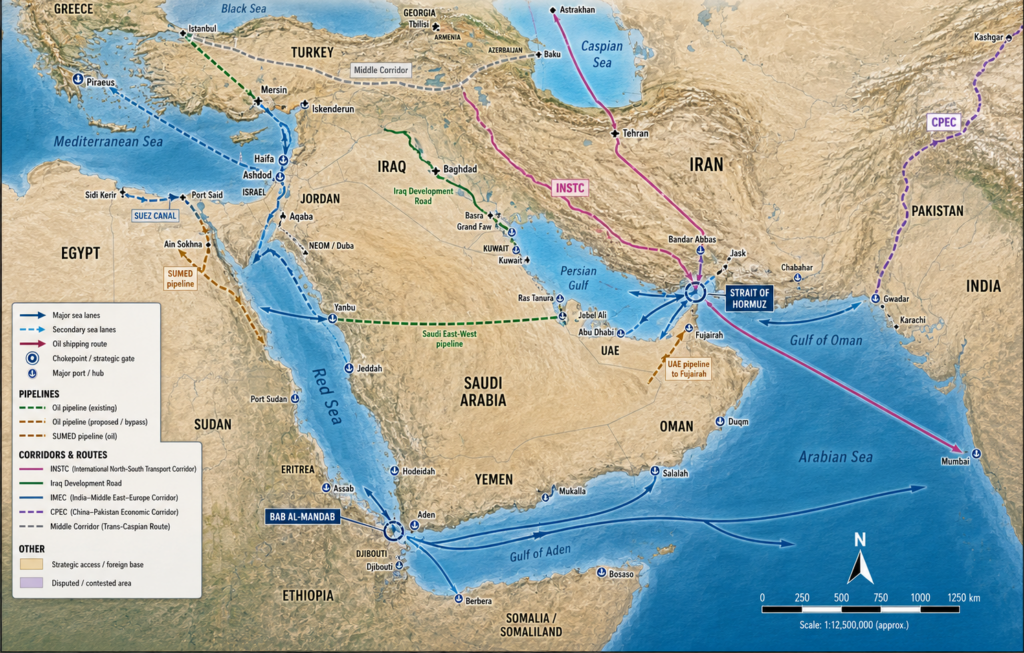
Baku still cooperated with Tehran when it suited Azerbaijani interests. Azerbaijan is part of the western branch of the International North-South Transport Corridor, connecting Russia to Iran and the Persian Gulf. The unfinished Rasht-Astara railway is intended to complete a rail connection through Azerbaijan between Russian and Iranian ports. Azerbaijan therefore profits from north-south transit while building an east-west system that reduces Iran’s place in Eurasian commerce.
The policy is best described as selective dependence. Azerbaijan uses Iran as a road to Nakhchivan, an electricity and gas partner, a market and the southern component of the North-South Corridor. It resists any arrangement that would give Iran control over Azerbaijan’s westward energy and trade connections.
From Tehran’s point of view, this amounted to an incomplete bargain. Iran helped sustain Azerbaijan’s territorial and economic viability in the 1990s. Azerbaijan then used its oil revenues and Western partnerships to build a transport order in which Iran was useful but replaceable.
Israel supplied the missing military part of that order.
Why Baku chose Israel
The Azerbaijani-Israeli relationship is sometimes reduced to a simple exchange: oil for weapons. It has always been broader.
Israel entered the relationship without the historical burdens carried by Iran, Russia and Turkey. It had no territorial dispute with Azerbaijan, no large Azerbaijani-speaking population and no interest in promoting political Islam. It was willing to sell advanced weapons without tying them to democratic reform or a settlement with Armenia.
That mattered to the Aliyev government. Azerbaijan did not need a partner that would mediate indefinitely. It needed systems that could locate Armenian positions, suppress air defences, destroy artillery and reduce the human cost of attacking fortified ground.
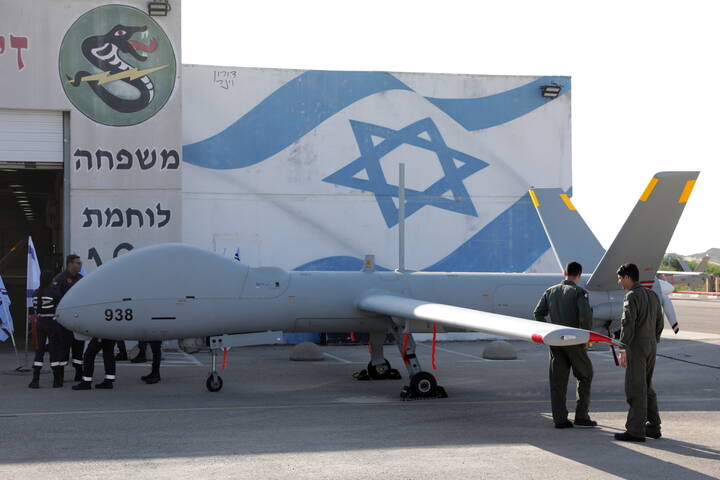
Israel supplied reconnaissance drones, Harop loitering munitions, guided missiles, LORA ballistic missiles and the Barak-8 air-defence system. SIPRI calculated that Israel provided 69 per cent of Azerbaijan’s imports of major weapons between 2016 and 2020. Israeli loitering munitions, surveillance drones and missiles were used during the 2020 war. Azerbaijan’s purchases made up 17 per cent of Israel’s major-arms exports in the same period. Aliyev had already said in 2016 that Israeli defence contracts were worth about $5 billion.
Those systems contributed to a change in the military balance that diplomacy had failed to produce. Israeli weapons did not win the war alone. Turkish operational support, Azerbaijani planning, oil revenue, Armenian errors and Russian passivity all mattered. Israel provided several of the capabilities that made the Azerbaijani method of war possible.
The relationship also gave Baku political advantages in the United States. Azerbaijan had long faced pressure from Armenian-American organisations and restrictions associated with Section 907 of the Freedom Support Act. Cooperation with Israel allowed Baku to present itself in Washington as a secular Muslim partner, an energy supplier and a state containing Iran. Israeli officials and pro-Israel organisations had reasons to argue for closer ties with Azerbaijan.
For the Aliyev government, Israel was also safe at the domestic level. Iran’s connection to Azerbaijani clerics and religious communities could produce independent centres of political loyalty. Turkey’s influence came with cultural and nationalist expectations. Israel asked for neither religious change nor political liberalisation. Its surveillance and security technology strengthened the existing state.
Iran was part of the bargain from the start.
Reuters reported in 2012 that Azerbaijani and Israeli intelligence cooperation was already established. Azerbaijani sources discussed the possible use of former Soviet airfields for reconnaissance, emergency landing or rescue missions in the event of an Israeli operation against Iran. Both governments denied that Israel had received formal basing rights. An Azerbaijani parliamentarian nonetheless gave a blunt description of the arrangement: Israeli-designed drones helped Azerbaijan patrol its frontier while allowing Israel to observe Iran indirectly.
No conclusive public evidence has shown that Baku formally authorised Israeli combat missions from Azerbaijani territory. Tehran does not need proof of a permanent Israeli airbase to see a threat. Radar coverage, signals collection, border surveillance, extraction routes, emergency access and intelligence on northern Iran have value below the threshold of a declared base.
The reports became more serious during the 2026 war. CNN sources alleged that Israel had deployed military and intelligence personnel to Azerbaijan and installed monitoring equipment near the Iranian border. Baku called the report baseless. The claim remains disputed and should be treated as such. It also fits a pattern of cooperation discussed publicly for more than a decade.
Energy gives the partnership its other foundation.
In 2025, Israel imported about 94,000 barrels per day of Azerbaijani crude through Ceyhan, 31 per cent more than the previous year. Azerbaijani oil accounted for 46.4 per cent of Israeli crude imports. Tanker data indicated that some vessels switched off tracking equipment or listed other destinations before unloading in Israel. The traffic continued despite Turkey’s declared trade ban over Gaza.
Azerbaijan cannot determine every final commercial destination once crude enters the international market. SOCAR and the Azerbaijani state are still central to a supply chain that gives Israel almost half of its imported oil. That oil has economic and military uses. During a regional war, reliable crude supply becomes part of national endurance.
SOCAR has also moved into Israel’s energy sector. It joined BP and NewMed in offshore exploration and later acquired a stake in the Tamar gas field. The relationship is no longer limited to Azerbaijan selling crude and buying weapons. The Azerbaijani state company is becoming invested in Israel’s long-term energy system.
This is where the issue of reciprocity becomes unavoidable. Iran’s support helped keep Nakhchivan warm, supplied and connected. Azerbaijan’s energy policy now helps keep Israel supplied while Israel attacks Iran and develops military positions around it.
The corridor question
The route through southern Armenia is the place where these older tensions meet.
During the Soviet period, railways connected mainland Azerbaijan to Nakhchivan through the Armenian district of Meghri. The first Karabakh war closed the lines. Azerbaijan then relied on aircraft, the Iranian road and the narrow Turkish connection into Nakhchivan.
Clause 9 of the November 2020 ceasefire statement called for the restoration of regional economic and transport links. Armenia agreed to guarantee safe transport between western Azerbaijan and Nakhchivan, with Russian border guards overseeing the connection. The document also allowed new transport infrastructure to be built. It did not transfer Armenian territory, abolish Armenian jurisdiction or use the expression “Zangezur corridor.”
The language mattered because the same agreement explicitly described the Lachin route as a corridor and placed it under Russian peacekeeping control. Azerbaijan later argued that if Armenians had enjoyed unimpeded movement through Lachin, Azerbaijanis should receive a comparable route through southern Armenia.
Armenia rejected the comparison. Lachin had been a temporary post-war arrangement for the Armenian population of Nagorno-Karabakh. A route across sovereign Armenia, Yerevan argued, had to remain under Armenian law, customs and border control.
Aliyev’s use of the term Zangezur added a territorial undertone. He repeatedly referred to southern Armenia as historically Azerbaijani land and warned that Baku would obtain the route whether Armenia wanted it or not. Even where the intended outcome was transport rather than annexation, the language gave Iran reason to plan for a more coercive possibility.
Iran’s objection is often presented as hostility toward Azerbaijani reunification. The Iranian position makes more sense when the type of connection is separated from the principle of connection.
Tehran has accepted roads and railways linking mainland Azerbaijan with Nakhchivan. It objects to an extraterritorial passage that removes Armenian control, changes the practical meaning of the Iran-Armenia border or brings foreign security personnel to the Aras.
The Armenian frontier is short, about 40 kilometres, but it has disproportionate value for Iran. It gives Tehran direct access to a third South Caucasus state and prevents Azerbaijan and Turkey from forming a continuous political space along Iran’s entire northwestern edge. Through Armenia and Georgia, Iran has at least a possible route toward the Black Sea and Europe that does not cross Turkish or Azerbaijani territory.
Losing that border would leave Iran dependent on two states that cooperate closely with Israel and host the main east-west routes intended to bypass it. It would also weaken Armenia until Yerevan had little choice but to accept Turkish and Azerbaijani terms.
The corridor would have an ethnic dimension inside Iran. A continuous Turkish-Azerbaijani route from Anatolia to the Caspian and onward to Central Asia would give pan-Turkic politics new physical form. Roads do not create separatism by themselves. A transport order marketed as the reunion of the Turkic world would inevitably be read in Tabriz and Tehran through the memory of 1918, 1945 and Elchibey.
There is also a military concern. A route under Russian control already troubled Iran. A route developed or secured by the United States would be worse. Israeli access to Azerbaijan and an American-managed transport line along the Armenian-Iranian frontier would place two of Iran’s main adversaries near the same narrow border.
The 2025 Washington agreement turned that concern into a more immediate issue. Armenia and Azerbaijan agreed to work toward an unobstructed connection under the TRIPP programme. Armenia’s own description says the route will remain subject to Armenian sovereignty, territorial integrity and jurisdiction. It also says Yerevan will work with the United States and agreed third parties to define the implementation framework. Roads, railways, pipelines, power lines and communications infrastructure are envisaged.
Those safeguards distinguish TRIPP from the extraterritorial corridor previously demanded by Baku. Iran still sees an American role in planning and operating infrastructure on its border as a security loss. Tehran’s angry reaction was excessive in language but coherent in substance.
Iran’s strongest answer to accusations of obstruction is the Araz route.
In March 2022, Iran and Azerbaijan signed an agreement to build new road and railway links from Azerbaijan’s East Zangezur region through Iranian territory to Nakhchivan. The plan included bridges across the Aras and associated energy and communications infrastructure. In 2023, Aliyev’s foreign-policy adviser said Azerbaijan could use Iran after negotiations with Armenia had failed.
Construction continued despite severe bilateral tensions. The Aghband-Kalaleh road bridge was nearing completion in late 2025, and Azerbaijani reporting said the bridge itself was completed in February 2026 while work continued on border and customs facilities.
Iran did not offer this route out of generosity. It would collect transit revenue, preserve customs control and keep Azerbaijan dependent on Iranian territory. It would also prevent the southern Armenian border from being replaced by an Azerbaijani-controlled strip.
That does not weaken the Iranian argument. It clarifies it. Tehran does not oppose a connection between Azerbaijan and Nakhchivan. It opposes a connection designed to remove Iran and reduce Armenian sovereignty.
The border changed in 2020
The second Karabakh war transformed Iran’s northern security environment even though Tehran supported the return of Azerbaijani territory.
Before 2020, Armenian-held districts created a buffer between most of mainland Azerbaijan and Iran. The area was legally Azerbaijani, but Baku had no effective control over much of the frontier. When Azerbaijani forces retook Jabrayil, Fuzuli, Zangilan and Qubadli, Iranian territory came face to face with a confident Azerbaijani army backed by Turkey and equipped by Israel.
For Azerbaijan, this was the restoration of a normal international border. For Iran, it meant that Turkish advisers, Israeli technology and new Azerbaijani military infrastructure could move closer to the Aras.
Tehran nevertheless accepted the territorial result. Iranian leaders supported Azerbaijan’s right to recover occupied districts and later worked with Baku on the Khoda Afarin and Qiz Qalasi water projects along the restored border. The joint dams were inaugurated in May 2024. They supply irrigation water and hydroelectric power to both sides.
The first serious post-war confrontation arose from a road, not from Karabakh itself.
Parts of the Goris-Kapan highway connecting Armenia to Iran passed through small sections restored to Azerbaijani control after the war. Azerbaijan established checkpoints, charged Iranian trucks and detained two Iranian drivers accused of entering Azerbaijani territory illegally. Tehran objected because the route was Armenia’s main connection to Iran and because Iranian commercial traffic had used it for years.
Iran then held large exercises near the Azerbaijani border in October 2021. Iranian officials linked the drills to Israeli activity and warned that Tehran would not accept hostile positions beside its territory. The exercises were coercive and worsened public hostility in Azerbaijan. They were also a warning that the new border would not be treated as an ordinary frontier if it became part of Israel’s military system.
Baku interpreted the exercises as evidence that Iran had tolerated Armenian occupation but objected when Azerbaijan recovered its land. Tehran’s reading was different. Armenian forces had posed a local problem. An Azerbaijani-Turkish-Israeli security zone along the Aras could affect Iran itself.
The two governments have argued past each other ever since.
The bargain Azerbaijan did not return
There was never a written agreement requiring Azerbaijan to reward Iran for refugee camps, electricity or access to Nakhchivan. States do not owe permanent allegiance for past assistance. Baku had sound reasons to avoid dependency and to acquire the weapons needed to restore its territory.
The absence of a legal obligation does not erase the political imbalance.
Iran accepted independent Azerbaijan, protected its recognised borders, helped manage its refugees, kept Nakhchivan supplied and later offered an alternative corridor through Iranian territory. Azerbaijan answered by becoming Israel’s main Muslim energy partner, a major customer for its arms industry and a possible site for intelligence collection against Iran.
Baku also tolerated a political vocabulary that Iran regards as territorial revisionism. References to “South Azerbaijan” appear in nationalist organisations, media and public debate. The Azerbaijani government usually avoids making a formal claim, but it can allow the discourse to intensify when relations with Tehran deteriorate.
Azerbaijani officials would answer that Iran has supported religious networks and plots inside Azerbaijan. Baku has accused the Revolutionary Guard of planning attacks on Israeli, Jewish and Azerbaijani targets. In 2026, Azerbaijani authorities said they had disrupted plans to attack the Baku-Tbilisi-Ceyhan pipeline, the Israeli embassy and a synagogue. Iran did not accept responsibility, and the public evidence has not established every claim independently. Tehran’s wider use of covert networks means the allegations cannot be dismissed without investigation.
Iran has also made serious actions.
In 2001, an Iranian warship and aircraft forced vessels working for Azerbaijan and BP away from a disputed Caspian field. The action hardened Azerbaijani suspicion and encouraged Baku to look toward Turkey and Israel for protection.
The January 2023 attack on Azerbaijan’s embassy in Tehran was another failure. A gunman killed the security chief and wounded two guards. Iranian authorities said the motive was personal; Azerbaijan called it terrorism and accused Iran of failing to protect the mission. Video of an Iranian police officer failing to intervene badly damaged Tehran’s explanation. Iran later prosecuted and executed the attacker, and the Azerbaijani embassy eventually reopened.
These episodes gave Aliyev material with which to justify his Israeli policy. Tehran’s conduct could be presented as proof that Iran was an unreliable neighbour while Israel was a dependable supplier.
Yet the scale of the two relationships remains different. Iran’s assistance was tied to the survival and daily functioning of Azerbaijani territory. Israel’s relationship has tied Azerbaijani resources and geography to pressure against Iran.
The March 2026 incident should be read within this longer record.
The Israeli analysis supplied as the starting point for this article describes Azerbaijan’s conduct during the war as alignment restrained by caution. It stresses Baku’s military credibility, its refusal to be provoked and its humanitarian aid to Iran. It also treats the Nakhchivan drone incident as most likely a deliberate Iranian warning, while conceding that the evidence does not settle responsibility.
That account begins too late. It measures restraint from the opening of the 2026 war and gives little weight to the decades in which Iran could have exploited Azerbaijani weakness more severely than it did.
Iran could have shut the Nakhchivan route during earlier crises. It could have challenged Azerbaijan’s territorial legitimacy through the ethnic question. It could have refused the Araz connection, abandoned the gas swap or treated Azerbaijan as a formal enemy once Israeli cooperation became obvious. It usually chose controlled pressure instead.
Azerbaijan also exercised restraint. It denied Israel the declared use of its territory for attacks, avoided immediate retaliation after the Nakhchivan strike and sent food and medicine to Iran. Those measures reduced the chance of a second front. They did not make Azerbaijan neutral.
A state supplying almost half of Israel’s imported oil, buying much of its advanced arsenal from Israeli firms and cooperating with Israeli intelligence cannot place itself outside the Iran-Israel conflict through a declaration alone. Baku’s policy is alignment with limits. It wants Israel strong enough to arm Azerbaijan and constrain Iran, but it does not want Israel’s war to bring Iranian missiles onto Azerbaijani territory.
Iran understands the distinction. It also sees that every Azerbaijani effort to reduce dependence on Iran increases Baku’s value to Israel, Turkey and the United States.
The dispute is therefore moving from relations between two neighbours to a contest over the organisation of Eurasia.
The east-west system runs from Central Asia across the Caspian, Azerbaijan, Georgia, Armenia or Turkey and onward to Europe. It avoids Russia and Iran. The north-south system runs from Russia through Azerbaijan and Iran toward the Gulf and India. Azerbaijan participates in both.
Baku wants to sit at their intersection. Tehran fears that the east-west route will receive Western investment and protection while the north-south route remains slowed by sanctions, missing railways and political pressure. If TRIPP succeeds, the Araz route loses some of its value. If the Middle Corridor expands, Iranian territory becomes easier to bypass. If Israeli and American security ties follow the infrastructure, Iran loses more than transit income.
This is why Iran’s reaction to the corridor issue cannot be explained as resentment of Azerbaijani prosperity. Tehran is defending access, influence and military depth. The methods it uses can be clumsy or threatening. The interest itself is real.
The original bargain between Iran and Azerbaijan was never written down, but its terms can be reconstructed. Iran would accept an independent Azerbaijan, help keep it territorially functional and refrain from exploiting its divisions. In return, Azerbaijan would remain a manageable neighbour and would not turn its territory into a forward position for powers at war with Iran.
Iran kept much of the first part. Azerbaijan gradually abandoned the second.
That does not make Azerbaijan irrational. It makes the relationship unstable. Baku’s success has come from converting geography into independence. It used Iranian roads when it was weak, Western pipelines when it became solvent, Israeli weapons when it was ready for war and American involvement when it wanted a corridor through Armenia.
The same policy has a limit. Azerbaijan cannot remove Iran from its map. Nakhchivan still lies where it lies. The Aras still forms the border. The North-South Corridor still requires both states. Iranian Azerbaijan remains part of Iran, not a reserve territory for Baku. Any war on that frontier would threaten the energy platforms, pipelines and trade routes on which the Azerbaijani state depends.
Iran’s restraint was never mercy in the sentimental sense. It was a long wager that a stable and intact Azerbaijan would eventually behave as a neighbour rather than as an access point for Iran’s enemies.
Baku took the stability. It chose a different role.