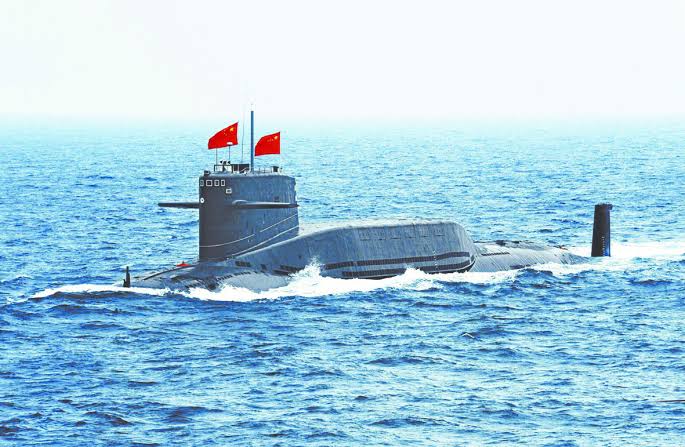
At 12:01 p.m. on 6 July 2026, a Chinese nuclear-powered submarine launched a strategic ballistic missile towards the Pacific. The missile carried a dummy warhead and landed in the designated area, according to the People’s Liberation Army Navy.
China did not identify the submarine, the missile or the launch position. The weapon was widely believed to be a JL-3, but that has not been confirmed. Beijing described the launch as part of its annual military training programme. Foreign Ministry spokeswoman Mao Ning said it complied with international law and was not aimed at a particular country or target.
The timing caused an immediate diplomatic argument. Earlier that day, Australian Prime Minister Anthony Albanese and Fijian Prime Minister Sitiveni Rabuka had signed two treaties in Suva. The Vuvale Union covers economic, social and security cooperation. The Ocean of Peace Alliance, also called the Veitacini Treaty, creates a mutual defence relationship.
Australian Foreign Minister Penny Wong called the missile test destabilising. Albanese later described it as provocative. Solomon Islands Prime Minister Matthew Wale warned China against threatening Pacific countries. Governments in New Zealand, Japan, Taiwan and the United States also raised concerns about the limited warning and China’s growing nuclear forces.
Beijing rejected the idea that the launch was a response to the Australia-Fiji agreement. A test of this type cannot be arranged in a few hours. The navy must prepare the submarine and missile, reserve a flight corridor, position tracking equipment and coordinate with civilian authorities. Ships may spend weeks moving towards their assigned stations.
The coincidence still mattered. Military operations can carry a political meaning that was not part of the original plan. A strategic missile entered the Pacific on the same day that Australia added another mutual defence agreement to its regional network. Pacific governments were always going to connect the two events.
A rare test with several audiences
The launch had several possible audiences.
The first was China’s own military leadership. A missile trial gives engineers and commanders data that cannot be collected from simulations. They need to know whether the launch tube works under operational conditions, whether the missile clears the water safely, whether its guidance remains accurate and whether the re-entry vehicle reaches the assigned area.
The second audience was the United States. China’s sea-based nuclear force exists mainly to preserve the ability to retaliate against a major nuclear opponent. Fiji has little military relevance to that purpose. Washington has a large nuclear arsenal, missile defences, attack submarines and long-range conventional weapons that could threaten Chinese forces during a war.
The third audience was the Pacific. China may not have selected the date because of the treaties signed in Suva, but it chose to conduct a rare public test across an ocean where its political and military role is under close examination.
There was also a domestic audience. President Xi Jinping chairs China’s Central Military Commission and has made military modernisation part of his programme for national power. A successful submarine launch allows the government to show that the navy can operate strategic weapons beyond China’s coastal seas.
The official announcement was unusually direct. China often keeps the movements of its nuclear submarines secret. Publicising the test allowed Beijing to display the result without revealing the submarine’s patrol route.
A telemetry ship added another detail. The Yuan Wang 5 was reported in Suva around the time of the launch. It is a large Chinese tracking vessel equipped with radar dishes and satellite communications equipment. Its normal work includes collecting telemetry from rockets and ballistic missiles.
The presence of the ship does not prove that the launch was aimed politically at Fiji. It does show the scale of the preparation. Long-range tests depend on ships positioned near the flight path and impact area. These vessels record speed, position, stage separation and re-entry performance. Engineers later compare the data with the missile’s planned flight.
What the submarine force is supposed to do
China has nuclear weapons on land and is developing an air-based nuclear role. Its submarine force gives it a third means of retaliation.
A ballistic-missile submarine is built to remain hidden. Fixed missile silos can be mapped by satellites. Road-mobile launchers can be hunted by aircraft and surveillance systems. A submarine can change position and stay underwater for months.
This matters after a first strike. An opponent might destroy many land-based missiles but still fail to find the submarines. The possibility of retaliation makes a disarming attack much less attractive.
China’s first nuclear ballistic-missile submarine, the Type 092 Xia class, never became a dependable operational system. It was noisy, carried a short-range missile and appears to have conducted few serious patrols.
The Type 094 Jin class gave China a more credible force. The United States Department of Defense estimates that the People’s Liberation Army Navy has six operational Type 094 submarines. Each can carry up to twelve JL-2 or JL-3 missiles.
The older JL-2 has an estimated range of about 7,200 kilometres. A submarine carrying it would have to move into the central Pacific to threaten much of the continental United States. That journey would take it through waters watched by American and allied forces.
The reported range of the JL-3 is more than 10,000 kilometres. The exact figure is uncertain. At that distance, a submarine could reach parts of the United States from waters much closer to China.
The range difference changes the patrol problem. A Type 094 carrying the JL-2 must travel through monitored passages and operate far from Chinese air and naval support. A boat carrying the JL-3 can remain nearer the Chinese coast while still holding distant targets at risk.
China is also developing the Type 096 submarine. American defence assessments expect the new class to enter service around the end of the 2020s or the beginning of the 2030s. It is expected to operate alongside the Type 094 for years.
The unanswered question is how quiet the Type 096 will be. Chinese submarines have generally produced more noise than the latest American and Russian boats. Noise makes a submarine easier to detect with passive sonar. A quieter design would force the United States and its allies to devote more aircraft, ships and submarines to tracking it.
The geography around China
China’s maritime geography creates problems for its submarine force.
The Chinese coast is enclosed by a chain of islands running through Japan, Taiwan and the Philippines. A submarine leaving the East China Sea or South China Sea has a limited number of routes into the open Pacific.
The Miyako Strait lies between Japanese islands. The Bashi Channel and Luzon Strait lie between Taiwan and the Philippines. These passages are watched by satellites, underwater sensors, patrol aircraft and naval vessels.
Japan operates a large and experienced anti-submarine force. The United States has bases in Japan and Guam. American P-8A maritime patrol aircraft can search wide areas and drop sonar buoys. Attack submarines can wait near likely transit routes.
China can try to protect its ballistic-missile submarines in a defended area. Surface ships, aircraft and shore-based missiles would make it more dangerous for foreign forces to approach. The Soviet Union used a related method during the Cold War.
Hainan is central to this problem. China has built major submarine facilities there, close to deep water in the South China Sea. Yet a boat leaving Hainan still has to pass through waters where American and allied surveillance is active.
If the JL-3 has the expected range, China may not need to send every submarine deep into the Pacific. Some boats could remain in a protected patrol area. Others might deploy farther east to complicate American tracking.
The July test may have examined China’s ability to move a submarine through this surveillance environment. A missile launch is only the visible part of the mission. The navy would also want to know whether the boat could reach its launch area without being followed.
No public source can establish whether foreign forces detected or tracked the submarine before it fired. That information would be highly classified. American, Australian and Japanese intelligence services will have examined acoustic records, satellite images and the movements of Chinese support ships.
Command, control and nuclear readiness
A submarine deterrent creates difficult questions about political control.
China has traditionally kept tight central control over its nuclear weapons. Most outside estimates say that many Chinese warheads were stored separately from their missiles during peacetime. This reduced the risk of an accidental or unauthorised launch.
A submarine patrol requires a different arrangement. A boat cannot provide an immediate retaliatory capability if it has no nuclear warheads on board. Once a submarine sails with operational weapons, the government needs secure procedures for communication and launch authority.
A submerged submarine cannot communicate in the same way as an ordinary ship. Very-low-frequency radio can send short messages through seawater, but the data rate is limited. The submarine may need to approach the surface or deploy an antenna to receive more detailed instructions. Doing so can make it easier to detect.
Chinese leaders must decide how much authority a commander receives if communications with Beijing are lost. Too little authority may leave the submarine unable to respond after an attack. Too much creates a risk that a local commander could act without approval.
The decision sits under the Central Military Commission chaired by Xi Jinping. The commission must balance survivability against political control. The July test may have included exercises involving coded orders, authentication and communication between the submarine and national command authorities.
China continues to state that it will never use nuclear weapons first. It also says that it keeps its arsenal at the minimum level required for national defence.
Those statements are harder to assess as the force grows. The Stockholm International Peace Research Institute estimated that China had about 620 nuclear warheads in January 2026. The United States and Russia still possess much larger arsenals, together holding most of the world’s nuclear weapons. China, however, is adding warheads and delivery systems faster than the other nuclear powers.
China is building hundreds of new missile silos. It has more road-mobile missiles and is developing a nuclear role for the H-6N bomber. Its submarines are conducting sea patrols. A force spread across land, air and sea is very different from the smaller Chinese arsenal of twenty years ago.
The growth does not prove that Beijing plans to abandon its no-first-use pledge. It does mean that foreign governments have more Chinese nuclear units to monitor and fewer reliable facts about how they would operate in a crisis.
The Taiwan problem
The most dangerous setting for these questions is a war over Taiwan.
A conflict could begin with conventional weapons. China might attack Taiwanese airfields, ports and command centres. The United States could respond with aircraft, submarines and long-range missiles. Japan and Australia might provide bases, intelligence or military forces.
The nuclear problem would appear quickly.
Many of China’s military systems support both nuclear and conventional operations. Radars, satellites and communication networks may serve several forces at once. An American attack intended to disable conventional missiles could also damage China’s nuclear command system.
American submarines might track Chinese ballistic-missile submarines from the beginning of the conflict. Washington could see this as a normal part of naval warfare. Beijing could see it as preparation to remove its ability to retaliate.
A Chinese commander would then face a hard question. Is the United States trying to win the conventional war, or is it creating the conditions for a nuclear first strike?
The United States would face a similar problem. If China placed its nuclear forces on higher alert, American officials might read that move as preparation for nuclear use. China might believe it was taking a defensive precaution.
This is how conventional fighting can move towards nuclear danger without either government planning it at the start.
The longer range of the JL-3 may reduce some pressure on China because its submarines can remain closer to protected waters. It could also lead the United States to increase surveillance near China. Greater survivability for one side produces a larger tracking effort by the other.
Australia’s undersea role
Australia is part of this competition even though it has no nuclear weapons.
The Royal Australian Air Force operates P-8A Poseidon aircraft for maritime surveillance and anti-submarine warfare. The Royal Australian Navy has Collins-class submarines and surface ships equipped for undersea operations. Australia also shares intelligence and communications facilities with the United States.
AUKUS will deepen this involvement. Under the current plan, American and British nuclear-powered attack submarines are expected to rotate through HMAS Stirling in Western Australia from 2027. Australia plans to acquire Virginia-class submarines from the United States in the 2030s before operating the jointly developed SSN-AUKUS.
These submarines are intended to carry conventional weapons. Their missions can include finding enemy submarines, gathering intelligence and striking targets ashore.
From Canberra’s position, they strengthen deterrence. From Beijing’s position, they add to the forces that could track Chinese ballistic-missile submarines or attack naval bases during a war.
Defence Minister Richard Marles has presented AUKUS as a response to a worsening security environment. The Chinese missile test will give him another argument for long-range naval investment. Opposition leader Angus Taylor has already used the event to question whether the Albanese government is spending enough on defence.
Australia still faces a gap between its plans and its current force. The Collins submarines are ageing, and their life-extension programme has suffered delays. The Virginia-class purchases depend on the ability of American shipyards to supply the United States Navy while also releasing boats to Australia.
China may calculate that Australia’s future force will be formidable but that the transition period will remain difficult. Canberra may calculate that closer access to American and British submarines can cover part of that gap.
What the Fiji treaty actually says
The Ocean of Peace Alliance is stronger than an ordinary security partnership, but it is not an automatic declaration of war.
Article 4 commits the parties to help one another develop the capacity to resist external threats and armed attacks. Article 5 requires consultation when a security development threatens the sovereignty, peace or stability of either party.
Article 6 states that an armed attack on one party in the Pacific would endanger both. Each party would act to meet the common danger according to its domestic processes.
That final phrase matters. Australia and Fiji retain control over how they respond. The treaty does not specify that every attack must produce the same military action. Parliament, cabinet and national law would still shape the decision.
Article 7 calls for visiting-forces agreements to support defence activities. This could cover joint exercises, disaster relief or temporary deployments. In a crisis, it could also make it easier for Australian aircraft and ships to use Fijian facilities.
Article 12 allows other Pacific states to join if all existing parties agree. Penny Wong has said the alliance is open to Pacific countries with armed forces. Fiji, Papua New Guinea and Tonga are among the island states with standing military organisations.
The treaty could remain a bilateral agreement. It could also become the start of a small Pacific defence group. Much will depend on how Rabuka and Albanese apply it and whether other governments believe it respects their sovereignty.
Fiji’s role is often misunderstood. Rabuka was not simply accepting an Australian plan. Wong has said that Rabuka proposed turning the existing Vuvale Partnership into a treaty and also proposed the alliance.
Rabuka has promoted the idea of the Pacific as an Ocean of Peace. His government wants more regional cooperation while avoiding a direct demand that island countries choose between China and the West.
The Chinese launch created a problem for that position. If Beijing’s military activity appears intimidating, Rabuka has a stronger reason to work with Australia. If Australian officials present the treaty mainly as a tool against China, Fiji risks being drawn into a contest it has tried to manage.
Australia’s expanding treaty network
The Fiji agreement is part of a larger Australian effort.
Australia has entered a defence alliance with Papua New Guinea. It has separate security arrangements with Tuvalu and Nauru. It signed the Nakamal Agreement with Vanuatu in June 2026. The Albanese government is also negotiating a comprehensive treaty with Solomon Islands.
After meeting Albanese in Honiara on 7 July, Matthew Wale confirmed that Solomon Islands and Australia wanted to move ahead with those negotiations. Penny Wong was assigned to lead the Australian side, with Richard Marles and Pacific Minister Pat Conroy also involved.
This network does not amount to a Pacific version of NATO. The agreements have different obligations and are built around different national concerns. Tuvalu’s main fear is climate change and the survival of its population. Solomon Islands has placed heavy attention on policing and internal security. Fiji and Papua New Guinea have armed forces and can enter deeper defence arrangements.
China will still examine the agreements as a connected pattern. Access clauses, police training, communications systems and visiting forces can create military value even when an agreement is presented in civilian language.
Beijing tried its own region-wide approach in 2022, when Wang Yi toured the Pacific with a proposed agreement covering security, policing and digital cooperation. Pacific governments did not accept a collective deal. China then returned to bilateral engagement.
The competition now works through separate agreements country by country. Australia has advantages in geography, labour mobility, education and long-standing defence ties. China can offer infrastructure, trade, policing equipment and fewer public conditions on governance.
Pacific leaders can use this competition to obtain support. They also risk losing control if outside powers treat each port, airfield or communications project as part of a military contest.
The nuclear-free-zone question
The missile reportedly landed inside the area covered geographically by the South Pacific Nuclear Free Zone.
The zone was created by the Treaty of Rarotonga, signed in 1985. It grew out of anger over nuclear testing by the United States, Britain and France. Australia, Fiji, New Zealand, Papua New Guinea, Solomon Islands and several other Pacific states are parties.
China ratified protocols under which nuclear powers agreed not to test nuclear explosive devices in the zone and not to use or threaten nuclear weapons against treaty members.
The July launch appears unlikely to be a direct violation of the treaty’s text. The missile carried a dummy warhead, and there was no nuclear explosion. The treaty also preserves freedom of navigation in international waters.
That legal distinction does not settle the political question. Pacific communities were displaced or exposed to fallout during earlier nuclear tests. The Marshall Islands, Kiribati and French Polynesia still deal with the medical, environmental and political effects.
A nuclear-capable missile entering the zone therefore carries a meaning that is not captured by the narrow difference between an explosive device and its delivery system.
New Zealand has treated this history as part of its national security policy. Fiji and other island governments have also used nuclear-free principles as an expression of regional independence.
China has often presented itself as more respectful of Pacific history than former colonial powers. The launch weakened that argument. Beijing can point out that the weapon was unarmed and the test was lawful. Pacific leaders can answer that legality was never their only concern.
Warning time and the risk of error
China said relevant countries were informed before the test. Several governments said the notice was too limited.
A warning issued only shortly before launch may be enough to close a small area of sea or airspace. It may not be enough for regional governments to understand the operation or explain it to their citizens.
A missile can fail at several points. The booster can explode, a stage can separate incorrectly or the re-entry vehicle can fall outside the planned area. Debris may spread across a much larger zone than the final impact point.
There is also a risk of misidentification. Early-warning systems detect the heat and trajectory of a ballistic launch. Military officials then have minutes to decide where it came from and where it is going.
During peacetime, prior notice reduces that danger. During a crisis, an unexpected launch could be read as the beginning of an attack.
China, the United States and other nuclear powers have experience with missile notifications, but there is no complete regional arrangement covering strategic tests in the Pacific. Each government decides how much information to provide.
More notice would improve safety. China may resist because advance warning gives foreign intelligence services time to position aircraft, satellites and ships. The Yuan Wang vessels collect Chinese data, while American and allied platforms try to collect the same signals from outside the test area.
The argument over warning is therefore connected to the military value of the test. Governments want transparency, but the testing state wants to protect technical information.
The risk of a self-defeating signal
The launch may strengthen China’s nuclear deterrent while weakening its political position in the Pacific.
If the purpose was to discourage island governments from joining defence agreements with Australia, the reaction may be the opposite. Governments that feel exposed to strategic pressure have more reason to seek support.
Australia can use the test to defend its treaty network. Albanese can say that Pacific countries should not face external pressure alone. Wong can argue that Australian-led agreements allow the region to organise its own security.
China may then see those agreements as containment. It could answer with more naval deployments, missile tests or security arrangements of its own. Australia and the United States would respond with more surveillance and access agreements.
Neither side needs to plan an arms race for one to develop.
Pacific governments have their own choices. They can accept Australian support without endorsing every American military objective. They can trade with China without granting it a military base. They can demand longer notice from Beijing while asking Canberra to explain how AUKUS submarines will operate.
Rabuka and Wale have both spoken about Pacific-led security. That idea will have little meaning if the region is forced to react after decisions are already made in Beijing, Washington or Canberra.
The missile test was probably planned long before the treaties were signed in Suva. It was still conducted at a time when the Pacific was debating who should provide security and under what conditions.
China obtained data about its submarine, missile and command system. Australia obtained another argument for alliances and AUKUS. Pacific island governments received a reminder that the nuclear competition between larger states can enter their region with little warning.
The missile disappeared into the ocean. The military and political questions remain.