Pacific strategy is usually written on a fixed map. Governments compete for ports, telecommunications contracts, diplomatic support and military access, but the states themselves are treated as permanent. Bougainville and New Caledonia make that assumption unsafe. In both places, the distribution of sovereignty remains open, and the economic arrangements being made before the constitutional question is settled may shape the eventual answer.
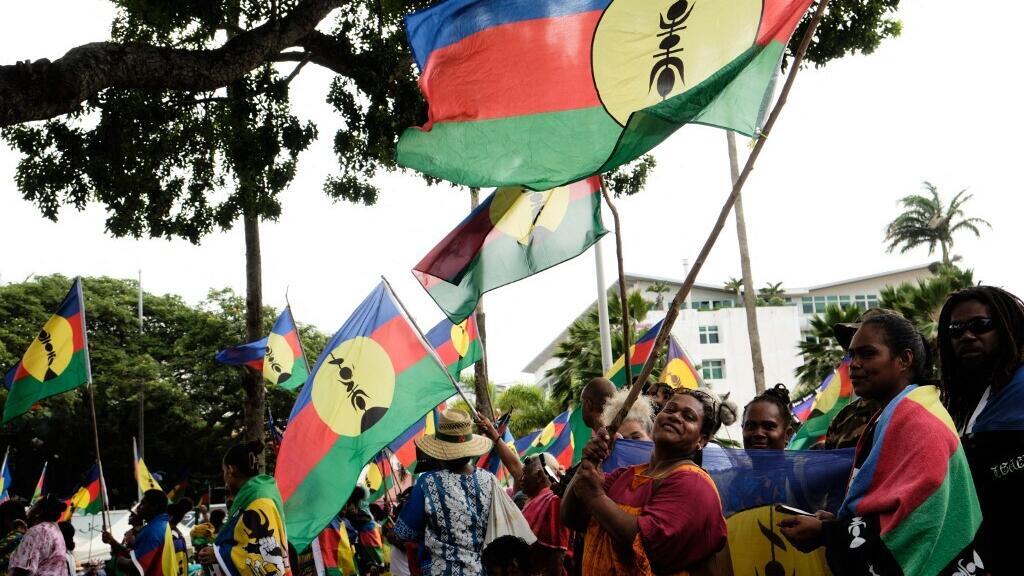
The two cases have different democratic foundations. Bougainville held an internationally observed referendum in 2019 in which 97.7 per cent voted for independence from Papua New Guinea. New Caledonia has held three referendums under the Nouméa Accord, but the legitimacy of the third, conducted in December 2021 during a Covid-related Kanak mourning period and boycotted by the main independence parties, remains disputed. There is no New Caledonian equivalent of Bougainville’s 97.7 per cent mandate.
They nevertheless present the same strategic problem. Political movements seeking greater sovereignty need revenue, administrative capacity and outside recognition. The governments that still hold constitutional authority, Papua New Guinea and France, control the legal routes through which those ambitions must pass. Mining companies can supply money that local administrations cannot yet raise. Foreign governments can provide infrastructure, technical staff or diplomatic support. Long before a new flag appears, the practical content of independence can be fixed through mining leases, budget transfers, electoral rules and debt agreements.
That process is already under way.
The constitutional veto
Bougainville’s referendum produced an overwhelming political result without producing a sovereign state. Under the Bougainville Peace Agreement, the outcome was non-binding and had to be followed by consultations with Papua New Guinea. The final decision rests with the national parliament.
In June 2026, the Papua New Guinea government said ratification would require an absolute three-quarter majority: 89 votes in the 118-member parliament. Bougainville’s leaders dispute that interpretation. The difference is substantial. A simple majority would require 60 votes if every seat were filled and voting. An 89-vote threshold would force Bougainville to gain support from most of Papua New Guinea’s political class, including MPs with no electoral reason to support the loss of national territory.
The threshold also gives Port Moresby room to attach political conditions to ratification. Economic readiness has already become one of them. Prime Minister James Marape has said Bougainville should finance at least half of its public spending itself. The Autonomous Bougainville Government remains far from that figure.
Bougainville’s 2026 budget is K844.09 million. Of that amount, K520.36 million comes from Papua New Guinea government grants, while K46.74 million is internally generated revenue. Bougainville therefore raises about 5.5 per cent of the budget itself. Nearly 62 per cent comes directly from Port Moresby. Other funding sources, including development expenditure and carried-over allocations, make up the balance.
Those figures are politically useful to Papua New Guinea because they allow economic dependence to be presented as evidence against immediate independence. They are less conclusive than they first appear. A government that does not yet exercise the full revenue powers of a state cannot be assessed as though it already does. Customs revenue, fisheries income, corporate taxation, external borrowing and the division of mineral receipts would all change under a sovereign arrangement.
The cost side is also incomplete. Bougainville’s 2026 Cost of Services exercise found that national agencies continue to carry functions inside the autonomous region. It also recorded the expense of serving mountain communities, scattered islands and places with weak transport links. The existing budget is therefore neither the full cost of a Bougainville state nor a reliable statement of the revenue that such a state could eventually collect.
Still, fiscal weakness is real. Political independence would immediately create costs that autonomy does not fully carry. Bougainville would need a functioning customs service, border administration, foreign representation and systems for passports, maritime surveillance and monetary payments. It would have to decide whether to continue using the Papua New Guinean kina and on what terms. It would need agreements covering pensions, public-sector liabilities and the status of citizens living elsewhere in Papua New Guinea.
This explains the return of Panguna to the centre of Bougainvillean politics. The mine is being asked to close a fiscal gap that ordinary taxation cannot close soon enough.
Panguna and the pre-independence state
Panguna once supplied about 44 per cent of Papua New Guinea’s exports. Yet the communities around the mine received a small part of the wealth and carried the environmental cost. Anger over land, compensation and pollution helped produce the uprising that closed the mine in 1989 and led into a decade of war.
The physical damage remains. The Panguna Mine Legacy Impact Assessment, released in December 2024, found unstable buildings and landforms, mine-related flooding, contaminated soil and water, sediment movement and risks to communities downstream. The assessment identified imminent threats to life and made 24 recommendations. More than three decades after production ended, Bougainville is still negotiating how the liabilities of the first mine should be divided among Rio Tinto, Bougainville Copper Limited, the government and affected communities.
This history changes the meaning of every current investment proposal. A Panguna partner would enter a project that has no recent operating record, unresolved environmental obligations, disputed landowner representation and infrastructure requiring extensive reconstruction. It would also enter the institution from which Bougainville expects to finance independence. The company would therefore gain access to government at the moment when that government is building the powers of a state.
In January 2026, President Ishmael Toroama rejected Bougainville Copper Limited’s proposed partnership with China’s CMOC and instructed the company to engage India’s Lloyds Metals & Energy. The announcement was widely read as a choice between Chinese and Indian influence. It also appeared to give India an unusual opening near Solomon Islands, only about 30 kilometres from Bougainville at the closest point.
That interpretation became outdated within months.
On 11 June, the Bougainville Executive Council approved a 25-year large-scale mining lease over Panguna for Bougainville Minerals Limited. BML is an Autonomous Bougainville Government-owned mining investment company. The new lease covers the same area as Bougainville Copper’s exploration licence, whose rights have been suspended and placed below the BML lease for as long as the new arrangement remains in force.
The government has therefore changed the corporate route through which Panguna would be redeveloped. It owns BML, controls 72.9 per cent of Bougainville Copper and regulates the mining sector that granted the lease. This structure may allow more of the mine’s value to remain under Bougainvillean control. It also places the government on several sides of the same transaction. It is the licensing authority, the owner of the licence holder and the majority shareholder in the company whose earlier rights have been subordinated.
That concentration of authority deserves more attention than the nationality of the proposed foreign partner. The principal political question is how decisions will be divided between the cabinet, BML, Bougainville Copper, Panguna landowners and the House of Representatives. A state-owned company can prevent an overseas investor from acquiring the mine outright. It can also become an off-budget centre of patronage if borrowing, procurement and future mineral revenues are not subject to public scrutiny.
Several difficult choices will appear during financing negotiations.
A partner may seek long-term rights to buy the mine’s copper output. A lender may demand security over project revenue. A construction company may seek control of roads, power generation or port facilities needed for the project. Investors may request tax concessions, protection against later legal changes and access to international arbitration. Each provision can look commercially normal when read separately. Together they can remove substantial economic discretion from a government before independence has begun.
Bougainville must also decide whether remediation will be separated from redevelopment. Combining them would give the new investor considerable power over how historical damage is assessed and compensated. It could allow urgent safety work to become conditional on approving a much larger mining project. A separate remediation account, financed by the parties responsible for the old operation and supervised independently of the redevelopment company, would reduce that pressure.
Landowner consent presents another problem. The people around Panguna do not form a single administrative body with one uncontested leadership. Associations, clan authorities and competing representatives have disagreed over access, compensation and who has the right to negotiate. A company can exploit those divisions by signing agreements with the groups most willing to approve its plans. The government can do the same. Consent must therefore be demonstrated at the clan and community level, with the financial terms published, rather than announced through one organisation speaking for all landowners.
The idea that Lloyds represents a settled Indian geopolitical victory should be treated cautiously. The public record establishes a proposed commercial relationship with an Indian company. It does not establish that New Delhi designed the arrangement. Any Lloyds role must now be reconciled with the lease awarded to BML. China, meanwhile, does not need ownership of Panguna to gain an economic position. Chinese companies can bid for engineering work, supply machinery, finance associated infrastructure or purchase mineral output without becoming the mine’s formal operator.
The real contest concerns the financial architecture around Panguna. A government that depends on one project for most of its export income and public revenue can become vulnerable even when it owns the mine. A fall in copper prices, a delay in production or a dispute with the operator could become a national budget emergency. If the same foreign partner controls project finance and export sales, that partner may acquire influence over decisions far beyond mining.
Panguna could give Bougainville a tax base. It could also reproduce the dependence that the independence movement is meant to end.
Nickel, debt and French power
New Caledonia’s political crisis is often described through the presence of France’s armed forces and the dispute over Kanak self-determination. France has 1,650 military personnel and defence civilians in New Caledonia. The territory supports French maritime surveillance, regional military cooperation and operations across the South Pacific.
The harder question concerns who pays for New Caledonia’s institutions and productive economy. French sovereignty is supported by fiscal transfers, debt guarantees and emergency financing. As the local economy has weakened, those instruments have given Paris more influence over the terms of any constitutional settlement.
The Bougival agreement of July 2025 attempted to create a “State of New Caledonia” within the French Republic. It proposed a Caledonian nationality alongside French nationality and allowed for later transfers of sovereign responsibilities. France would initially retain defence, security, justice and currency, while New Caledonia would receive wider authority in external affairs. The proposal was designed to occupy the space between the existing territory and complete independence.
The arrangement did not survive. The FLNKS rejected it, and on 2 April 2026 the French National Assembly blocked the constitutional bill required to put it into effect. France then pursued a narrower alteration of the provincial electoral roll, which parliament approved in May before the delayed elections. The franchise remains central because the composition of the electorate affects whether Kanaks can retain enough political weight to negotiate decolonisation.
The provincial elections of 28 June produced no constitutional mandate. The main loyalist alliance won 24 of the 54 seats in Congress. Independence parties together obtained 26. The remaining four went to L’Eveil océanien, a centrist party based largely among Wallisian and Futunan voters. Loyalists became the largest single bloc, while pro-independence parties collectively held more seats. Neither side can claim that the electorate settled the sovereignty question.
This institutional deadlock sits on an economy badly damaged by the 2024 unrest. By the end of June 2024, physical damage to the public and private sectors had been estimated at more than €2.2 billion, excluding lost business activity. The New Caledonian government’s immediate financing requirement was estimated at €675 million. Fourteen people were killed, businesses closed and outward migration accelerated.
France has since announced a €2 billion package over five years. Part of the money is conditional on economic reform. The programme covers public finances, health, pensions, energy, debt rescheduling and investment in infrastructure and other sectors. It is therefore larger than a reconstruction grant. It gives the French state a role in deciding how New Caledonia’s public sector and economy will be reorganised after the crisis.
A territory negotiating sovereignty while depending on Paris to finance pensions, electricity and health services has limited room for economic confrontation. France can attach reforms to its support. Independence leaders can reject those conditions, but doing so risks deeper cuts in employment and public services. Loyalists can demand continuing French protection, but France may refuse to subsidise existing arrangements indefinitely.
Nickel sits inside this bargaining structure.
The industry was built around more than export earnings. Ownership of mines and processing plants was used to redistribute economic power between the largely loyalist Southern Province and the Kanak-majority Northern Province. The Koniambo project, controlled 51 per cent by the locally owned SMSP and 49 per cent by Glencore, gave the north an industrial asset and an independent source of revenue. It was linked to the political “rebalancing” that made the Nouméa Accord possible.
Koniambo stopped production in March 2024 after Glencore decided to sell its stake and cease funding the loss-making operation. Most of its roughly 1,200 employees were later laid off. Two bids had been submitted by early 2025, but no recovery of full production followed.
The southern Prony Resources operation has a different ownership structure. New Caledonian public bodies, employees and local communities hold a protected 51 per cent share. Trafigura entered with 19 per cent and an offtake agreement, while other investors hold the remainder. Prony has also required financial support and a replacement for departing investors.
The third producer, SLN, is controlled by France’s Eramet. It has struggled with high energy costs, restricted access to some mining areas and repeated losses. France has already had to restructure debt and offer further support to prevent collapse. During the 2024 unrest, SLN reduced operations to the minimum needed to maintain its furnaces while Prony stopped mining and processing for security reasons.
These plants represent competing political models. Koniambo was meant to give the Kanak north industrial power. Prony was designed around majority local ownership. SLN retains the strongest connection to French capital. Their simultaneous weakness removes the economic foundation from every side of the constitutional argument.
It also gives potential foreign investors unusual leverage. A buyer is not entering a healthy industry at a normal price. It is negotiating over distressed assets while the territorial government is short of money and France is trying to reduce the cost of its rescue. The investor may be able to demand cheap electricity, revised export rules, state guarantees or favourable access to ore.
China’s role in this crisis is often misunderstood. Beijing does not need to acquire a New Caledonian plant to alter the territory’s political economy. Chinese investment helped Indonesia build a nickel industry that supplied more than 60 per cent of global output in 2025. Its low-cost mines and smelters contributed to a prolonged supply surplus and placed higher-cost producers under pressure. Chinese companies dominate much of Indonesia’s downstream processing.
The comparison within Eramet is especially revealing. The company has struggled to sustain SLN in New Caledonia while developing the Weda Bay operation in Indonesia with China’s Tsingshan. Production can move to the lower-cost jurisdiction even when the corporate headquarters remain French. The consequence for New Caledonia is political as well as commercial. The asset that was supposed to finance greater autonomy loses value, while dependence on French transfers increases.
A Chinese company could eventually bid for Koniambo or another distressed asset. That would create a direct political argument about foreign ownership. The existing indirect effect may be more consequential. Chinese-backed Indonesian production has changed the price at which New Caledonia’s model of local processing can survive.
France then faces an uncomfortable choice. It can continue subsidising an industry connected to the territory’s political settlement. It can press New Caledonia to export more unprocessed ore and weaken the local-processing doctrine. It can accept new foreign investors on terms that reduce French control. It can also allow plants to close, with the loss of employment and provincial revenue that follows.
None of these choices leaves the constitutional balance untouched.
France’s military position therefore cannot be separated from the fiscal settlement. Bases and sovereign powers may remain legally French, but regional acceptance depends on the political process that protects them. Melanesian governments and organisations have long treated the Kanak cause as a decolonisation question. A settlement imposed through French institutions could retain formal sovereignty while reducing France’s authority among neighbouring states.
Australia’s transition problem
Australia has a Papua New Guinea policy and a France policy. It has not developed a sufficiently visible policy for the political entities that may emerge from inside them.
In Bougainville, Canberra supports the peace agreement, provides development assistance and avoids publicly deciding the independence question before Papua New Guinea’s parliament acts. That caution protects Australia’s relationship with Port Moresby. It also risks leaving Australia unprepared if the parliamentary process fails or if Bougainville responds with a unilateral declaration.
Australia needs detailed plans for recognition, citizenship, border administration, policing cooperation, currency arrangements and maritime boundaries. These plans do not require an advance promise to recognise Bougainville. They require an understanding of what Australia would do during the first weeks of a constitutional break.
Economic preparation is more urgent. Australia should help Bougainville build revenue institutions that do not depend on Panguna. Fisheries administration, customs collection, property registration and small-business taxation will produce less money than a copper mine, but they spread political risk. Budget assistance should be designed as a multi-donor transition arrangement rather than a bilateral system in which one government or company becomes Bougainville’s treasury.
Panguna contracts should be treated as part of Bougainville’s constitutional formation. The beneficial owners of partner companies should be disclosed. Financing terms, tax concessions, offtake rights and infrastructure guarantees should be available to the House of Representatives and affected communities. Remediation money should be legally separated from redevelopment finance. Landowner agreements should identify the clans and areas represented, the payments promised and the procedure for resolving internal disputes.
Australia cannot impose these conditions. It can make them requirements for its own technical support and for participation by Australian public finance institutions. Japan, New Zealand, India and multilateral lenders could join the same framework. The purpose would be to give Bougainville alternatives during negotiations with a large mining partner.
In New Caledonia, Australia should continue defence cooperation with France while widening the political relationships around it. The Congress, provincial governments, Kanak customary institutions, unions and independence parties will all affect the territory’s future external policy. Treating Paris as the only address may produce a technically correct relationship with the sovereign authority and a politically weak relationship with New Caledonia itself.
Australia also has an interest in the nickel settlement. The closure of the plants would deepen New Caledonia’s dependence on French money and make foreign rescue bids more attractive. Yet backing indefinite subsidies would preserve an industry whose costs remain uncompetitive. Australian involvement would be more useful in electricity reform, workforce retraining, environmental rehabilitation and links with regional supply chains. It should avoid presenting one foreign investor as the geopolitical answer to another.
China will have opportunities in both territories, but the opening is unlikely to begin with a military base. It will begin with an administration that needs money quickly, a distressed industrial asset, an unfinished road or a government seeking diplomatic support. A foreign partner able to combine credit, construction and commodity purchases can acquire influence without demanding any formal security agreement.
The answer is not to exclude Chinese companies by political order. That approach would reduce competition and allow other investors to demand worse terms. The safer position is to ensure that no company controls the mine, its electricity supply, its export route and the government’s short-term financing at the same time.
Bougainville and New Caledonia are usually placed in the final pages of Pacific strategy, after the sections on great-power rivalry. They belong near the beginning. Their political futures could change voting inside regional organisations, control of maritime space, the location of military forces and the ownership of large mineral deposits.
The map may change through parliamentary procedure and corporate law rather than force. By the time sovereignty is formally transferred, much of the new state’s foreign policy may already have been written into its mining contracts and public accounts.