Donald Trump’s second administration has brought greater definition to an approach that was once described mainly through temperament. The 2025 National Security Strategy and the 2026 National Defense Strategy establish a hierarchy that places the defense of the American homeland and the Western Hemisphere first, the maintenance of a favorable military balance in the Indo-Pacific second, and the transfer of greater responsibility to allies in Europe and other regional theaters thereafter. Economic security, energy production, technological leadership and the reconstruction of the defense industrial base provide the domestic foundation for these priorities.
This framework gives Trump’s foreign policy more coherence than many of its critics acknowledge. It responds to a genuine strategic condition: the United States has accumulated military commitments that exceed the forces and industrial capacity readily available to support them, particularly under conditions of simultaneous crisis. China has continued to expand its military and technological capabilities, Russia has sustained a major war in Europe, Iran has retained the capacity to disrupt the Middle East and global energy markets, and the American military has struggled with readiness, maintenance, shipbuilding and munitions production. The Government Accountability Office reported in March 2026 that military readiness had deteriorated over the preceding two decades, while the Navy still lacked a sufficiently integrated strategy for the shipbuilding and repair industrial base.
The original case for interpreting Trump’s policy as a strategy of consolidation therefore starts from a valid diagnosis. Previous administrations enlarged the range of American objectives abroad while allowing the material basis of American power to weaken. Washington continued to issue security guarantees, maintain extensive deployments, impose sanctions, support partners and plan for military contingencies in several regions without resolving the underlying shortage of ships, munitions, trained personnel, logistical capacity and industrial redundancy. The widening distance between commitments and usable power eventually had to be addressed.
The concept of consolidation nevertheless requires more precision than it usually receives in discussions of the administration. In the literature on grand strategy, consolidation refers to an effort to improve a state’s long-term position by limiting exposure, restoring domestic capacity, strengthening its immediate strategic environment and avoiding conflicts that would interrupt the process of recovery. Retrenchment can form part of such a strategy, although consolidation need not involve general withdrawal. A state may reduce one commitment while increasing another, provided that these adjustments contribute to a sustainable concentration of power.
Trump’s policies fit this description only partially. The administration has attempted to reduce American responsibility for European conventional defense, stabilize economic relations with China, strengthen control over the Western Hemisphere and mobilize domestic industry. At the same time, it has expanded the use of military and economic coercion, questioned the security of allied territory, initiated a major conflict with Iran and assumed a significant role in Venezuela’s political and economic transition. These actions may produce tactical advantages, though they also create liabilities of the kind that a consolidating power would normally seek to avoid.
A more accurate description would treat the administration’s approach as a form of selective primacy supported by coercive statecraft. The United States is preserving direct predominance in areas that Trump considers essential, especially the homeland, the hemisphere and certain sectors of advanced technology. In Europe and parts of the Middle East, Washington seeks to remain influential while transferring more of the military cost to regional partners. Economic access, security guarantees, sanctions, tariffs, export controls and military protection have become instruments through which the administration attempts to renegotiate the terms of American leadership.
This strategy has a recognizable logic, but its success depends on institutional discipline. Priorities must remain stable long enough to shape procurement, force posture, alliance planning and private investment. Peripheral opportunities must be assessed according to their effect on the central balance of power. Allies must be pressed to contribute more without being encouraged to treat dependence on Washington as a political danger. The administration has struggled with each of these requirements.
Hemispheric primacy
The Western Hemisphere occupies a central place in the administration’s conception of national security. The 2025 National Security Strategy revives the Monroe Doctrine in a more expansive form, presenting the exclusion of hostile external powers from the Americas as a prerequisite for American freedom of action elsewhere. Chinese investment in ports, telecommunications, energy, mining and infrastructure is treated as a strategic issue because it can create political influence, intelligence access and control over resources or facilities that may acquire military significance during a crisis.
There is a conventional realist basis for this policy. Great powers have rarely accepted the establishment of rival military positions close to their borders, and the United States has derived an exceptional strategic advantage from the absence of a peer competitor in its own region. A government concerned with competition in Eurasia has good reason to protect that advantage.
The administration’s hemispheric objectives reach beyond the denial of hostile military access. They include the political alignment of regional governments, the direction of energy and mineral production, the control of migration routes, the destruction of transnational criminal organizations and the reduction of Chinese commercial influence in strategically sensitive sectors. The dividing line between security policy and a general claim to regional predominance has consequently become difficult to identify.
The removal of Nicolás Maduro in January 2026 illustrated the reach of this policy. The operation eliminated a government closely connected to Russia, China, Iran and Cuba, while giving Washington influence over Venezuela’s oil sector and political transition. American officials chose to cooperate with parts of the existing state apparatus under Delcy Rodríguez, suggesting that stability, resource access and geopolitical realignment took precedence over an immediate transfer of authority to the democratic opposition. Subsequent economic reforms have yet to generate investment on the scale anticipated by their supporters because firms remain concerned about Venezuela’s courts, infrastructure, currency arrangements and history of expropriation.
The Venezuelan case carries consequences that extend beyond the immediate operation. Once the United States assumes a decisive role in removing a government and organizing the disposition of its principal economic assets, it acquires an interest in the performance of the order that follows. Political repression, disputed elections, deteriorating infrastructure or renewed instability can all become questions for Washington because the credibility of the intervention becomes attached to the outcome. The absence of a large occupation force reduces the visible cost without removing the political responsibility.
This pattern is familiar from the history of spheres of influence. Regional dominance can provide security when the leading power defines its interests narrowly and accepts considerable diversity among neighboring governments. It becomes expensive when the leading power attempts to regulate the domestic politics, foreign investment and commercial relationships of the states within the sphere. Latin American governments may share American concerns about organized crime or strategic infrastructure while resisting the assumption that proximity gives Washington authority over their broader political and economic choices.
A viable hemispheric policy therefore needs a clearer standard for intervention. The exclusion of foreign military bases, intelligence facilities and control over critical infrastructure can be connected directly to American security. Opposition to ordinary Chinese trade, diplomatic relations or infrastructure investment requires a more demanding justification. Treating every expansion of Chinese commercial influence as a strategic penetration would leave the United States responsible for competing with Beijing across nearly every sector of every Latin American economy.
China and strategic interdependence
The administration’s approach to China combines a relatively clear military concept with a less settled economic policy. The 2026 National Defense Strategy calls for a denial posture along the First Island Chain, supported by larger contributions from regional allies. The purpose is to prevent China from achieving a rapid military victory and establishing regional hegemony, particularly through an attack on Taiwan. This approach reflects the changing military balance more realistically than a strategy based on the assumption of uncontested American control of the Western Pacific.
The economic relationship presents a more difficult problem because the United States and China remain deeply connected in sectors that have acquired national-security importance. American firms and defense manufacturers depend on Chinese processing capacity for several critical minerals, while China depends on access to advanced foreign technologies, including semiconductors and manufacturing equipment. Beijing’s restrictions on heavy rare-earth exports have demonstrated that interdependence can be converted into coercive leverage. Exports of several strategically important elements remained substantially below earlier levels in 2026 despite negotiations over a wider trade truce.
Trump has alternated between severe tariff pressure and high-level commercial accommodation. This flexibility can be useful in negotiation, though it also makes the direction of policy difficult to anticipate. Industrial investment requires assumptions about tariffs, export controls, subsidies, procurement and market access that extend over many years. Frequent reversals encourage companies to delay investment or organize production around the expectation that restrictions will eventually be modified as part of a presidential agreement.
The strategic objective should be the gradual removal of dependencies that could disable essential military and industrial systems during a conflict. This requires selectivity. Broad commercial exchange can coexist with restrictions on advanced computing, telecommunications, surveillance systems, military components and critical infrastructure. A policy that attempts to suppress ordinary trade will impose high costs on American consumers and firms, while a policy that repeatedly trades security restrictions for short-term purchasing commitments will preserve the vulnerabilities that Beijing has learned to exploit.
Allied participation remains essential because the relevant production networks extend across Japan, South Korea, Taiwan, Australia, Canada and Europe. The United States controls only part of the technological and mineral system needed to compete with China. A durable policy would coordinate export controls, mineral investment, research funding and industrial subsidies across this wider network. Washington’s current proposal for a critical-minerals trading arrangement has encountered resistance among G7 partners partly because they fear that the United States intends to dominate pricing and governance.
The administration’s wider trade policy makes this coordination more difficult. Governments asked to restrict commercial relations with China are also being pressured by American tariffs, investment demands and threats against their own industries. They may still cooperate when the security case is compelling, although they have a growing incentive to develop arrangements that reduce exposure to both Chinese and American coercion.
Europe and the management of alliances
Trump’s strongest claim to a measurable strategic achievement concerns European defense spending. NATO members agreed at the 2025 Hague summit to allocate 3.5 percent of gross domestic product to core defense expenditure and a further 1.5 percent to security-related investment by 2035. The commitment reflects the effect of Russia’s war against Ukraine, the deterioration of the European security environment and the sustained pressure applied by the Trump administration.
The redistribution of responsibility is justified. European members of NATO possess the population, wealth and technological capacity to provide a much larger share of their own conventional defense. Greater European expenditure can allow the United States to shift scarce naval, air, space and logistical resources toward the Indo-Pacific while retaining an important role in nuclear deterrence and alliance command.
The transition requires careful sequencing because higher budgets do not immediately produce usable forces. European militaries remain dependent on American intelligence, strategic transport, aerial refueling, integrated air defense, targeting systems, long-range strike and command infrastructure. Procurement programmes take years to deliver equipment, while recruitment, training and force integration impose additional constraints. An American drawdown undertaken before these capabilities are available would create a period of increased vulnerability even if European expenditure continues to rise.
The administration’s handling of NATO has added political uncertainty to this military problem. Trump’s criticism of allies that declined to support the 2026 war with Iran was accompanied by renewed discussion of troop reductions and questions concerning the conditions under which the United States would honour its alliance obligations. NATO Secretary-General Mark Rutte travelled to Washington in June to contain the resulting dispute before the alliance summit scheduled for July.
Security guarantees lose part of their value when governments believe that they may be suspended over disagreements outside the geographical and legal scope of the alliance. European states are already expanding their capacity for independent action, and some degree of autonomy would improve the distribution of burdens. The form taken by that autonomy matters to the United States. A stronger European pillar operating within NATO would increase combined Western power. A European system designed to protect itself from unpredictable American pressure would weaken Washington’s political influence and could produce divergence on China, Russia, sanctions and defense-industrial policy.
Alliance theory has long recognized that coercion and reassurance must be applied together. A dominant ally needs to discourage free-riding while preserving confidence that cooperation will continue during a crisis. Trump has been effective at increasing the perceived cost of European dependence. His administration has devoted less attention to ensuring that the resulting European power remains institutionally connected to the United States.
Ukraine and the limits of personal diplomacy
The effort to negotiate an end to the war in Ukraine follows directly from the administration’s desire to reduce American exposure in Europe. A settlement would allow Washington to shift attention and resources toward Asia, reduce the risk of escalation with Russia and place more responsibility for postwar security on European governments.
The negotiations have made limited progress because the conflict remains rooted in incompatible territorial and security objectives. Russia continues to demand Ukrainian withdrawal from four regions that Moscow claims to have annexed, including territory that Russian forces do not control, together with a formal end to Ukraine’s pursuit of NATO membership. Kyiv has rejected these terms and argues that an agreement without credible security guarantees would give Russia time to prepare another offensive. As of June 29, 2026, the Kremlin stated that its principal conditions had not changed.
Trump’s reliance on direct relationships with Vladimir Putin and Volodymyr Zelensky has kept diplomatic channels open, although personalized mediation has also generated conflicting expectations. Russian officials have referred to understandings allegedly reached during the 2025 Alaska summit, while subsequent American statements have appeared more supportive of Ukraine. Moscow now seeks clarification over whether Washington has changed its position.
Personal diplomacy can assist formal negotiations when the political basis for compromise already exists. It has less influence when leaders disagree over the future sovereignty and military alignment of a state. Any settlement in Ukraine will require arrangements for monitoring, armament, sanctions, territorial administration and responses to violations. These functions depend on institutions, enforcement mechanisms and long-term commitments that cannot be replaced by an understanding between presidents.
The administration may eventually obtain a ceasefire by applying pressure to both sides. The strategic value of such an agreement will depend on whether it leaves Ukraine defensible and Europe capable of sustaining the settlement. A weak agreement could reduce American costs temporarily while increasing the probability of another war under less favourable conditions.
Iran and the persistence of secondary theaters
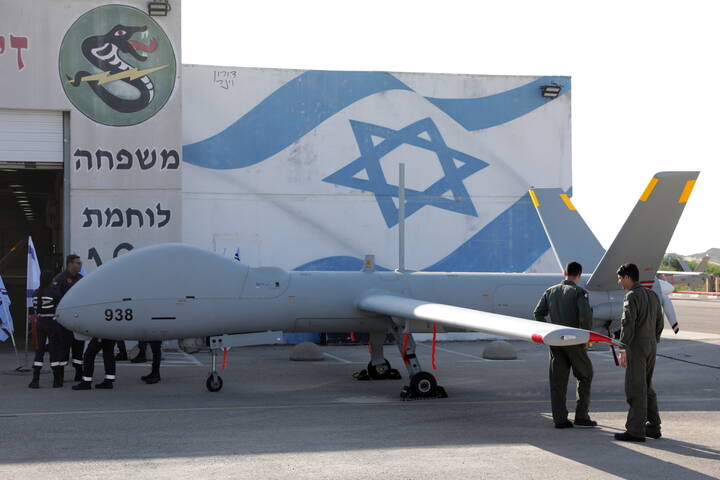
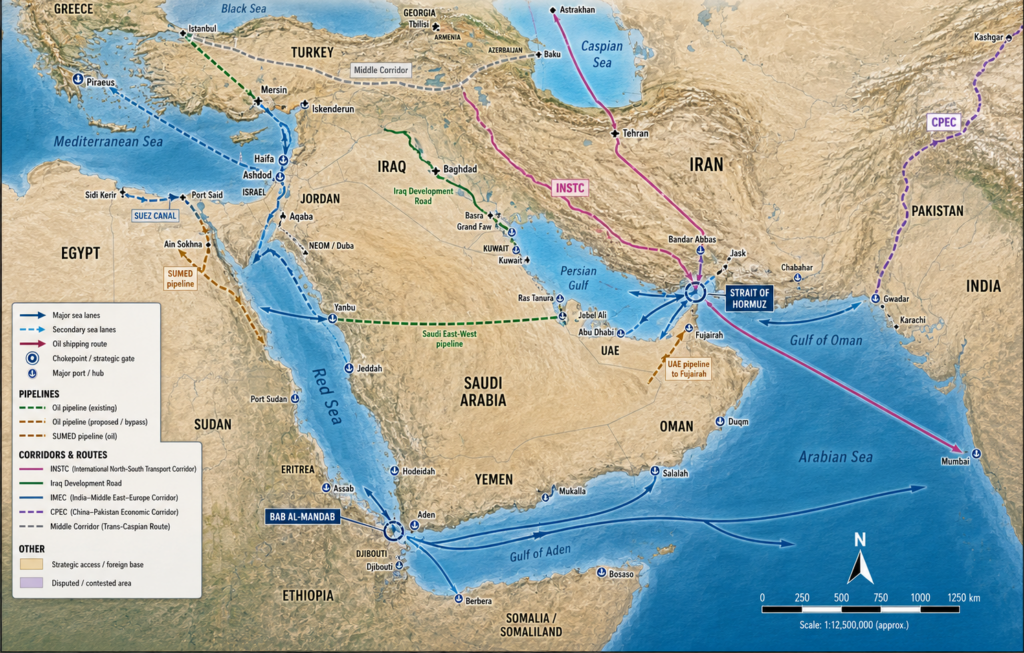
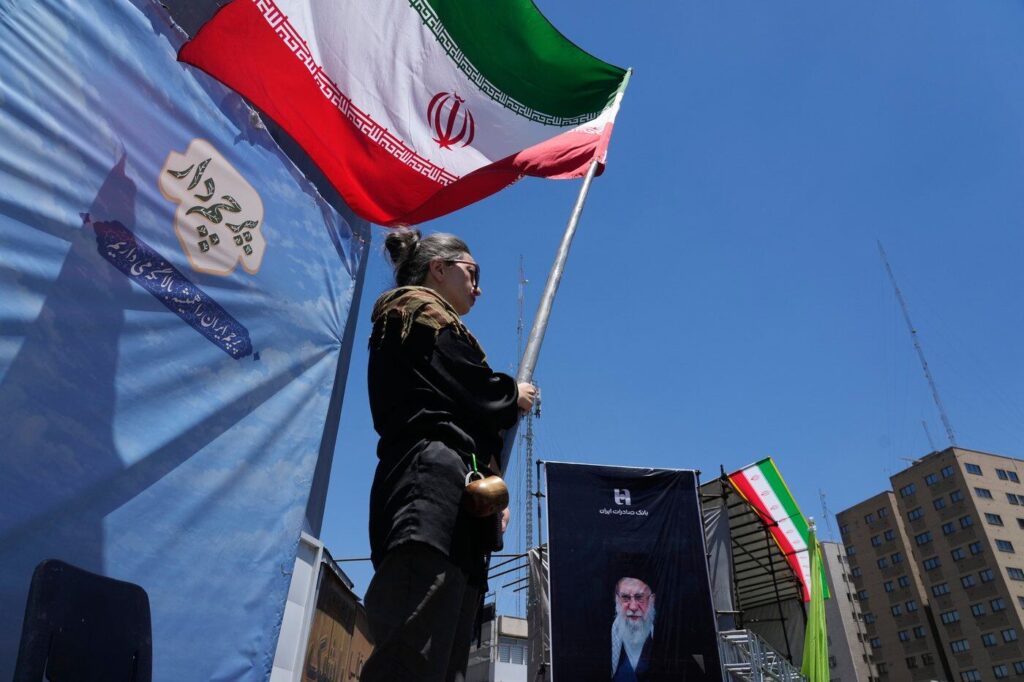
The war with Iran has exposed the largest gap between the administration’s stated hierarchy and its use of military power. The National Defense Strategy envisaged a Middle East increasingly managed by Israel and Arab partners, with the United States limiting its role and directing additional resources toward the homeland and the Indo-Pacific. The American-Israeli campaign launched in early 2026 instead developed into a four-month conflict that disrupted shipping through the Strait of Hormuz, placed pressure on American forces and munitions stocks, raised oil prices and produced severe disagreement with European allies. By late June, reciprocal strikes were still threatening a fragile ceasefire, while American and Iranian delegations travelled to Doha amid uncertainty over whether direct negotiations would occur.
The military campaign weakened Iranian capabilities and may have created conditions for an agreement on the nuclear programme and regional security. Its relationship to consolidation remains uncertain because the costs will depend on the political order that follows. A verifiable settlement that reduces the nuclear danger, protects navigation and limits Iranian regional operations could lower the future demand placed on American forces. A sequence of temporary ceasefires followed by renewed strikes would retain the Middle East as a major consumer of military resources and senior political attention.
The episode also illustrates the difficulty of categorizing regions as secondary when they contain globally important energy routes, American bases, nuclear risks and allies capable of drawing Washington into conflict. Delegation can reduce routine burdens, but it gives regional partners greater influence over escalation. Israel and the Gulf states have their own threat assessments and domestic political objectives, which do not always coincide with the American interest in limiting commitments.
The administration entered office arguing that previous governments had allowed peripheral conflicts to distract from China. The Iran war has reproduced that pattern under a more aggressive theory of limited force. Military superiority allowed the United States to inflict extensive damage, though superiority does not by itself determine the duration of a conflict or the political terms that follow it.
Industrial power and state capacity
The long-term case for Trump’s strategy rests on domestic reconstruction. Rebalancing commitments provides little strategic benefit unless the resources released are converted into greater military readiness, industrial output and technological resilience.
The administration has correctly emphasized energy, critical minerals, advanced manufacturing, shipbuilding, artificial intelligence and defense acquisition. The scale of the required reconstruction remains much larger than a collection of deregulation measures or tariff negotiations. Shipyards need predictable orders, modern infrastructure and skilled labour. Munitions producers need multiyear contracts and confidence that demand will continue beyond the current emergency. Mineral projects require processing capacity and offtake agreements as well as access to deposits. Military readiness depends on maintenance personnel, spare parts, training time and logistics in addition to new weapons.
The GAO’s 2026 findings are especially important because they show that industrial weakness is also a problem of governance. The Navy has invested billions of dollars in shipbuilding and repair capacity without consistently coordinating those investments or providing industry with stable workload projections. The Department of Defense continues to carry a large number of unimplemented readiness recommendations. These are institutional failures that cannot be corrected solely through greater expenditure.
An industrial strategy directed against China will also require close cooperation with allies. The American advantage lies in the combined resources of a wider network that includes European engineering, Japanese and South Korean manufacturing, Australian and Canadian minerals, and Taiwanese semiconductor expertise. Economic nationalism can mobilize domestic political support, but an approach that insists on relocating every important activity to the United States will raise costs, delay production and provoke competition among allied governments for the same investment.
The conditions for consolidation
Trump’s foreign policy has acquired a clear strategic hierarchy. It recognizes the limits of American power more openly than the expansive strategies that followed the Cold War, and it has forced allies and domestic institutions to confront weaknesses that had been postponed for many years. European defense spending has increased, industrial capacity has returned to the centre of national-security policy, and the administration has treated geographical proximity, supply chains and technological dependence as elements of power rather than separate commercial questions.
The administration’s conduct also shows how easily consolidation can be undermined by the methods used to pursue it. Military intervention in Venezuela has generated responsibility for a political transition. The campaign against Iran redirected resources toward a theater scheduled for reduced attention. Tariff volatility has complicated the industrial investment that economic security requires. Pressure on NATO has encouraged higher spending while weakening confidence in the durability of American guarantees. Personal diplomacy has created movement in negotiations without resolving the institutional requirements of a settlement.
A durable strategy will require firmer limits on the use of coercion. American leverage remains considerable because allies and adversaries depend on the United States for access to markets, technology, finance, intelligence and security. Using all of that leverage in every negotiation may produce immediate concessions, although it also encourages other states to reduce their dependence and search for alternative arrangements. The cumulative result can leave the United States with fewer instruments of influence even after it has won individual disputes.
Consolidation also requires continuity beyond the president’s own decisions. Force posture, shipbuilding, mineral processing and alliance planning operate across decades. Foreign governments and private firms must be able to distinguish lasting policy from temporary bargaining positions. Without that distinction, every agreement remains vulnerable to reversal and every strategic investment carries an additional political risk.
The administration has identified the central question facing American grand strategy: how to preserve a favourable balance of power while the domestic instruments supporting that balance are being repaired. Its formal documents provide a plausible answer based on geographical priority, allied responsibility, deterrence in Asia and industrial renewal. The record through June 2026 is less consistent. The United States has gained leverage in several regions, but it has also acquired new obligations and introduced uncertainty into relationships that will be needed for long-term competition.
The eventual assessment of Trump’s foreign policy will depend on whether these policies produce cumulative strength. Venezuela will need to become governable without remaining under indefinite American supervision. Europe will need to assume greater military responsibility while preserving strategic alignment across the Atlantic. Negotiations with China will need to provide time for industrial adjustment without relaxing controls on essential technologies. The Iran settlement will need to reduce the future demand for American force. Domestic programmes will need to produce ships, munitions, resilient supply chains and trained personnel rather than announcements and investment pledges.
These outcomes remain possible, though none follows automatically from the exercise of pressure. The administration has developed a strategy for renegotiating the American position. It has yet to establish the political and institutional discipline required to consolidate it.