For nearly eight decades, the global nuclear system rested on a paradox. The most destructive weapons ever created did not multiply at the pace many expected. They did not become routine instruments of coercion. They were not used again after 1945.
This outcome was not inevitable. It was engineered.
The postwar nuclear order was not simply a legal regime or a balance of terror. It was a layered structure of alliances, assurances, coercive measures, arms control arrangements, and political commitments. At its center stood the United States. Washington acted not only as a nuclear superpower but as the principal organizer of the system that limited the spread and managed the role of nuclear weapons in international politics.
Today, that architecture is under visible strain.
Arms control agreements between the United States and Russia have collapsed or been suspended. China is expanding its nuclear arsenal at a scale and speed unseen in its modern history. The nonproliferation regime faces repeated challenges, from Iran’s advancing nuclear capabilities to North Korea’s normalization as a de facto nuclear state. At the same time, uncertainty surrounding U.S. alliance commitments is prompting allies to reassess their long-term security strategies.
The result is not immediate chaos. Nuclear systems move slowly. But the structural assumptions that governed nuclear stability since 1945 are eroding. The question is no longer whether the nuclear order is changing. It is what will replace it.
The Architecture of Restraint
In the early Cold War, widespread nuclear proliferation appeared likely. Political leaders and analysts projected a world of dozens of nuclear-armed states. The logic seemed straightforward: if nuclear weapons guaranteed survival in an anarchic system, states would seek them. That outcome did not materialize. Only nine states possess nuclear weapons today. This restraint was not a product of moral awakening. It was the result of strategic design.
The United States built an extended deterrence system that reassured allies under its security umbrella. NATO members in Europe, as well as Japan and South Korea in Asia, accepted nonnuclear status in exchange for credible U.S. protection. This reduced the incentive for independent nuclear programs.
Simultaneously, Washington cooperated with Moscow to construct the Nuclear Nonproliferation Treaty (NPT), creating a legal framework that differentiated nuclear weapon states from nonnuclear states while institutionalizing safeguards and inspection mechanisms. Export control regimes, sanctions authorities, and restrictions embedded in civil nuclear cooperation agreements reinforced the system.
This was not altruism. It was strategy. Preventing horizontal proliferation limited the number of actors capable of nuclear escalation. Managing vertical competition between superpowers through arms control agreements reduced incentives for arms racing. The United States preserved influence over allied security policy by remaining the indispensable guarantor.
The nuclear order was a product of hierarchy. It functioned because one state was willing and able to underwrite it.
Erosion at the Center
The stability of that system depended on three pillars: credible extended deterrence, superpower arms control, and enforcement of nonproliferation norms.
Each pillar is weakening. Arms control between Washington and Moscow has largely unraveled. The Intermediate-Range Nuclear Forces Treaty is defunct. The New START framework faces uncertainty. Transparency measures have diminished. Without agreed limits and verification mechanisms, both sides retain incentives to modernize and diversify their arsenals without constraint.
China’s rapid expansion of its nuclear forces introduces additional complexity. For decades, Beijing maintained a comparatively small deterrent. Today, it is constructing new missile silos, expanding delivery systems, and signaling a transition toward a more robust and survivable posture. The traditional bipolar arms control model does not easily accommodate a triangular dynamic.
Meanwhile, enforcement of nonproliferation norms is increasingly politicized. Great power rivalry has undermined coordinated responses to proliferators. Sanctions regimes face erosion. Diplomatic unity around compliance is less certain.
Yet the most consequential uncertainty concerns the credibility of U.S. security guarantees.
Extended deterrence is psychological as much as material. It requires allies to believe that the guarantor would risk its own cities for their defense. It requires adversaries to believe the same. Public signals that cast doubt on alliance commitments weaken both dimensions simultaneously.
When alliance credibility becomes uncertain, states begin to hedge.
Hedging and the Emergence of Parallel Structures
Across regions, U.S. allies and partners are exploring supplementary arrangements that would reduce dependence on Washington.
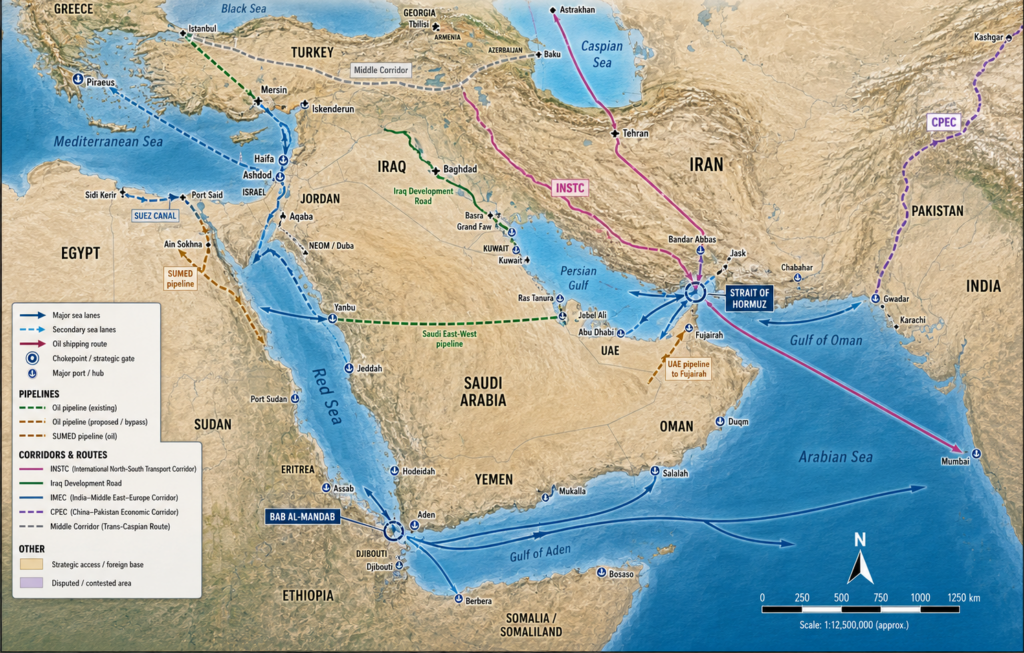
In the Middle East, security relationships are being recalibrated. Saudi Arabia, long reliant on U.S. protection, is diversifying its partnerships. Its strategic defense agreement with Pakistan is illustrative. While not formally a nuclear sharing arrangement, the mutual defense language implies that nuclear deterrence may extend beyond Pakistan’s immediate regional context.
This does not constitute immediate proliferation. It does, however, represent a reconfiguration of deterrence relationships.
In Europe, discussions of strategic autonomy have intensified. France and the United Kingdom, the continent’s nuclear powers, are coordinating more closely. Political leaders in Germany and Poland have initiated conversations about the contours of a European deterrent less reliant on Washington.
These developments remain cautious. The United States has not withdrawn from NATO. But precautionary planning reflects structural anxiety.
The emerging pattern suggests the early stages of a post-American nuclear environment. States are not yet abandoning the existing order. They are constructing contingencies.
Horizontal or Vertical Proliferation?
The key question is whether these adjustments represent a new model of deterrence management or the beginning of broader proliferation.
One possibility is that secondary nuclear guarantees substitute for indigenous weapons programs. A state that secures protection from an alternative nuclear patron may judge that developing its own arsenal is unnecessary.
Another possibility is that such arrangements serve as transitional mechanisms. Security pacts could evolve into deeper technological cooperation, expanded delivery roles, or shared decision-making structures. Over time, political and strategic pressures may push nonnuclear states toward independent capabilities.
Even absent new nuclear states, extended deterrence by additional nuclear powers could stimulate vertical proliferation. If Pakistan’s deterrence posture must now account for obligations beyond India, force expansion becomes easier to justify. If France assumes greater responsibility for continental deterrence, adjustments in posture and delivery systems may follow.
Each additional layer of deterrence multiplies complexity.
Credibility and Escalation Risks
Extended deterrence is inherently fragile. It rests on a promise of retaliation under extreme circumstances. As more states assume guarantor roles, they will confront the same credibility dilemma long faced by the United States.
Would a nuclear power trade its own metropolitan center for the defense of an ally?
To strengthen credibility, guarantors may engage in nuclear signaling, forward deployments, or integrated exercises. These measures can reassure allies. They can also increase peacetime risk.
More actors involved in deterrence decision-making means more pathways to miscalculation. Crisis management becomes more complicated when commitments overlap or intersect.
The historical nuclear order minimized these risks by concentrating extended deterrence authority within a single dominant actor. Fragmentation diffuses responsibility.
The Indo-Pacific Question
In Asia, the stakes are particularly high. Japan and South Korea rely heavily on U.S. extended deterrence in the face of North Korean capabilities and China’s growing power.
If confidence in U.S. guarantees erodes, indigenous nuclear options may become politically viable. Technologically, both states possess advanced civilian nuclear infrastructures. The barrier is strategic choice, not capacity.
Clear opposition to allied proliferation, combined with reaffirmed extended deterrence commitments, can preserve the current structure. Ambiguity, by contrast, invites debate.
The Indo-Pacific lacks alternative nuclear patrons capable of credibly substituting for Washington. If the United States retreats, proliferation pressures may intensify rather than dissipate.
The Strategic Trade-Off
Some argue that allied proliferation would reduce U.S. burdens. If partners assume responsibility for their own nuclear deterrence, Washington could reallocate resources and reduce forward commitments.
This logic underestimates the systemic consequences.
A proliferation cascade would dilute U.S. influence over allied decision-making. It would introduce additional nuclear actors into volatile regions. It would increase the probability of nuclear crises and potentially of nuclear use.
Moreover, the credibility of U.S. leadership in nonproliferation diplomacy would erode. Enforcement of global norms depends on consistency.
The original nuclear order was not purely restrictive. It was a mechanism through which the United States shaped global security architecture. Relinquishing that role alters more than force posture. It alters political leverage.
Arms Control in a Multipolar Era
Reviving arms control in a transformed strategic environment is difficult but not impossible.
Bipolar frameworks no longer suffice. Future arrangements may require incremental confidence-building measures, transparency agreements, and risk reduction mechanisms rather than comprehensive treaties.
Engagement with China on nuclear transparency is essential, even if formal limits remain elusive. Restoring channels with Russia to manage escalation risks is equally important, regardless of broader geopolitical tensions.
Diplomacy in this domain is not symbolic. It is a mechanism for managing uncertainty in systems where miscalculation carries existential consequences.
Testing and Technological Drift
An additional risk in a fragmenting nuclear environment is renewed explosive testing. If one major power resumes testing, others may follow. This would erode long-standing norms and accelerate qualitative arms competition.
Technological innovation in delivery systems, cyber capabilities, and space assets further complicates deterrence stability. As systems become more sophisticated and potentially more vulnerable, crisis timelines compress. In such an environment, disciplined communication and negotiated restraint become more critical, not less.
The Window for Choice
Nuclear orders do not collapse overnight. They erode gradually, through accumulated decisions. The current moment remains fluid. Extended deterrence commitments can be reaffirmed. Arms control dialogues can be reopened. Nonproliferation enforcement can be strengthened through coordinated diplomacy.
Alternatively, ambiguity can persist. Allies can hedge further. Secondary deterrence arrangements can solidify. Over time, the center of gravity may shift irreversibly.
The prior order was imperfect. It institutionalized inequality between nuclear and nonnuclear states. It depended on political discipline that was not always consistent. But it constrained the spread and use of nuclear weapons to a degree that early Cold War observers considered unlikely.
Preserving stability in a changing strategic environment requires recognition of a basic principle: nuclear weapons magnify miscalculation. They reward prudence and punish improvisation.
Wrap up
The global nuclear system is entering a period of structural transition. The United States can continue to anchor it, adapt it, and reform it. Or it can allow a diffusion of deterrence authority that will reshape the landscape in unpredictable ways.
Diplomacy remains central. Nuclear stability has always been less about weapon counts than about political management. Hierarchy, clarity, and credible commitment constrained proliferation for decades.
If those elements fade, the nuclear future will not necessarily become chaotic overnight. But it will become less predictable, more entangled, and more vulnerable to crisis escalation.
The nuclear order was built deliberately. Whether it fragments or evolves will depend on equally deliberate choices.
In matters of nuclear stability, drift is itself a decision.