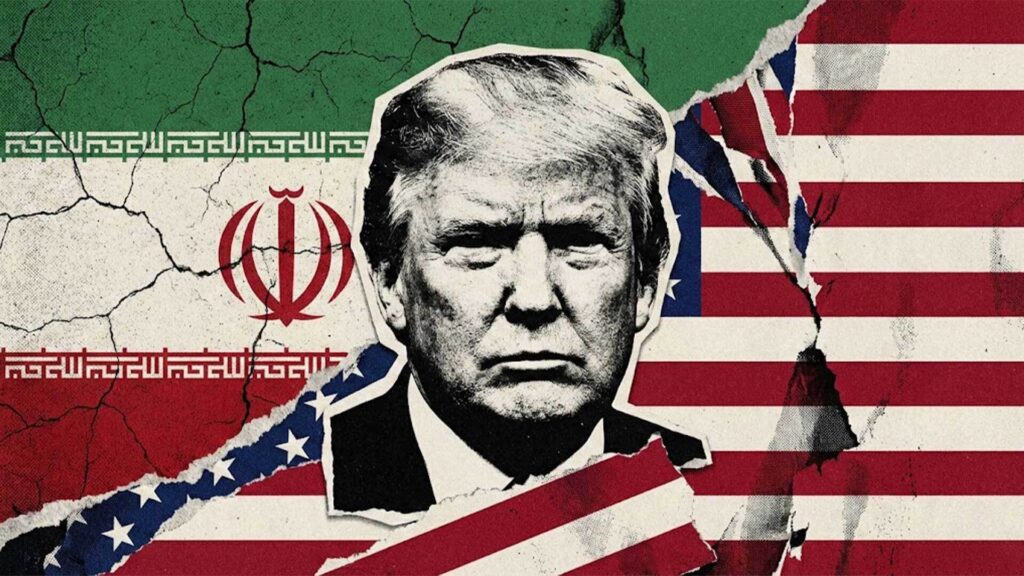
The pause in U.S.-Iran hostilities should not be mistaken for strategic stability. A ceasefire can halt fire without changing the incentives that produced the war. In this case, the military phase may prove less important than the security effects now spreading across the region and beyond. The main danger is not only renewed combat between Washington and Tehran. It is the emergence of a wider security environment in which deterrence weakens, escalation moves into murkier domains, allied confidence becomes more conditional, and adversaries adapt faster than policymakers.
From a narrow operational perspective, the United States and Israel showed clear advantages in precision strike, intelligence fusion, air defense, and targeting depth. Yet tactical success does not guarantee strategic consolidation. Iran has absorbed heavy punishment before without abandoning confrontation. Instead, it has redistributed risk outward, relied on deniable tools, and imposed costs where stronger militaries operate less effectively. That pattern will likely intensify. The most important unintended consequence of the war may therefore be a shift from visible military confrontation to a longer campaign across cyber networks, maritime infrastructure, commercial logistics, proxy systems, and domestic political space.
The Shift to Hybrid Pressure
One immediate consequence is a likely Iranian shift toward hybrid coercion. When conventional assets suffer serious damage, states often rely more heavily on cyber operations, covert action, proxy violence, sabotage, influence operations, and economic disruption. Tehran has long experience in exactly these methods. They allow it to stay active at lower cost while denying its adversaries a clean battlefield.
This shift moves confrontation away from military formations and into civilian systems. Ports, undersea cables, energy facilities, desalination plants, logistics hubs, hospitals, local government networks, and cloud infrastructure all become possible targets. These are not symbolic vulnerabilities. They are core pressure points in societies that depend on uninterrupted digital and physical connectivity.
Cyber conflict will likely become even more central. It is no longer just a supporting tool. It now serves as an operational instrument of strategic retaliation. This war has shown again that modern combat depends on data infrastructure. Targeting, battle management, drone coordination, missile defense cueing, maintenance, and logistics all rely on data availability, transmission security, and processing capacity. That creates a double vulnerability. States need data superiority to fight effectively, yet the commercial systems that store and move that data often remain softer targets than military networks.
In a future round of confrontation, the most exposed nodes may not be air bases or warships. They may be commercial cloud services, regional data centers, satellite-linked communications, shipping platforms, and industrial control systems tied to critical infrastructure. Under these conditions, the line between civilian and military target sets grows harder to sustain.
Infrastructure, Terrorism, and Maritime Exposure
This matters because the Gulf is more than a battlefield. It is a tightly connected infrastructure zone. Hydrocarbon production, port operations, desalination, financial transfers, container traffic, and military basing sit close together in a dense and vulnerable network. A strike or cyber disruption against one node can trigger wider effects across several others. Insurance premiums rise. Shipping patterns shift. Electricity and water security become political issues. The burden of infrastructure defense expands quickly beyond what many states planned to absorb. This produces a form of escalation that may stay below formal war while generating strategic effects similar to it.
A second consequence concerns terrorism and irregular violence. Much public debate focuses on missiles and proxies. The harder problem for Western and regional security services is dispersed, low-signature violence. Iran and aligned networks do not need spectacular attacks to create strategic friction. A series of attempted assassinations, attacks on soft targets, small maritime incidents, or lone-actor mobilizations could force several countries into costly defensive postures at once. Even failed plots consume resources, deepen public anxiety, and encourage more securitized politics. The conflict may therefore produce a long tail of internal security pressure, especially in states already dealing with polarization, migration stress, or weak intelligence coordination.
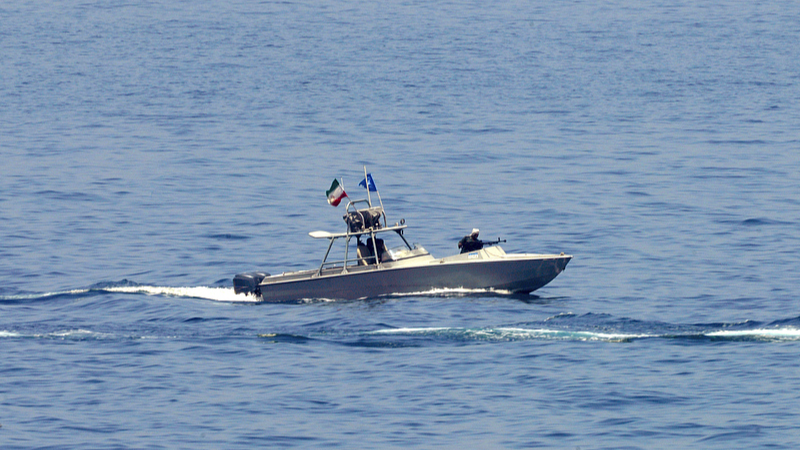
The maritime domain presents a separate challenge. The war has shown again that control of a strategic waterway does not require command of the sea in the classical sense. A state with a weakened navy can still disrupt passage through a chokepoint with missiles, drones, mines, fast attack craft, electronic interference, and a credible threat environment. Even intermittent disruption around the Strait of Hormuz can produce outsized economic effects. Tanker routing, freight rates, risk premiums, refinery planning, and state budget calculations respond not only to actual interdiction, but also to the possibility of it. This is where military and market effects merge. Naval superiority that cannot restore commercial confidence remains strategically incomplete.
That reality exposes a deeper weakness for the United States and its partners. Western militaries still excel at high-end combat and punitive strike. But the real competition now turns increasingly on the defense of ports, pipelines, platforms, cables, energy terminals, data centers, and shipping corridors. These missions demand persistence, manpower, legal clarity, and political attention. They also require close coordination among military commands, coast guards, intelligence services, insurers, telecom firms, commercial operators, and private technology companies. The problem is not only military capacity. It is institutional fragmentation. Adversaries gain from that fragmentation because they can attack seams rather than hardened centers.
Strategic Spillover Beyond the Gulf
The war also creates broader geopolitical distortions. One of the most serious is strategic distraction. A U.S. security establishment pulled deeper into the Gulf must reallocate planning attention, munitions, intelligence coverage, force protection assets, and diplomatic effort. Even limited diversion matters in an era of tight stockpiles and growing theater demands. Air defense interceptors, precision munitions, satellite coverage, maintenance cycles, and transport capacity are finite. Any prolonged requirement in the Middle East will affect assumptions elsewhere, especially in Europe. Russia does not need a formal realignment in its favor to benefit. It only needs Western attention to become thinner, slower, and less coherent.
This dynamic also places new strain on the transatlantic relationship. European governments will view any future escalation through the lens of secondary exposure: energy shocks, refugee pressure, terrorism risk, maritime disruption, and reduced U.S. focus on European security. If Washington appears to take decisions with alliance-wide consequences without meaningful consultation, political support for common policy will weaken even if formal alliance commitments remain in place. This would not mean the collapse of Western security structures. It would mean a more conditional and transactional cohesion, where publics and governments ask more openly whether U.S. crisis behavior creates liabilities that Europe is then expected to absorb.
At the same time, Gulf states are likely to revise their defense planning. The war has shown that the challenge is no longer limited to static missile defense around oil facilities. States now need layered resilience across air and missile defense, counter-UAS, cyber defense, redundancy in water and electricity systems, protected data architecture, rapid repair capacity, and continuity in port and shipping operations. Governments that once treated these as separate sectors will now have to integrate them. This will likely drive large investment in multi-domain defense ecosystems. The key demand will not be prestige platforms alone. It will be integration, survivability, and speed of adaptation.
The United States also faces a domestic consequence that should not be underestimated. Wars of this kind rarely remain external. They sharpen debates over homeland vulnerability, critical infrastructure, emergency preparedness, foreign influence, and federal coordination. If the next phase of confrontation revolves less around airstrikes and more around cyber disruption, covert plots, infrastructure incidents, or intimidation campaigns, the political effect inside the United States could become more destabilizing than conventional combat abroad. A country can often absorb distant military action more easily than the perception that ordinary civilian systems are exposed and penetrable.
The wider lesson is that this war has accelerated a shift already visible in contemporary conflict. Security no longer depends only on the ability to destroy enemy forces. It increasingly depends on the ability to keep complex societies functioning under continuous coercion. Precision strike and technological superiority still matter. But resilience, redundancy, institutional coordination, industrial depth, and political endurance matter just as much.
The ceasefire should therefore be understood as a pause within a longer cycle of competition, not as the end of one. The military exchange may have demonstrated U.S. and Israeli superiority in conventional terms. At the same time, it sharpened Tehran’s incentive to avoid symmetrical confrontation and expand pressure where the West feels less comfortable, less coordinated, and in some areas less prepared. The danger ahead lies not only in renewed open war. It lies in a more fragmented and persistent conflict in which the line between battlefield and civilian system continues to erode. That is the security environment policymakers must now confront.