With less than forty eight hours left before the ceasefire expires, the most dangerous illusion is the belief that the current crisis can still be managed through pressure alone. That illusion has already done enough damage. It has distorted American expectations, hardened Iranian resistance, unsettled global energy markets, and turned the Strait of Hormuz from a battlefield lever into something far more consequential: a strategic asset Tehran now has little reason to surrender cheaply.
The immediate issue is not only whether the ceasefire survives. It is whether Washington understands that the war has altered the bargaining landscape in ways that cannot be reversed by threats, maritime seizures, or another round of maximalist diplomacy. Fifty days of fighting have not produced Iranian capitulation. They have produced a different Iranian position, more wounded perhaps, more economically strained certainly, but also more convinced that its remaining leverage must be preserved, formalized, and traded only at a high price. That is the reality now driving events. Any analysis that ignores it will misunderstand both the risks of the next forty eight hours and the limited but still real path away from renewed war.
The current crisis is often described as a ceasefire under strain. That is true, but it is not sufficient. What is under strain is not only the truce itself. What is breaking down is the assumption that military pressure can continue without changing the political terms of the conflict. The United States still appears trapped in the belief that battlefield and naval pressure can force Tehran into accepting a settlement well beyond what Iran’s political system could absorb domestically. Iran, by contrast, has moved toward a colder and more disciplined reading of the situation. It is no longer acting as if Hormuz is merely a threat to be waved in moments of escalation. It is treating control over maritime access as one of the few strategic gains the war has produced, perhaps the most important one, and therefore as something to be preserved into the next phase rather than relinquished in order to secure a temporary reduction in pressure.
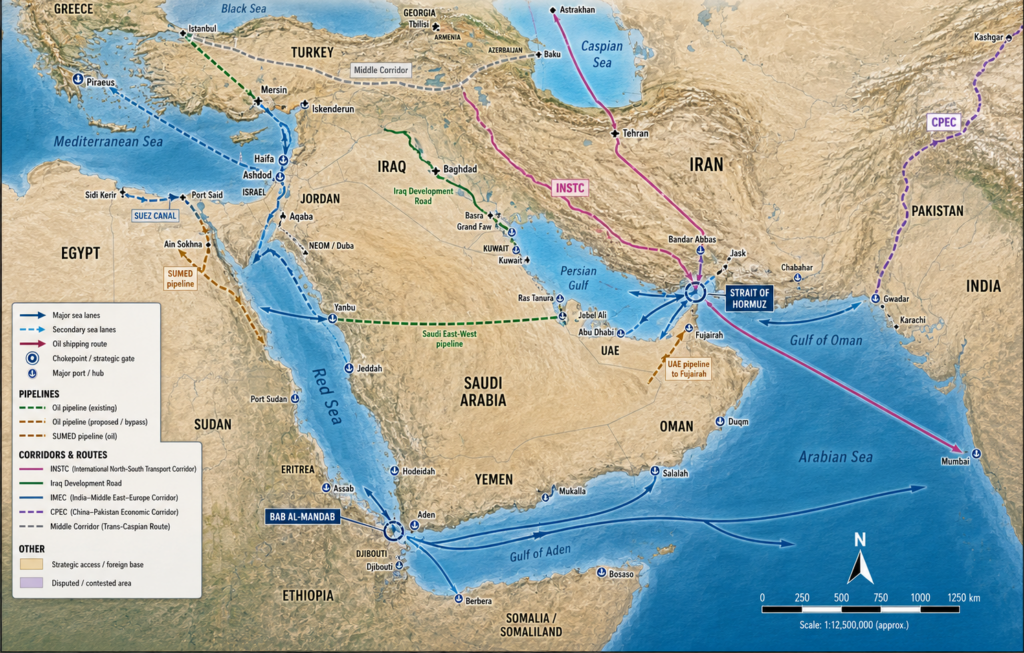
That distinction matters. In earlier crises, the Strait of Hormuz was usually discussed in binary terms. Iran could threaten closure, or it could refrain from doing so. The logic was episodic. Use the threat, create fear in global markets, and then return to the prior status quo once the immediate confrontation passed. What has emerged in this war is more sophisticated and more difficult to unwind. Tehran has shown preference for selective disruption over total closure, for controlled access over indiscriminate denial, and for calibrated pressure over a single dramatic move that might trigger overwhelming retaliation. This approach has allowed it to inflict costs, shape perceptions, and keep the world’s attention fixed on a chokepoint that remains indispensable to global energy flows, while avoiding some of the self-harm that a full permanent closure would entail.
That is why Washington’s current posture is strategically confused. It appears to assume that because Iran is under pressure, Iran is approaching the point of diplomatic concession. In fact, the opposite may be closer to the truth. The more Tehran concludes that the United States is seeking surrender dressed up as negotiation, the more value it assigns to the instruments that prevent that outcome. Hormuz has become one of those instruments. It offers economic leverage through sustained disruption and higher prices. It offers political leverage by forcing states and commercial actors to reckon with Iran’s practical role in governing transit through a critical waterway. And it offers strategic leverage by reminding the United States and its partners that Iran still retains the capacity to shape regional order even under severe coercive conditions.
That is the first point any serious analysis must start from. Iran is not simply refusing to reopen the strait because it is stubborn or ideological. It is refusing because, from Tehran’s point of view, reopening Hormuz without major political returns would amount to surrendering the most valuable bargaining chip the war has placed in its hands. A state that believes it has gained leverage from conflict does not give that leverage away merely to prove good intentions to an adversary that has continued to threaten its infrastructure, pressure its economy, and publicly speak in the language of domination. Under such conditions, restraint is easily interpreted as weakness, especially in a system like Iran’s where the regime’s credibility rests heavily on demonstrating endurance under pressure.
This does not mean Iran is winning in any simple or romantic sense. It is not. The country has taken damage, absorbed serious costs, and faces a long period of economic and infrastructural strain. But wars are not judged only by material losses. They are also judged by whether one side can prevent the other from converting military pressure into political submission. On that front, Iran has not folded. More importantly, it appears to have adapted. That adaptation is what now shapes the closing hours of the ceasefire.
The best way out of this crisis therefore cannot be a fantasy of comprehensive peace. There is no time for that, and there is no trust for it. The realistic objective is narrower and harder. It is to construct an exit from the ceasefire deadline that gives both sides enough to avoid immediate escalation without forcing either into visible humiliation. That is not elegant diplomacy. It is emergency statecraft. Yet it is the only kind that fits the moment.
The first requirement is an immediate extension of the ceasefire for at least two weeks, ideally longer. Without an extension, the clock itself becomes a weapon. Every maritime encounter becomes a test of resolve. Every contradictory statement becomes evidence of bad faith. Every domestic faction that opposes compromise gains strength from the argument that the process has failed anyway. Diplomacy under an expiring ceasefire is rarely diplomacy in the true sense. It is deadline theatre, and deadline theatre is usually staged for domestic audiences rather than for actual problem solving. An extension would not resolve the underlying dispute, but it would at least create room for decisions not driven by theatrical urgency.
The second requirement is a reciprocal maritime freeze. Iran would need to halt attacks, interdictions, and coercive harassment against commercial traffic beyond what it can plausibly frame as immediate defense. The United States, for its part, would need to suspend further seizures and coercive interdictions that Tehran can easily present as proof that Washington sees the truce only as a one sided instrument. This is where the current American posture is especially self-defeating. If Washington insists on negotiating while simultaneously demonstrating that it reserves the right to intensify operational pressure at sea, it should not be surprised when Tehran concludes that talks are merely an extension of coercion by other means. No serious state bargains away strategic leverage while being shown in real time that the pressure campaign remains intact.
The third requirement is to narrow the agenda. The problem with the present diplomatic frame is not only mistrust. It is also overreach. A negotiation that tries to settle the future of enrichment, sanctions, regional security, maritime access, proxy activity, and war termination all at once is almost designed to collapse. The immediate package should be limited to what is necessary to stop the crisis from worsening. Maritime deconfliction in Hormuz. Rules of military restraint during the extended ceasefire. A temporary political formula on the nuclear file that postpones the most explosive end state demands while preserving a road to broader negotiation. Washington may dislike the idea of interimism, but its alternatives are worse. Tehran will not accept strategic disarmament under bombardment. If American negotiators still imagine that pressure has created a clean path to Iranian capitulation, they are not reading the battlefield correctly.
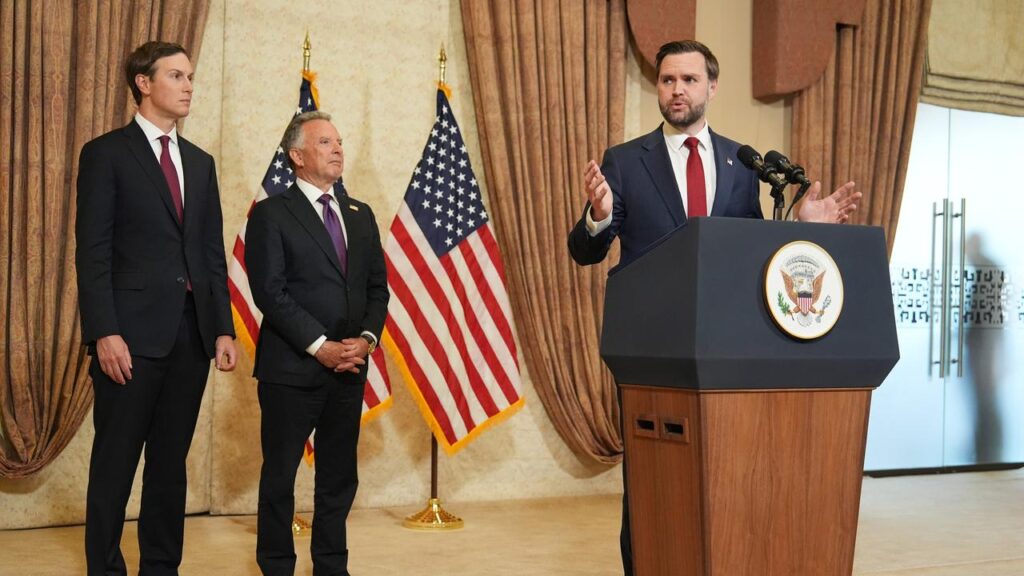
The fourth requirement is political seriousness in the composition and conduct of the U.S. negotiating channel. There is a point at which performative toughness stops producing leverage and starts poisoning the possibility of an exit. That point has already been reached. If the American side continues to rely on figures whose value lies more in ideological loyalty, media symbolism, or alignment with Israeli preferences than in disciplined statecraft, the channel will remain structurally unserious no matter how many meetings are announced. Tehran will interpret it as an arena for public pressure and political theatre, not a mechanism for reciprocal compromise. The problem is not only who is sent. It is the worldview they carry. A team that sees negotiation as the final administrative step after the enemy has been broken will fail because Iran has not, in fact, been broken. It has been bloodied, constrained, and hurt, but it still has enough leverage to refuse terms that would publicly reduce it to submission.
That point needs to be stated plainly because too much Western analysis still confuses damage with dominance. A country can be hurt and still retain escalation leverage. It can lose assets and still prevent the other side from imposing a stable outcome. It can suffer economically and yet refuse a political order it sees as intolerable. This is exactly the kind of adversary Iran has proven to be. Any path out of the present crisis must therefore begin from a more sober premise: the United States cannot bomb, blockade, and threaten its way to a durable settlement if the settlement itself is understood in Tehran as a codified defeat.
If that sober premise is rejected, several scenarios become more likely.
The first is a return to limited war almost immediately after the ceasefire expires. This is the clearest danger. Hostilities would likely resume first in the maritime domain and through stand off military action rather than through any dramatic declaration. Commercial shipping would remain at risk. Iranian aligned attacks on vessels or infrastructure could intensify. The United States would respond with strikes meant to restore deterrence. Israel would likely expand its own operational tempo under the argument that diplomacy had collapsed because Iran never intended to compromise. Each side would claim to be acting defensively while expanding the conflict in practice. This is the scenario most consistent with the current trajectory.
The second is what might be called a false extension. Talks continue on paper, but the tactical confrontation at sea and in the broader region persists. This would be presented publicly as a diplomatic success because the ceasefire technically survives, yet in reality it would institutionalize instability. Shipping would remain constrained. Insurance premiums and freight costs would stay elevated. Energy markets would continue pricing in disruption. The world would not be looking at peace, but at the normalization of a controlled crisis. This is dangerous because it gradually teaches all actors to live inside an unstable equilibrium. Over time that can make a larger confrontation more likely, not less, because the threshold for escalation becomes blurred by repetition.
The third scenario is the most constructive but also the most demanding politically. The ceasefire is extended, the maritime arena is partially stabilized, and an interim agreement is reached that does not settle the conflict but reorganizes it into a slower, more negotiable form. In that case, oil prices would fall from panic peaks but not return to earlier comfort levels. Shipping would resume gradually and unevenly. Iran would retain some leverage, but under an agreed framework rather than through active disruption. The United States would claim it had preserved freedom of navigation and a path to further negotiation. Iran would claim it had forced recognition of its strategic weight and prevented an imposed settlement. Neither side would trust the other. But trust is not the measure here. Survival is.
There is also a fourth scenario that deserves more attention precisely because policymakers often underestimate it. That is the scenario in which no side actually wants a broad war, yet all drift toward one through domestic politics, alliance pressure, and misread signaling. Tehran cannot be seen internally as yielding under naval pressure and public threats against civilian infrastructure. Washington, especially under a leadership culture that mistakes humiliation of the adversary for diplomacy, cannot easily tolerate visible Iranian retaliation. Israel has its own calculations and may not share the same threshold for sustaining diplomacy if it believes prolonged pressure serves its strategic objectives. Add to this the role of accidents, misidentification at sea, local commanders operating under pressure, or a strike that produces higher than expected casualties, and the result is a pathway to escalation that no formal actor may have originally chosen in full. This is how wider wars often begin. Not as master plans, but as accumulations of supposedly limited choices made in an environment of ego, fear, and political rigidity.
The consequences of failure would extend far beyond the immediate military theater. The economic consequences are already visible. Hormuz is not simply another route. It is one of the central arteries of global energy and trade. Even if traffic resumes tomorrow, the cumulative disruption has already changed the pricing environment. Energy shortages are not erased by headlines. Shipping systems do not reset instantly. Insurance markets do not forget risk because diplomats issue a statement. Storage behavior, freight costs, speculative positioning, and supply replacement all create lags that outlive the immediate crisis. This means the world is already facing a more inflationary and more fragile environment than the one that existed before the war. A renewed confrontation would deepen that shift and make the return to stable growth far more elusive.
For the Middle East, the consequences would be sharper still. Gulf states would accelerate hedging strategies. Some would deepen security dependence on Washington while quietly seeking accommodations with Tehran. Others would invest harder in bypass infrastructure, strategic storage, and maritime alternatives, though none of these can fully neutralize Hormuz in the near term. Regional militarization would intensify. Trust in American crisis management would deteriorate even among partners who still depend on U.S. security guarantees. And Iran, if cornered further, would become still more committed to retaining instruments of asymmetric and geographic leverage that compensate for its conventional vulnerabilities. In other words, the region would not emerge from renewed war more orderly. It would emerge more armed, more suspicious, and more structurally unstable.
There is also a deeper political consequence. Every failed ceasefire teaches a lesson. If this one collapses because it was treated as a pause designed to facilitate coercion rather than as the opening of a viable political process, then future ceasefires will be harder to secure and harder to trust. Iran will learn that any pause without enforceable reciprocity only gives the United States time to reposition. Washington will learn, or think it has learned, that only greater force can make diplomacy meaningful. Israel will conclude that military pressure should be sustained because pauses merely buy time for adversaries. These are the kinds of lessons that poison future crises.
That is why the best way out in the next forty eight hours is not rhetorical escalation disguised as negotiating leverage. It is a hard, unsentimental recognition that neither side is in a position to dictate the postwar order outright. Washington needs to drop the fantasy that military advantage automatically produces political obedience. Tehran needs to understand that leverage retained too rigidly can also become a trap if it invites a larger confrontation before gains are consolidated. But between these two errors, the more destabilizing one right now lies in Washington, because it still seems tempted by the belief that one more display of coercion will finally break Iranian resistance. That belief has already outlived the evidence.
A viable exit still exists, but it is narrower than most public commentary admits. Extend the ceasefire. Freeze the maritime escalations. Strip the negotiation agenda down to what is necessary for immediate stabilization. Put serious diplomats, not ideological mascots, in charge of the channel. Accept an interim arrangement that leaves all major disputes unresolved but prevents immediate reentry into war. That is not a triumph. It is something more valuable in the present circumstances. It is the avoidance of a larger failure.
With less than forty eight hours remaining, the central fact is brutally simple. Iran now believes that Hormuz is too valuable to surrender for vague promises and public pressure. The United States still appears reluctant to admit that force has not translated into the kind of strategic submission it expected. The gap between those two positions is where the ceasefire is now dying. If that gap is not narrowed quickly, the region is likely to discover that what looked like a temporary truce was only the interval between two rounds of a wider and more dangerous war.