The United States has constructed over the past three quarters of a century a national security apparatus that is breathtaking in its global reach and terrifying in its operational efficiency. Yet this very machinery, designed originally to contain Soviet expansion and defend a liberal international order, has evolved into something far more problematic than its architects intended. The country has developed what can only be described as a doctrinal addiction to war, a condition in which the resort to military force has become not merely a tool of last resort but a habitual first response to a remarkably wide array of foreign policy challenges. This addiction transcends partisan politics, survives electoral cycles, and persists across administrations that enter office explicitly promising to break from the patterns of their predecessors. Understanding why the United States cannot stop fighting requires moving beyond simplistic explanations about presidential character or lobbyist influence and instead examining the deep structural, theoretical, and institutional arrangements that have made war the most administratively convenient option available to American leaders.
The first and perhaps most consequential foundation of this addiction is the extraordinary concentration of war making authority in the executive branch that has occurred since the early years of the Cold War. The constitutional design of the American republic placed the power to declare war firmly in the hands of Congress, while designating the president as commander in chief of the armed forces once hostilities had been authorized. This arrangement reflected a deliberate judgment by the founding generation that decisions about war and peace were too consequential to be left to any single individual. Yet over decades of accumulated precedent, congressional abdication, judicial avoidance, and executive assertion, the presidency has accumulated a de facto authority to initiate military action across the globe with virtually no meaningful legislative check. The Korean War established the pattern of presidential war making without a declaration. The Vietnam War deepened it. The global war on terrorism following the attacks of September 2001 expanded it to an almost limitless degree. By the time the country entered the second decade of the twenty first century, presidents from both parties had come to regard the decision to bomb another country as an internal executive matter requiring no more consultation with the legislative branch than the appointment of a mid level agency head.
This consolidation of executive authority would be concerning enough in itself, but its pathological character becomes fully apparent only when combined with a second factor, namely the fiscal insulation of the American public from the costs of war. The traditional political economy of warfare held that populations would restrain their leaders enthusiasm for military adventures because wars required immediate tax increases, bond drives, or other forms of visible sacrifice. That constraint has effectively disappeared. The Korean conflict was the last major American war financed in significant part through tax increases. Every subsequent conflict, from Vietnam through the Iraq and Afghanistan campaigns to the current operations across multiple theaters, has been funded primarily through deficit spending. The practical consequence is that most Americans experience war as a remote abstraction, something that happens to other people in faraway places and that affects their own lives only through occasional news reports or the diversionary spectacle of presidential speeches. The trillions of dollars spent on the post September 11 wars did not arrive as a line item on household tax bills but were instead borrowed and added to a national debt that will be serviced by future generations not yet born. The removal of fiscal immediacy has stripped away what was historically the most powerful democratic brake on military adventurism.
The all volunteer military completes this insulation by ensuring that the human costs of war are borne by a very narrow and self selecting segment of American society. When the country maintained conscription, the possibility of being drafted concentrated the minds of voters and their representatives in ways that produced genuine political constraints on presidential warmaking. The end of the draft in 1973 and the transition to an all professional force severed that connection. Today the men and women who fight and die in American wars are volunteers who chose military service knowing the risks. Their sacrifice is genuine and profound, but it is also demographically isolated. The children of members of Congress rarely enlist. The families of senior administration officials almost never send their offspring to combat zones. The wealthy and the politically connected have found countless ways to avoid military service even as they advocate for the wars that poorer and less connected Americans must fight. This arrangement creates a caste like separation between the warrior class and the civilian society it ostensibly defends, and that separation systematically reduces the political costs that presidents face when contemplating the use of force. The people who pay the ultimate price are not the people who make the decisions, nor are they the people who elect the decision makers.
The third pillar of American war addiction is the military industrial complex that President Eisenhower warned about in his farewell address, though the contemporary manifestation of this complex has evolved in ways Eisenhower could not have anticipated. It is not necessary to believe that defense contractors secretly conspire to start wars in order to recognize that an economy heavily dependent on weapons production generates powerful incentives for threat inflation and for the promotion of kinetic solutions to political problems. Defense firms do not need to lobby directly for specific conflicts when they have already achieved something more durable, namely a national security culture that assumes the world is full of imminent dangers requiring constant military preparation and frequent military action. The think tanks funded by these firms produce a steady stream of analyses warning about emerging threats from every corner of the globe. The retired generals and admirals who populate the boards of these same firms appear regularly on cable news to explain why the crisis of the moment demands a military response. The congressional districts that host major defense facilities provide their representatives with powerful motivations to vote for ever larger military budgets, and those budgets once appropriated create a standing capacity for violence that inevitably seeks justification in use.
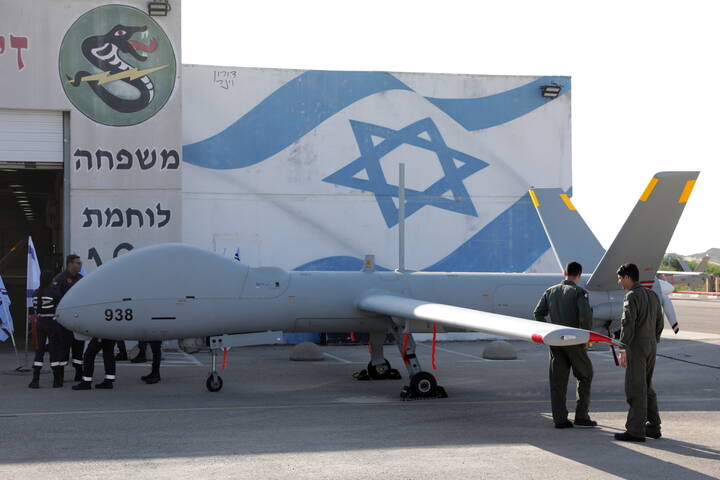
There is a doctrinal logic at work here that deserves careful theoretical examination. The possession of extraordinary military capabilities tends over time to produce a cognitive shift in how decision makers perceive the world. What begins as a capacity for defense transforms gradually into an expectation that military force can and should be applied to a widening range of problems. The question shifts from whether to use force to which force to use and against whom. And because the United States has invested for decades in capabilities that are uniquely suited for certain kinds of warfare, particularly air campaigns employing precision guided munitions and unmanned systems, those capabilities come to define the universe of perceived policy options. When a president faces a foreign policy difficulty, the options that involve air strikes present themselves as administratively straightforward, requiring no large scale ground deployments, no allied coordination beyond the most basic level, and no significant risk of American casualties. The technological ease of modern warfare has made war seem simultaneously less costly and less consequential than it actually is.
This technological dimension introduces a profound asymmetry into strategic reasoning. American leaders can order strikes against targets across the globe with the expectation that the enemy cannot meaningfully retaliate against the American homeland. Cruise missiles launched from naval vessels in international waters, drones operated from bases in friendly countries, and stealth aircraft designed to evade the most sophisticated air defense systems all contribute to an operational environment in which the United States can inflict massive destruction while incurring negligible immediate risk. This asymmetry has a corrupting effect on strategic judgment. When the costs of action appear trivial and the costs of inaction appear to include the possible erosion of deterrence credibility or the appearance of presidential weakness, the rational calculation tilts heavily toward action. The big red button on the presidential desk, as one observer aptly characterized it, becomes nearly impossible to resist pushing when aides describe a problem and note that pushing the button would demonstrate resolve and might produce a positive outcome while the risks appear modest.
The deeper theoretical problem is that this pattern of behavior has become self reinforcing in ways that make escape increasingly difficult. Each use of force, regardless of its strategic outcome, reinforces the institutional expectation that future challenges will be met kinetically. The military services develop plans and refine techniques. The intelligence community produces target lists and assessments. The legal apparatus generates justifications and finds precedents. The media covers the strikes as dramatic news events. And the foreign policy establishment, having been socialized into this way of thinking, regards skepticism about the efficacy of force as naiveté rather than wisdom. A president who genuinely wished to break the cycle would need to resist not merely the immediate pressures of a particular crisis but the accumulated weight of an entire national security bureaucracy organized around the proposition that American power means American bombs.
The situation is further complicated by the contemporary condition of the international order that the United States constructed after World War Two. That order is now in what might be called a terminal interregnum, a period in which the old structures of liberal hegemony are visibly dying while whatever will replace them has not yet been born. The United States built after 1945 a system of alliances, trade relationships, and international institutions that reflected American values and advanced American interests. That system delivered an unprecedented era of great power peace, prosperity, and democratic expansion. But it is now under assault from multiple directions. Revisionist powers like China and Russia seek to overturn its rules and replace them with arrangements more favorable to autocratic governance and territorial aggrandizement. The global south increasingly resents what it perceives as Western hypocrisy and domination. And the United States itself, the system primary guarantor, has grown weary of the burdens of leadership and skeptical of the liberal ideologies that justified its global role.
Three possible futures present themselves in this interregnum period, and each carries different implications for the American addiction to war. The first future is a bipolar competition reminiscent of the Cold War but with China rather than the Soviet Union as the principal adversary. In this scenario the world divides into two hostile blocs, one led by Washington and composed primarily of democratic allies, the other led by Beijing and including Russia and various autocratic fellow travelers. A second future sees the emergence not of two great blocs but of several regional spheres of influence, with the United States consolidating its dominance over the Western Hemisphere, China asserting primacy in East Asia, Russia reclaiming its near abroad, and additional powers like India, Turkey, and Iran carving out their own domains. A third future, darker than the first two, is a descent into genuine anarchy in which no great power accepts responsibility for order maintenance and the international system reverts to a self help condition of constant competition and frequent conflict.
The American addiction to war will be a decisive factor in determining which of these futures actually arrives. In the bipolar scenario, the United States would need to demonstrate not merely military strength but also strategic restraint and a genuine commitment to the rule of law in order to maintain the cohesion of a democratic bloc. An America that bombed seven countries in a single year, that kidnapped foreign leaders, that tore up treaties and threatened its own allies would find it difficult to lead a coalition based on shared values. The addiction works directly against the requirements of bipolar competition because it signals to potential partners that American power is unpredictable and potentially predatory. The second scenario, spheres of influence, would require a different kind of discipline, namely the willingness to tolerate the domination of other regions by other great powers in exchange for recognition of American hegemony in the western hemisphere. Yet the American compulsion to intervene militarily on a global scale, to strike at threats wherever they emerge regardless of geographic distance or strategic priority, makes such a disciplined retreat from global engagement nearly impossible to imagine. The United States has demonstrated again and again that it cannot resist the urge to involve itself in conflicts far from its shores.
The third scenario, the anarchic self help world, is the one most compatible with the current trajectory of American war addiction precisely because it requires no restraint at all. In a world without ordering principles, where every state looks after its own security and no great power accepts responsibility for the system as a whole, the American habit of reaching for military force becomes merely one more expression of the general condition. The danger is that this scenario is also the most destructive, not only for the United States but for the entire international community. An anarchic great power system, as the centuries before the American era amply demonstrated, produces arms races, territorial conquests, economic warfare, and eventually catastrophic conflicts. The interregnum between the British dominated nineteenth century and the American dominated twentieth century produced two world wars and a global depression. There is little reason to believe that a transition away from American hegemony would be any less violent.
What makes the current moment particularly treacherous is that the addiction to war has become so thoroughly institutionalized that it no longer requires conscious decision making to sustain itself. The national security bureaucracy churns out plans and options. The congressional appropriations process funds weapons systems designed for conflicts that have not yet been imagined. The defense industrial base employs millions of workers whose livelihoods depend on continued military spending. The military services promote officers who demonstrate operational competence in combat. The think tanks produce threat assessments that justify further military expansion. The news media covers each new strike as a dramatic story. The entire apparatus moves forward under its own momentum, and presidents who ride atop it find themselves carried along whether they wish to go or not.
The theoretical lesson that emerges from this analysis is that strategic addiction can take root in even the most sophisticated national security establishments when the institutional arrangements that enable war become decoupled from the political costs that historically restrained war. The United States has created a system in which a president can order military action with minimal congressional oversight, no immediate tax increase, no draft notice for the voters children, no meaningful risk of retaliation against the homeland, and a supportive press corps that frames each strike as a demonstration of strength. That system will produce wars regardless of who occupies the Oval Office or what they promised during their campaign. The addiction is not a matter of individual psychology or partisan ideology. It is a structural feature of how the American national security state has been organized and incentivized over decades of continuous operation.
There is no easy escape from this condition. The constitutional separation of powers could be restored if Congress were willing to reclaim its war making authority, but the same political incentives that led Congress to abdicate that authority in the first place, the desire to avoid responsibility for difficult decisions, continue to operate. The fiscal constraint could be reestablished if presidents were required to raise taxes to fund military operations, but no politician has shown any appetite for such a proposal. The all volunteer force could be replaced by conscription, thereby spreading the human costs of war across the broader society, but the political opposition to reinstating the draft is overwhelming. The military industrial complex could be dismantled, but the economic disruption would be severe and the security risks uncertain. The technological asymmetry could be reduced if adversaries developed equivalent capabilities, but the country would be unlikely to celebrate such a development.
The most honest conclusion, therefore, is that the United States will likely remain addicted to war for the foreseeable future. The structural and institutional arrangements that sustain this addiction are deeply embedded in the American political economy and national security culture. They have proven resistant to reform across multiple presidencies and multiple generations. They will continue to produce military interventions regardless of which party controls the White House or what strategic doctrines the administration nominally embraces. The interregnum period will be navigated not by a reformed and restrained America but by the same compulsive, kinetic, trigger happy superpower that has been bombing its way through the post Cold War world for three decades. Whether the final destination is bipolar competition, multipolar spheres, or anarchic chaos will depend on factors beyond the addiction itself, but the addiction will shape every step of the journey. The bombs will keep falling. The presidents will keep pushing the button. And the deeper question of why the most powerful nation in human history cannot stop fighting will remain unanswered not because the answer is unknowable but because knowing it would require confronting truths that the American political system is not yet prepared to face.