For much of the twentieth century, the Holy See was treated by realist foreign policy analysts as a historical curiosity, a relic of medieval Christendom whose moral pronouncements could be safely ignored wherever they did not align with national interest. The famous Stalinist quip about papal divisions captured a deep assumption of secular power as that authority without coercive capacity is ultimately decorative. What that assumption missed, and what the pontificate of John Paul II temporarily corrected, is that moral authority generates its own form of power by organizing consent, delegitimizing rulers, and reshaping the domestic political calculations of even the most powerful states.
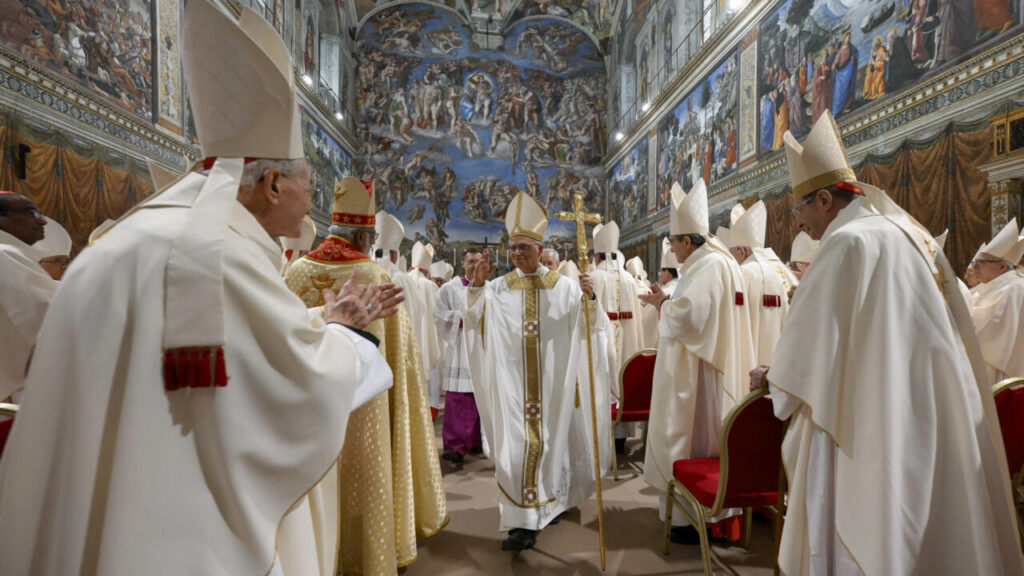
The election of the first American pontiff, Pope Leo XIV, has returned this question to the center of geopolitical analysis. Unlike his predecessors, who largely confined direct political intervention to relatively narrow diplomatic channels or regional conflicts with clear Catholic constituencies, Leo has adopted a strategy of public, almost theatrical confrontation with the sitting administration of the United States, a country that happens to be both his country of origin and the world’s sole military superpower. His statements on the war in Iran, his condemnation of immigration enforcement tactics that include church raids, and his explicit mobilization of American Catholic voters have provoked accusations of improper interference from senior administration officials. Those accusations are not merely rhetorical; they reflect a genuine uncertainty within the foreign policy establishment about how to categorize, counter, or accommodate an actor that operates simultaneously as a state, a transnational religious bureaucracy, and a moral jurisdiction without territorial limits.
This paper argues that the Vatican’s current political interventions cannot be understood through the standard toolkit of either soft power or hard interference. Instead, what the Holy See practices under Leo XIV is a form of structural moral leverage, a deliberate exploitation of the gap between domestic political polarization and the universal claims of Catholic social teaching. By addressing Catholic voters directly, bypassing both national governments and the traditional episcopal hierarchy when convenient, the pope has discovered that the very features which make his office weak in military terms make it exceptionally strong in a fractured information environment. The question is whether this strategy strengthens or further destabilizes the already crumbling norms of non-interference in the internal affairs of sovereign states.
The Historical Precedent and Its Limits
To understand the current controversy, one must first abandon the notion that Vatican political engagement is a departure from tradition. The Holy See has never accepted the Westphalian principle that spiritual authority must be confined to the private sphere. From the Investiture Controversy of the eleventh century to the Concordat of 1929 with Mussolini, the papacy has consistently argued that its jurisdiction extends to matters of justice, war, and the treatment of the human person regardless of the temporal sovereign in question. What changed in the nineteenth and twentieth centuries was not Vatican ambition but the capacity of nation-states to enforce exclusive territorial authority.
The downfall of European communism in 1989 remains the most cited example of effective Vatican political interference, and it is worth revisiting in some detail because it reveals the mechanisms that Leo is now redeploying. John Paul II did not call for the overthrow of the Polish regime by name. Instead, he traveled to Poland, celebrated open-air masses attended by millions, and announced that the country must be “transformed by the force of the Gospel.” Those words, spoken in the context of a state-controlled press that could not censor the pope without provoking international outrage, created a parallel public sphere in which Solidarity activists could organize with implicit ecclesiastical protection. The Soviet leadership understood perfectly well what was happening. The KGB’s files show extensive debates about whether to assassinate the Polish pope or to invade Poland to prevent the collapse of communist authority. In both cases, the costs were deemed prohibitive precisely because any violent response to the pope would have triggered a crisis across the Catholic-majority Warsaw Pact.
The relevance of this history to the current moment is that the Trump administration faces a structurally similar dilemma. The pope is an American citizen (by birth, though his Vatican citizenship now supersedes it) who enjoys diplomatic immunity as a head of state and commands the personal loyalty of fifty-three million adult Catholics in the United States. Any aggressive action against the Vatican, whether visa restrictions on curial officials, tariffs on Italian goods imported for Vatican use, or formal downgrading of diplomatic relations, would be perceived by a substantial portion of the American electorate as an attack on the church itself. The White House understands this, which is why the public response has so far been limited to social media broadsides and informal diplomatic protests, while more potentially consequential actions remain under study.
The Interference Framework: Legal and Political Ambiguity
The accusation of “interference” carries specific weight in international law. The 1970 Declaration on Principles of International Law Friendly Relations (United Nations General Assembly Resolution 2625) prohibits states from intervening in matters within the domestic jurisdiction of other states, including the right of each state to choose its own political, economic, and social system without external coercion. The Holy See is a permanent observer state at the United Nations, and while it is not a party to all relevant treaties, its diplomatic status implies a reciprocal obligation to respect the sovereignty of the states with which it maintains relations.
The difficulty is that the pope’s statements rarely rise to the level of direct incitement or material support for political opposition. When Leo tells American Catholics to contact their congressional representatives and “work for peace and reject war,” he is doing something that the United States government itself does in its own domestic political process. The First Amendment protects the right of religious leaders to advocate for policy positions. The question is whether the transnational character of the pope’s office transforms that advocacy into something akin to foreign electioneering. No American court has ever ruled on whether a foreign head of state who is also a religious leader violates federal campaign finance or foreign agent registration laws by urging citizens to vote in a particular direction. That legal uncertainty is itself a form of political cover.
More fundamentally, the concept of interference presumes a baseline of legitimate national authority that may no longer exist. A government that conducts a war without a congressional declaration, authorizes immigration raids on houses of worship, and deploys images of its leader as a messianic figure has already stretched the norms of democratic governance. When the Vatican points out these deviations from Catholic teaching, it is not necessarily intervening from outside the political community. It is speaking to its own members within that community, telling them that their religious obligations may conflict with their civic duties. That tension is the oldest political problem of Christian political theology, and no sovereign has ever resolved it entirely in the state’s favor.
Case Study One: Iran and the Catholic Just War Tradition
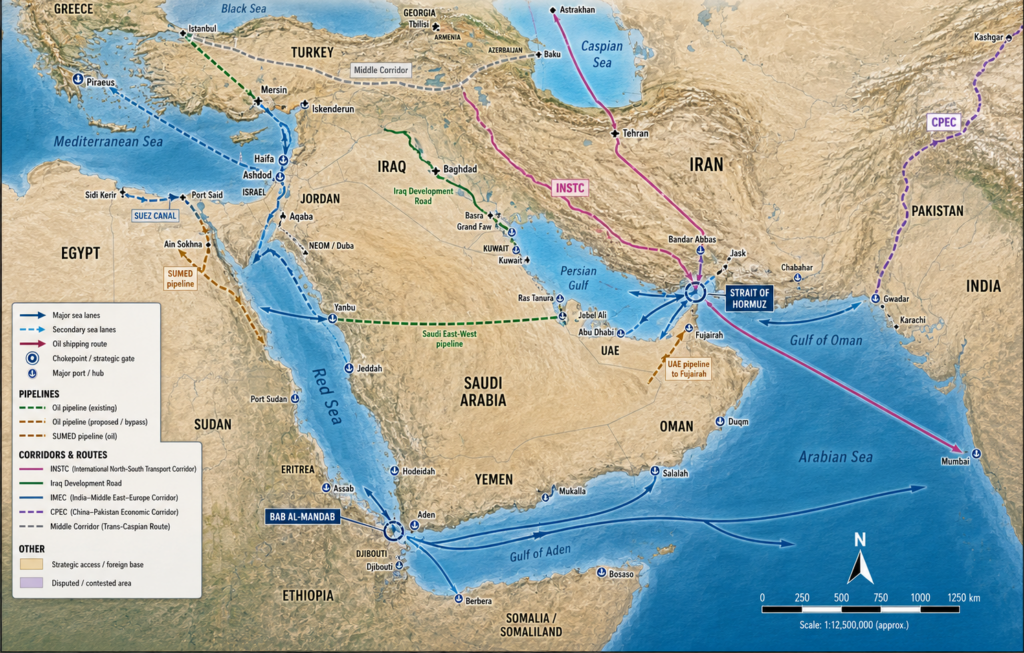
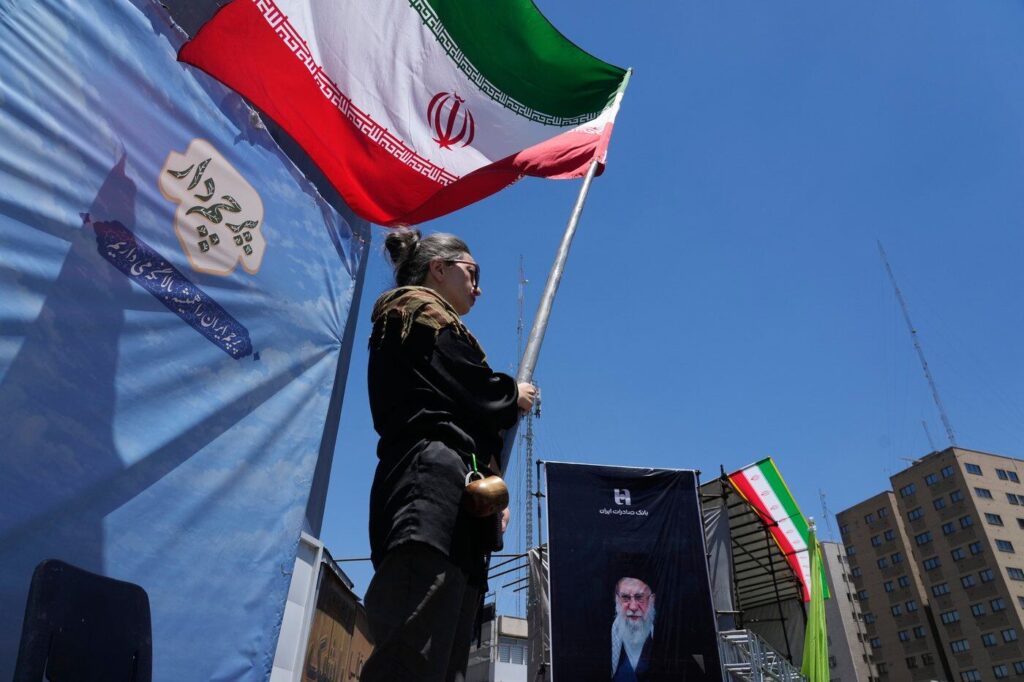
The most acute current conflict involves the war in Iran. Unlike the wars in Iraq and Afghanistan, which divided Catholic opinion along partisan lines with substantial conservative support for the initial invasions, the conflict with Iran has received unusually high-level Vatican criticism from its outset. The reasons are structural rather than merely personal to Leo. Iran retains a recognized Christian minority, including a Chaldean Catholic archdiocese in Tehran, and any large-scale military campaign in Iranian territory would put those communities at direct risk of reprisal or displacement. Moreover, the collapse of the Joint Comprehensive Plan of Action and the subsequent failure of any diplomatic framework has left the Vatican as one of the few entities with open channels to both Washington and Tehran.
The Vatican’s position is not pacifist in the absolute sense. The Catechism of the Catholic Church permits recourse to military force under strict conditions: just cause, competent authority, right intention, last resort, proportionality, and reasonable hope of success. Leo’s argument, articulated during his Africa trip news conference, is that these conditions have not been met because diplomatic avenues have not been exhausted. The administration’s counterargument, as framed by Vice President Vance, is that regime change in Tehran is a legitimate strategic objective and that the just war tradition permits preemptive action against an imminent threat. This is not a disagreement about the existence of moral constraints on war. It is a disagreement about the facts on the ground and who has the authority to interpret them.
What makes this a case of political intervention rather than abstract moral teaching is the targeted audience. The pope explicitly asked American Catholics to pressure their representatives in Congress, a body that retains constitutional authority over war declarations even if that authority has been systematically bypassed in practice. The Vatican knows that the congressional swing vote on further war funding or an authorization for use of military force could come from Catholic Democrats and a handful of Catholic Republicans in marginal districts. By mobilizing parish networks and diocesan advocacy offices, the Holy See can translate moral principle into concrete legislative pressure. Whether one calls that democracy or interference depends entirely on one’s view of whether religious institutions should exercise political power in a pluralist system.
Case Study Two: Immigration and the Clash of Jurisdictions
The second major arena of Vatican intervention is United States immigration enforcement, specifically the administration’s policy of conducting raids in and around Catholic churches, schools, and hospitals. From a legal perspective, these raids are defensible: the Immigration and Customs Enforcement agency has the statutory authority to enforce removal orders anywhere in the United States, and there is no blanket ecclesiastical exemption to federal law. From a theological perspective, however, the raids represent an unacceptable violation of church autonomy because they directly interfere with the administration of the sacraments and the pastoral mission of providing material aid to the vulnerable.
The Vatican’s response has gone beyond public statements. Dioceses in heavily Hispanic areas have established rapid-response networks that include legal observers trained to document enforcement actions, secure communications channels for reporting the presence of ICE agents, and in some cases physical shelters that are opened only after the conclusion of Sunday Mass to avoid the legal definition of harboring. These activities operate in a gray zone between religious exercise and civil disobedience. The Department of Justice has not yet prosecuted any bishop or parish for obstruction of justice, but legal scholars note that the statutory language of 8 U.S.C. 1324 could be read to criminalize the provision of material support to undocumented persons even when that support takes the form of a Mass or a meal.
The deeper issue is jurisdictional. The Catholic Church claims the authority to define sanctuary in a way that supersedes state immigration law. This claim is not new; the medieval concept of church asylum was recognized in canon law for centuries and only fully extinguished by European nation-states in the early modern period. The modern revival of sanctuary movements in the United States, from the 1980s Central American refugee crisis to the present, has never been definitively resolved by the courts. The Trump administration’s escalation of enforcement has effectively forced the question. If the Vatican instructs its priests to refuse cooperation with ICE and to actively hide persons subject to removal, and the federal government responds by arresting priests or seizing church property, the resulting confrontation would be the most serious church-state conflict in American history.
The Global South Dimension: Africa, Asia, and the Limits of Western Framing
Any analysis that focuses exclusively on Vatican interference in the United States misses the broader geopolitical picture. Pope Leo’s eleven-day trip to Africa, which concluded immediately before his latest round of statements on the Iran war, was not a detour from the main event. It was a strategic reorientation of the church’s center of gravity toward the continents where Catholicism is growing rather than shrinking. Sub-Saharan Africa now accounts for nearly a quarter of the world’s Catholics, with projected growth to one third by 2050. The political implications of this demographic shift are only beginning to be understood.
In Equatorial Guinea, the pope’s condemnation of capital punishment was not directed at a distant Western government but at a regime that uses execution as a routine tool of political control. The Obiang government, which has ruled since 1979, maintains formal diplomatic relations with the Holy See, but those relations have been strained for years by the regime’s human rights record. Leo’s public statement, delivered on the tarmac of Malabo airport with state television cameras recording, was a deliberate humiliation of the regime. It also served as a signal to other African autocrats that the Vatican will no longer prioritize diplomatic niceties over prophetic witness.
In the Philippines, the Vatican is watching the aftermath of the International Criminal Court’s confirmation of charges against former President Rodrigo Duterte with particular attention. The Philippine church was one of the most vocal critics of Duterte’s drug war, with bishops excommunicating police officers involved in extrajudicial killings and offering sanctuaries for suspected drug users targeted by death squads. Now that the ICC has taken up the case, the Vatican faces a choice about whether to publicly support the court’s jurisdiction over Duterte, a Catholic who continues to enjoy substantial popular support. Quiet Vatican intermediaries have reportedly been in contact with both the Philippine government and the court, offering to facilitate testimony from church witnesses who documented killings. This is interference by any definition, but it is interference in the service of international criminal accountability, which complicates any simple narrative of Vatican overreach.
The Chinese Question: The Unresolved Frontier
No discussion of Vatican political influence is complete without addressing the relationship with China, which remains the most consequential and unresolved frontier of papal diplomacy. The Holy See and the People’s Republic of China do not have full diplomatic relations, but they have maintained a complex modus vivendi since the 2018 provisional agreement on bishop appointments. The agreement, renewed in 2022 and again in 2025, gives the Vatican a voice in the selection of China’s underground and state-sanctioned bishops in exchange for Chinese acceptance of papal confirmation.
Critics of the agreement, including senior cardinals who have since been reassigned, argue that the Vatican has effectively abandoned the underground church to secure marginal influence over the state-sanctioned Chinese Catholic Patriotic Association. Defenders argue that the alternative is a complete schism in which China produces its own rival pope, as occurred with the Chinese Catholic Patriotic Church in the 1950s. Pope Leo has so far maintained the agreement, but his public statements on religious freedom have been notably more explicit than those of his predecessor. During a private audience with Chinese officials in Rome last year, according to diplomatic sources, Leo raised the case of detained underground bishops by name and demanded their release.
The Chinese response to Vatican interference, when it comes, will be far more consequential than anything the Trump administration can threaten. China does not negotiate on sovereignty. If the Vatican pushes too hard on religious freedom, Beijing can simply expel the papal nuncio, arrest the underground bishops, and declare the bishop appointment agreement null and void. The result would be the first complete rupture between Rome and Beijing since the establishment of the People’s Republic. The Vatican’s calculation, apparently, is that the long-term growth of the Chinese Catholic community (estimates range from eight to twelve million, split between state-sanctioned and underground churches) is worth the short-term risk of confrontation. That calculation assumes that Beijing will continue to tolerate a degree of Catholic autonomy for social stability reasons. In the current climate of heightened nationalist mobilization, that assumption may prove optimistic.
The Structural Leverage of Papal Communication
One of the most underappreciated aspects of Vatican political influence is the communication infrastructure that supports it. The Holy See maintains its own satellite television network, its own news agency (Fides), its own multilingual radio service (Vatican Radio), and a suite of social media accounts that reach tens of millions of followers in multiple languages. During the Africa trip, Pope Leo’s aircraft press conferences were live-streamed on the Vatican’s YouTube channel to an audience that averaged three million concurrent viewers. That is a larger live audience than any cable news network commands for its primetime programming.
This communication capacity matters because it allows the Vatican to set the terms of debate without going through national media filters. When the pope speaks about the Iran war from the airplane, his words reach Catholic parishes, lay movements, and religious orders directly within hours. The United States Conference of Catholic Bishops can then amplify those messages through its own diocesan networks. The result is a coordinated public opinion campaign that crosses national borders and denominational lines. No other religious institution on earth has this capability. No other state, for that matter, has a leader whose words are translated into fifty languages and transmitted to every continent within a day of utterance.
The architecture of this communication system is not accidental. The Vatican invested heavily in digital infrastructure during the late papacy of Benedict XVI and the entirety of Francis’s pontificate, recognizing that traditional print media and even broadcast television were losing their agenda-setting power. Pope Leo has accelerated that investment, hiring a communications team that includes veterans of American political campaigns and European Union media operations. The result is a lean, responsive, and strategically agile operation that can shift messaging from the pastoral to the political in a matter of hours.
The Theoretical Implication: Rethinking Non-Interference
For think tanks and foreign policy analysts trained in the realist tradition, the Vatican’s current posture presents a theoretical challenge that cannot be resolved by simply reclassifying it as an instance of soft power. Soft power, in Joseph Nye’s formulation, is the ability to influence others through attraction rather than coercion. The Vatican certainly possesses soft power, but it also possesses something harder: the ability to organize domestic political constituencies against their own governments using a transnational moral framework.
This is more accurately described as transnational moral leverage*. The Vatican identifies a policy domain in which Catholic teaching is clear and government practice is in violation of that teaching. It then activates its communication networks to inform Catholic voters of the conflict, provides them with the theological resources to resolve that conflict in favor of the church’s position, and encourages them to act politically on that resolution. If sufficient numbers of Catholic voters do so, the government faces a choice between policy change and political loss. No military force is threatened. No material sanctions are imposed. But the coercive effect is real because democratic governments depend on electoral majorities.
The legitimacy of this mechanism turns on one’s theory of democratic representation. If voters are understood as autonomous individuals who choose their political preferences based on a variety of influences (including religious beliefs), then Vatican political messages are simply one more input into the democratic process. If, however, voters are understood as bound by a hierarchical religious authority that purports to speak with divine sanction, then Vatican messages are qualitatively different from those of, say, a labor union or a business association because dissent from those messages carries spiritual consequences, including the possibility of excommunication or denial of the sacraments.
This is the core of the interference accusation. The pope is not just another advocacy group. He is the head of a church that claims the authority to bind consciences in matters of faith and morals. When he speaks on war or immigration, millions of Catholics believe themselves obligated to follow his teaching under pain of sin. That obligation is not legally enforceable, but it is socially and psychologically real. A foreign leader who can impose moral obligations on the citizens of another sovereign state is exercising a form of authority that the Westphalian system was designed to exclude.
The Future of Papal Political Power
The trajectory of Vatican political influence under Pope Leo XIV is unlikely to reverse in the near term. Demographic trends favor the church in the Global South, where political leaders are often more receptive to religious authority than their secularized European and North American counterparts. The collapse of the liberal international order, which once provided a framework of multilateral institutions that could contain or channel Vatican interventions, has created a vacuum that moral authority naturally fills. And President Trump’s confrontational style, far from intimidating the pope, has given Leo an opportunity to position himself as the defender of norms that the administration is systematically violating.
The greatest risk for the Holy See is that its interventions become so closely associated with opposition to the Trump administration that the next American president, whether Democratic or Republican, treats the Vatican as a partisan actor rather than a moral authority. Pope Leo has attempted to mitigate this risk by appointing conservatives to key Vatican positions, including the continuing service of Ambassador Burch at the Holy See, and by making statements on abortion and marriage that align with Republican positions. Whether this balancing act will survive the intensity of the Iran war debate is an open question.
For sovereign states, the lesson of the current moment is that the old assumption of religious irrelevance is dangerous. The Vatican is not a great power in the traditional sense, and it will never command divisions or aircraft carriers. But it does command attention, loyalty, and a communication network that penetrates every country on earth. In an era of fractured governance and weakening multilateral institutions, those assets may matter more than the ability to drop bombs or impose sanctions. The next administration, regardless of its party, will have to decide whether to engage the Vatican as a partner, contain it as a rival, or ignore it at its own political peril. The one option that is no longer available is the option of treating the Holy See as a marginal irrelevance. Stalin’s question was never answered because it was the wrong question. The proper question is not how many divisions the pope has but how many consciences he moves. The current American administration is learning that the answer to that question is a very large number indeed.