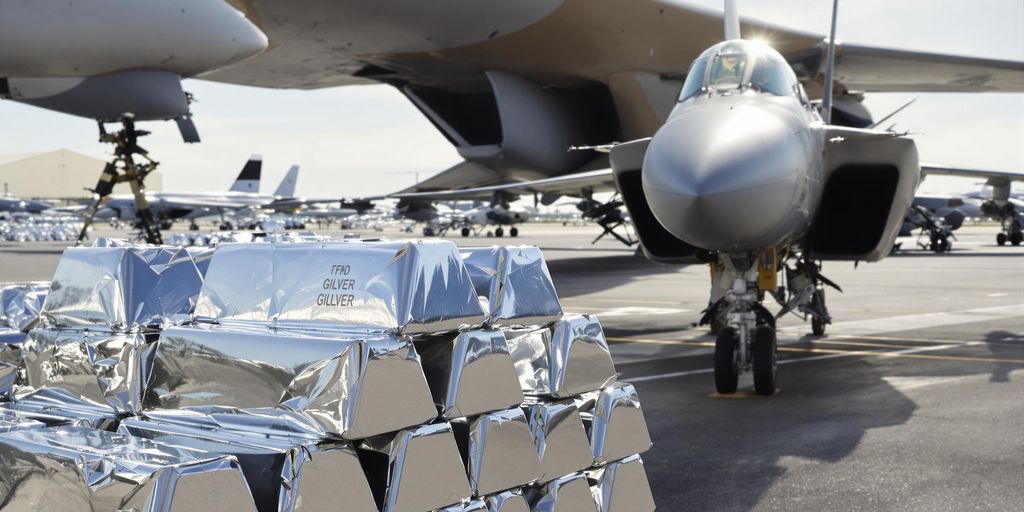
Modern military power depends on an intricate web of materials that extend far beyond the familiar categories of steel, aluminum, and titanium. The ability to design, produce, and sustain advanced weapon systems now rests on access to a diverse portfolio of ores, refined metals, specialty alloys, high-performance polymers, ceramics, and electronic compounds. This analysis expands the conventional focus on structural metals to encompass the full spectrum of militarily relevant materials, from bauxite and coltan to gallium nitride and synthetic diamond. It argues that the decisive strategic competition of the coming decade will not be fought over platform designs alone but over control of processing capacity, certification infrastructure, and circular supply chains.
More than forty distinct material families now qualify as strategically significant for defense purposes. They range from mass materials such as steel and aluminum, which dominate tonnage and repairability, to performance-enabling materials such as nickel superalloys and carbon fiber, and finally to low-volume but irreplaceable chokepoint materials including rhenium, hafnium, dysprosium, and high-purity graphite. The binding constraints in nearly every case are not geological scarcity but downstream processing bottlenecks: titanium sponge production, rare-earth oxide separation, superalloy powder atomization, and the painfully slow process of material qualification for flight and combat.
What follows is a systematic examination of these material families organized by their functional roles in defense systems. Each section covers the material’s military applications, its supply chain vulnerabilities, recent geopolitical developments, and the strategic implications for alliance industrial policy.
Part one: Ores and mineral concentrates – the upstream foundation
Every advanced alloy and electronic compound begins as an ore or mineral concentrate. Defense planners must therefore understand not only the refined materials but also the geological and geopolitical characteristics of their raw sources.
Bauxite, the primary ore for aluminum, is found in abundant quantities globally, but its transformation into high-purity alumina and then into aerospace-grade aluminum requires substantial energy and specialized refining capacity. China has built an overwhelming position in alumina refining, while the United States imports most of its bauxite from Australia, Brazil, and Guinea. The strategic risk lies not in bauxite availability but in the concentration of refining capacity.
Chromite, the sole commercial source of chromium, is essential for stainless steels and armor-grade alloys. South Africa and Kazakhstan together account for more than seventy percent of global chromite production, and the United States imports nearly all of its chromium requirements. The absence of domestic chromite mining creates a long-term dependency that no amount of stockpiling can fully mitigate.
Columbite-tantalite, commonly known as coltan, is the principal ore for tantalum and niobium. Tantalum capacitors are found in nearly every military electronic system, from radios to missile guidance packages. Niobium is used in superalloys and high-strength low-alloy steels. The Democratic Republic of the Congo holds a significant portion of global tantalum reserves, and supply chains from central Africa remain vulnerable to political instability, artisanal mining practices, and conflict mineral regulations. Brazil and Canada provide more stable sources but at lower volumes.
Wolframite and scheelite are the two tungsten ores, with wolframite generally yielding higher-grade concentrates. Tungsten is indispensable for kinetic energy penetrators, counterweights, and high-speed tool steels. China dominates both mining and refining, producing more than eighty percent of global tungsten concentrates. Scheelite deposits in Portugal, Austria, and the United Kingdom offer potential for allied diversification, but the refining capacity outside China remains limited.
Bastnäsite and monazite are the two dominant rare-earth ores. Bastnäsite, which is mined at California’s Mountain Pass facility and at China’s Bayan Obo deposit, contains primarily light rare earths such as neodymium and praseodymium. Monazite, found in Australian, Indian, and Brazilian beach sands, contains both light and heavy rare earths but also carries thorium, which creates radioactive byproduct streams that complicate permitting and processing. The strategic asymmetry is stark: China has built the capacity to process both ore types at scale, while allied nations are still constructing their first full separation facilities.
Lateritic nickel ore, which is mined extensively in Indonesia and the Philippines, has become an increasingly important source of nickel for the stainless steel and battery industries. However, laterite processing typically produces nickel pig iron or mixed hydroxide precipitate rather than the high-purity class one nickel required for superalloys. This distinction matters because military jet engines and gas turbines cannot use lower-grade nickel feedstocks.
Pyrochlore, the primary ore for niobium, is overwhelmingly concentrated in Brazil, which controls approximately ninety percent of global niobium mining. The strategic significance of niobium lies in its use as a microalloying element in high-strength steel pipelines and as a component in nickel superalloys and refractory alloys.
Spodumene is the most common hard-rock lithium ore, with significant deposits in Australia, North Carolina, and Canada. Brine operations in South America’s lithium triangle produce lithium carbonate at lower cost but with longer evaporation cycles. Military demand for lithium is driven by the proliferation of unmanned aerial vehicles, portable electronics, and silent watch batteries, not by electric vehicle batteries, although competition from the commercial sector will affect prices and availability.
Part two: Structural metals and alloys for air, land, sea, and space
Steel remains the most widely used military material by tonnage, and its strategic importance should not be dismissed because the technology is mature. Modern armor steels, including rolled homogeneous armor and high-hardness variants, are carefully alloyed with manganese, chromium, molybdenum, nickel, and vanadium to achieve the precise combination of hardness, toughness, and weldability required for vehicle and ship protection. High-speed steels containing tungsten and molybdenum enable machining of the very alloys described elsewhere in this analysis, creating a circular dependency that is rarely acknowledged. The recent NATO trials that demonstrated ferrovanadium-alloyed armor steel stopping thirty-millimeter armor-piercing rounds at fifty percent less weight than conventional armor represent a genuine advance, but the real strategic vulnerability remains the supply of ferroalloys themselves. Manganese, chromium, molybdenum, and vanadium are all produced from ores that are geographically concentrated, and the United States lacks domestic refining capacity for several of them.
Aluminum alloys, especially the two-thousand series aluminum-copper alloys and seven-thousand series aluminum-zinc-magnesium-copper alloys, have been the backbone of military aircraft structures for decades. The development of aluminum-lithium alloys such as two-thousand one hundred ninety-five and two-thousand fifty reduces density while increasing modulus, making them attractive for missile airframes and spacecraft. The deeper strategic development, however, involves aluminum-scandium alloys. Scandium, when added to aluminum in concentrations of just one-tenth to one-half of one percent, produces dramatic grain refinement and precipitation strengthening. The resulting alloys have begun replacing both conventional aluminum and titanium components in United States Department of Defense systems because they offer higher strength-to-weight ratios than conventional aluminum and, in some applications, competitive performance with titanium at lower density. The Pentagon’s investments in domestic scandium production, including the Elk Creek Resources project in Nebraska, reflect a recognition that scandium is no longer a laboratory curiosity but a fielded material. The challenge is that scandium is almost never mined as a primary product; it is recovered as a byproduct of rare-earth or uranium processing, and the economics are marginal without defense subsidies.
Magnesium alloys, the lightest structural metals, have received renewed attention for applications requiring extreme weight reduction. The German-developed WEZ alloys, containing gadolinium, yttrium, and zinc, have demonstrated ballistic impact resistance against 7.62-millimeter steel-core projectiles, making them viable for man‑portable armor and vehicle components where every kilogram matters. The strategic limitation is magnesium’s high reactivity and flammability, which complicate both production and battlefield survivability. The global magnesium smelting industry is dominated by China, which uses a ferroalloy process that is energy-intensive but low-cost. Allied producers in Europe and North America cannot compete without trade protection or continuous defense procurement commitments.
Part three: Propulsion and high-temperature materials
The thermal efficiency and thrust-to-weight ratio of military gas turbine engines are ultimately limited by the materials available for turbine blades, vanes, discs, and combustors. Nickel-based superalloys remain the foundation of propulsion supremacy, with alloy systems such as Inconel 718, Waspaloy, and the single-crystal René and CMSX families operating at temperatures approaching ninety percent of their melting points. The microstructural source of their strength is the gamma-prime precipitate phase, a nickel-aluminum intermetallic that coherently precipitates within the nickel matrix. Alloying additions of cobalt, chromium, molybdenum, tungsten, tantalum, titanium, and hafnium serve to strengthen the matrix, stabilize the precipitates, and resist oxidation and corrosion. Rhenium, which is among the rarest of the stable elements, is added to the highest-performance single-crystal alloys because it slows diffusion and allows the alloy to retain strength at temperatures where other superalloys begin to soften. Approximately seventy-five percent of global rhenium production goes into superalloys, and rhenium is almost exclusively recovered as a byproduct of molybdenum and copper mining. The absence of any single mine or refinery would not be catastrophic, but the cumulative fragility of a supply chain that depends on byproduct recovery from politically unstable regions should concern defense planners.
The processing chain for nickel superalloys is as strategic as the alloys themselves. Vacuum induction melting, vacuum arc remelting, powder atomization, hot isostatic pressing, directional solidification, single-crystal casting, and thermal barrier coating deposition are all specialized capabilities that cannot be created quickly. A country may have ample nickel, cobalt, and chromium but still lack the ability to produce a certified turbine disk if it has not invested in the full processing ecosystem. The Defense Logistics Agency’s focus on superalloy revert—recycled scrap from manufacturing and retired engines—reflects an understanding that the existing stock of high-value alloys is a strategic asset that must be recovered and reused rather than discarded.
Titanium alloys occupy the middle ground between aluminum and nickel superalloys. Ti-6Al-4V accounts for the majority of titanium used in military airframes, but beta alloys such as Ti-5553 and Ti-10V-2Fe-3Al offer higher strength and better forgeability for landing gear and bulkhead applications. Titanium’s corrosion resistance makes it essential for naval applications, including seawater systems and submarine components, where dissimilar metal corrosion would quickly destroy aluminum or steel. The material’s strategic vulnerability is titanium sponge—the porous, unconsolidated form of titanium produced by the Kroll process. The United States has only one operational titanium sponge producer, a facility in Utah with an annual capacity of five hundred tonnes. In 2023, the United States imported forty-two thousand tonnes of titanium sponge. Without domestic sponge capacity, declarations of titanium independence are meaningless. The problem is compounded by the fact that titanium sponge production generates large volumes of chlorine and requires continuous operation to be economic; restarting idle capacity takes months, not weeks.
Part four: Emerging alloy systems and the high-entropy frontier
The traditional paradigm of alloy design—one principal element with minor additions—is being challenged by the concept of high-entropy alloys and complex concentrated alloys. These materials combine multiple principal elements in roughly equal atomic proportions, creating a disordered solid solution that can offer unusual combinations of strength, ductility, thermal stability, and radiation resistance. Refractory high-entropy alloys based on niobium, molybdenum, tantalum, tungsten, vanadium, titanium, hafnium, zirconium, and chromium are being investigated as potential successors to nickel superalloys for the most extreme environments, including hypersonic leading edges and nuclear propulsion systems.
The progress is no longer confined to laboratories. A study from the People’s Liberation Army Army Engineering University in 2025 demonstrated that cobalt-chromium-iron-nickel-copper high-entropy alloy liners for explosively formed projectiles produced penetrating velocities of 2,357 meters per second and achieved penetration depths of 41.5 millimeters into one-hundred-millimeter-thick steel armor. The crater diameters exceeded two hundred sixty percent of the charge caliber, representing a substantial improvement over conventional copper liners. This is not an isolated result; multiple research groups worldwide have confirmed that high-entropy alloys offer exceptional performance in high-strain-rate deformation and shaped-charge jet formation.
The United States Navy is actively funding high-entropy alloy development for hypersonic applications. A Small Business Innovation Research contract awarded to Quantum Ventura in 2025 explicitly integrates computational modeling, machine-learning-driven material discovery, additive manufacturing, and hot isostatic pressing densification to produce lightweight high-entropy alloys optimized for high-G hypersonic flight. The program aims to deliver alloys with superior high-temperature strength, oxidation resistance, and creep durability. Meanwhile, a cooperative research and development agreement between the Naval Surface Warfare Center and the University of Texas at Arlington is developing high-entropy alloy coatings for turbine engines and rocket nozzles, applying the materials as thermal barriers and wear-resistant layers rather than as bulk structural components.
The obstacles to military adoption remain substantial. Many refractory high-entropy alloys are too brittle at room temperature for practical use; they oxidize rapidly at elevated temperatures unless protected by coatings that themselves require further development; and the powder atomization and additive manufacturing parameters are not yet standardized. The most likely near-term pathway is not wholesale replacement of nickel superalloys but selective applications as coatings, inserts, thermal shields, and additively manufactured demonstrator parts. Even in these limited roles, however, high-entropy alloys represent the most significant change in alloy design philosophy since the development of precipitation-hardening superalloys in the 1940s.
Part five: Rare-earth permanent magnets and the electrification of warfare
The shift toward more electric aircraft, unmanned systems, precision-guided munitions, and advanced radar arrays has made rare-earth permanent magnets one of the highest-leverage material families in the defense industrial base. Neodymium-iron-boron magnets provide the highest energy product of any commercial magnetic material, enabling compact actuators, generators, and motors that would otherwise be impossible. Samarium-cobalt magnets, while less powerful, offer superior temperature stability and corrosion resistance, making them the preferred choice for demanding military environments.
The strategic geography of rare-earth magnets is grim. China controls approximately eighty-five to ninety percent of global rare-earth refining capacity and more than ninety percent of high-performance magnet production. The Bayan Obo deposit in Inner Mongolia contains vast reserves of bastnäsite, and China has spent three decades building an integrated industry that moves from ore to separated oxides to metal to alloy to magnet to finished component. No other country has achieved comparable vertical integration.
China’s export controls on rare earths have evolved from periodic restrictions to a permanent strategic instrument. In April 2025, Beijing introduced new licensing requirements for seven medium and heavy rare earths: samarium, gadolinium, terbium, dysprosium, lutetium, scandium, and yttrium. Six months later, the list expanded to include holmium, erbium, thulium, europium, and ytterbium, bringing the total number of restricted rare earths to twelve. The most pernicious element of the new controls is their extraterritorial reach: foreign-made products that contain or were made using Chinese equipment or material now require a Chinese export license, regardless of whether any Chinese company is party to the transaction. The stated approval timeline is sixty to one hundred twenty days, but industry sources report that applications for defense-related end uses are almost never approved.
The United States Department of Defense has responded with a series of investments aimed at building a mine-to-magnet supply chain. MP Materials, which operates the Mountain Pass mine in California, has received extensive support to expand its separation and magnet production capabilities. A ten-year neodymium-praseodymium off-take agreement between MP Materials and the Department of Defense, with an estimated value of $1.25 billion, is intended to provide demand certainty for domestic production. The Pentagon has also invested in recycling capacity, with Rare Resource Recycling receiving $5.1 million to recover magnet-grade rare earths from industrial scrap.
The European Union has moved in parallel through the RESourceEU Action Plan. The Commission will propose restrictions on exports of permanent-magnet scrap to keep secondary materials within the European economy, and will develop EU-level codes to track these material flows. The strategic goal is to have recycling meet approximately twenty percent of EU demand for rare-earth permanent magnets by 2030. The target is modest but achievable, and it represents a necessary complement to primary mining.
Part six: Electronic, optical, and quantum materials for sensing and communications
Gallium and germanium occupy a unique position in the defense materials hierarchy because they are not consumed in large quantities but are present in nearly every advanced sensor, radar, and communication system. Gallium, particularly in the form of gallium nitride, has displaced gallium arsenide for high-power and high-frequency applications because gallium nitride operates at higher voltage, higher temperature, and higher frequency while delivering five times the power density. Germanium is used in infrared optics for night vision and thermal imaging, and in high-speed transistors for satellite communications.
China’s control over gallium and germanium refining is nearly absolute. The country produces approximately ninety-eight percent of low-purity gallium and ninety-five percent of low-purity germanium, and has invested heavily in the zone-refining and crystal-growing capacity required for semiconductor-grade material. In 2025, China announced the indefinite suspension of gallium and germanium exports to the United States, directly targeting the supply chains that support F-35 radar systems, Javelin missile seekers, and countless other defense electronics. The suspension remains in effect as of this writing, and no credible short-term substitute exists.
The combination of gallium nitride on silicon carbide has become the new standard for high-power radar and electronic warfare systems. Recent product launches include seven-hundred-watt gallium nitride on silicon carbide radio frequency transistors for S-band radar systems, which are widely used for ground-based and naval air defense. The same technology is being deployed in electronic warfare jammers and long-pulse radar transmitters, where power handling directly affects operational effectiveness. Silicon carbide alone is also a strategic material: it is used as a substrate for gallium nitride, as a high-temperature semiconductor in power electronics, and as a ceramic armor material. Global silicon carbide wafer production capacity is expanding rapidly, but China is building capacity faster than the rest of the world combined.
Lithium’s military significance has grown alongside the proliferation of unmanned systems. New lithium-metal battery cells designed specifically for military drones exceed five hundred watt-hours per kilogram in energy density, delivering two to three times longer flight endurance than conventional lithium-ion cells. The United States Army is funding the development of one hundred percent silicon anodes for lithium-ion batteries that operate reliably at minus forty degrees Fahrenheit, addressing the longstanding problem of cold-weather battery performance. The geopolitical dimension of lithium supply is complex: Australia, Chile, China, and Argentina are the largest producers, with China controlling much of the refining capacity regardless of ore origin. The Inflation Reduction Act’s battery sourcing requirements have driven investment in domestic refining, but the gap between aspiration and operation remains large.
Platinum group metals—platinum, palladium, rhodium, iridium, and ruthenium—are used across military electronics as catalysts, electrical contacts, and thermocouple materials. Their most distinctive military application is in infrared signature suppression: platinum coatings on vehicle exhausts and engine components reduce thermal emissions, making vehicles less vulnerable to heat-seeking missiles. Rhenium, although not a platinum group metal, is often discussed alongside them because of its similar rarity and byproduct recovery economics. The global tungsten alloy market, which includes tungsten heavy alloys for penetrators and counterweights, was valued at $3.42 billion in 2024 and is projected to reach $5.92 billion by 2032, driven largely by military demand.
Beryllium offers exceptional specific stiffness and dimensional stability across extreme temperatures, making it essential for satellite structures, missile guidance components, and the optical benches that hold sensitive sensors in alignment. The global beryllium market was valued at 337 tons in 2025, a remarkably small volume for a material of such strategic importance. The small market size means that even modest defense purchases can absorb all available non-Chinese supply. Beryllium is also highly toxic, especially when machined, which limits the number of qualified processors.
Optical materials for multispectral military sensors represent a specialized but critical category. Zinc sulfide and zinc selenide are used for mid-wave and long-wave infrared windows and domes. Aluminum oxynitride, known as ALON, is a transparent ceramic that combines optical transparency from the ultraviolet to the mid-wave infrared with mechanical properties suitable for transparent armor. Spinel, or magnesium aluminate, offers extended transmission in the mid-wave infrared and is being evaluated for missile domes. Synthetic diamond, which has the highest thermal conductivity of any material, is being developed for high-power laser optics and for quantum navigation sensors that use nitrogen-vacancy centers to measure rotation and acceleration without satellite signals.
Part seven: Polymers, composites, and functional coatings
Carbon-fiber composites have become the enabling material for stealth, unmanned aircraft, and lightweight airframes because they combine high specific stiffness, fatigue resistance, and the ability to be molded into complex aerodynamic shapes. The strategic bottleneck is not the carbon fiber itself but the polyacrylonitrile precursor from which it is made. Japan and the United States remain the two major sources of aerospace-grade polyacrylonitrile, but China has been investing aggressively in precursor production as part of its broader push for self-sufficiency. Graphite, the high-temperature form of carbon, is essential for lithium-ion battery anodes and for nuclear reactor moderators. The United States imports one hundred percent of its graphite consumption, a vulnerability that the Defense Logistics Agency’s $1 billion stockpile initiative is intended to address.
Aramid fibers such as Kevlar remain the dominant ballistic composite material for body armor, but ultra-high-molecular-weight polyethylene has gained ground for applications where weight reduction is paramount. Hybrid aramid-ultra-high-molecular-weight polyethylene composites have demonstrated the highest energy absorption for soft body armor applications. Polybenzoxazole fiber offers higher strength and modulus than aramid but is correspondingly more expensive and more difficult to process.
Thermoplastic composites based on polyetheretherketone (PEEK) and polyetherketoneketone (PEKK) are gaining attention for their ability to be formed and welded using rapid, repeatable processes. The European HELUES project has demonstrated PEKK-carbon fiber thermoplastic components for next-generation aircraft, achieving one-step forming and injection overmolding. Thermoplastic composites can also be repaired and recycled, unlike thermoset composites, which cure irreversibly. For expeditionary sustainment, the ability to reform damaged thermoplastic components using portable heating equipment could be transformative.
Two-dimensional materials such as graphene and molybdenum disulfide are not yet at the point of fielded military systems, but the research base is deepening. Gradient multilayer graphene-silicon nitride composites have exhibited enhanced electromagnetic wave absorption, suggesting potential for radar-absorbing materials. Chinese researchers have developed a graphene-based metasurface specifically for electromagnetic wave absorption in high-speed aerospace applications. The combination of graphene with other two-dimensional materials in heterostructures could enable tunable optical and electronic properties that would be valuable for multispectral sensors. However, the gap between laboratory demonstrations and qualified defense components remains wide, and no two-dimensional material has yet achieved the reliability and processing maturity required for military procurement.
Part eight: Hypersonic materials as the new performance frontier
Hypersonic vehicles, defined as those traveling at Mach 5 or above, impose material demands that exceed the capabilities of conventional alloys, ceramics, and composites. The aerothermal environment at hypersonic speeds produces heat fluxes orders of magnitude greater than the solar flux at Earth’s surface, combined with high stagnation pressures and plasma formation from gas ionization. The material classes that can survive these conditions include refractory alloys, carbon-carbon composites, ceramic matrix composites, ultra-high-temperature ceramics, and environmental barrier coatings.
Carbon-carbon composites offer the highest temperature capability in non-oxidizing environments and have been used for reentry vehicle nose tips and rocket nozzles for decades. Their fundamental limitation is rapid oxidation at elevated temperatures, which requires protective coatings that are themselves difficult to apply and maintain. Silicon carbide fiber-reinforced silicon carbide matrix composites, known as SiC/SiC, offer better oxidation resistance and are being used for combustor liners and turbine hot sections. Carbon fiber-reinforced silicon carbide composites, or C/C-SiC, are used for brake systems and thermal protection structures, combining the high-temperature capability of carbon-carbon with the oxidation resistance of silicon carbide.
Ultra-high-temperature ceramics, particularly zirconium diboride and hafnium diboride, are being developed for the most extreme leading edges and propulsion components. Hafnium carbide has the highest melting point of any known compound, approximately 3,958 degrees Celsius. The strategic vulnerability is that hafnium is a scarce byproduct of zirconium processing, and China dominates hafnium production through its control of zirconium refining. A country may have world-class hypersonic designs but be unable to produce a single operational leading edge if hafnium supply is interrupted.
Nano-structured modifications of ultra-high-temperature ceramics offer a pathway to improved performance. Reports of hafnium diboride nanorods with diameters of thirty nanometers and lengths of several hundred nanometers suggest that nanostructuring can enhance toughness without sacrificing melting point. Carbon fiber-reinforced ultra-high-temperature ceramic matrix composites, combining the toughness of carbon fiber with the refractoriness of diborides, are considered the leading candidates for reusable hypersonic thermal protection systems. The NATO Science and Technology Organization has identified resilient refractory alloys, composites, and ceramics as critical material classes for hypersonics and has called for coordinated alliance investment in characterisation, processing, and qualification.
Part nine: Geopolitical supply chain dynamics and strategic competition
The concentration of critical materials processing in China is not an accident of geology. It is the result of sustained industrial policy dating back to the 1990s, when China identified rare-earth refining as a strategic industry and provided state financing, tax incentives, and export controls to nurture domestic capacity. The West, by contrast, allowed its refining and processing industries to atrophy under the assumption that global markets would always supply needed materials. That assumption has been proven false.
China’s export controls on gallium, germanium, and rare earths have demonstrated that material supply chains can be weaponized without resorting to military force. The extraterritorial reach of Chinese licensing requirements is particularly dangerous because it creates legal uncertainty for any company that has ever used Chinese-origin equipment or materials. A semiconductor manufacturer in Malaysia that uses Chinese-built furnaces cannot sell its gallium nitride wafers to a United States defense contractor without a Chinese export license. The license may not be forthcoming.
The response from the United States and its allies has been substantial but remains incomplete. The Defense Production Act has been used to fund multiple critical materials projects, including scandium production, titanium sponge capacity, and rare-earth magnet manufacturing. The anticipated $12 billion critical minerals stockpile initiative represents a serious commitment to strategic resilience. The European Union’s RESourceEU Action Plan and the designation of forty-seven Strategic Projects under the Critical Raw Materials Act are equally serious. The deepening coordination between the United States and the European Union, formalized in a 2026 memorandum of understanding, is a welcome development.
Yet the gap between investment and operational capability remains wide. Titanium sponge capacity cannot be created overnight. Rare-earth separation facilities take years to permit and build. Gallium and germanium refining is a specialized chemical industry that requires a skilled workforce that does not currently exist in the West. The most urgent requirement is not more funding but a realistic assessment of timelines. If China cut off all gallium exports tomorrow, allied military electronics production would stop within months. No amount of funding can change that reality in the short term.
Part ten: Strategic recommendations for defense-industrial policy
First, titanium sponge must be treated as the highest-priority material vulnerability. The disparity between five hundred tonnes of domestic capacity and forty-two thousand tonnes of imports is unsustainable. The Defense Production Act should be used to underwrite not just new capacity but long-term off-take agreements that make domestic production commercial viable. The same logic applies to gallium, germanium, and rare-earth refining; production without guaranteed purchase is not production.
Second, stockpiles must evolve from raw ore to semi-finished forms. Ore in the ground is not usable in an emergency. The National Defense Stockpile should hold titanium sponge, rare-earth oxides and metals, magnet blocks, superalloy revert, atomized powders, carbon fiber tow, ceramic powders, high-purity graphite, and certified forgings. The shift from primary materials to near-net-shape forms would reduce the time from stockpile release to component production from months to weeks.
Third, recycling must be treated as defense production, not environmental policy. The European Union’s proposed restrictions on permanent-magnet scrap exports are a model for how to keep strategic secondary materials within allied economies. The United States should adopt similar measures. Recycling superalloy scrap recovers nickel, cobalt, chromium, rhenium, tantalum, hafnium, and tungsten. Recycling magnets recovers neodymium, praseodymium, dysprosium, terbium, and samarium. Recycling titanium scrap reduces sponge pressure. Each of these streams should be funded as industrial capacity with specific production targets.
Fourth, certification capacity is a strategic capability that has been systematically underfunded. A new alloy is militarily irrelevant until it has been qualified for use, with validated fatigue data, defect acceptance criteria, and process repeatability. The inclusion of additively manufactured material properties in the Metallic Materials Properties Development and Standardization Handbook is an important step. Governments should fund shared databases for fatigue, creep, corrosion, oxidation, ballistic behavior, additive manufacturing defects, powder reuse, and repair. Strategic testing capability—high-temperature mechanical testing, environmental exposure chambers, ballistic ranges, and non-destructive evaluation—should be accessible to primes and suppliers alike.
Fifth, alliance materials policy must become specific and operational. Broad declarations of critical minerals cooperation are insufficient. Allies should divide responsibilities by material chain: rare-earth separation for the United States, Australia, and Canada; magnet production for the United States, Japan, and Germany; titanium sponge for Ukraine, Japan, and Kazakhstan; superalloy revert for the European Union and the United States; tungsten powder for Portugal and Austria; carbon fiber precursor for Japan, the United States, and the European Union; ceramic armor tiles for the European Union and the United States; and gallium-germanium semiconductor substrates for Japan, Germany, and Poland. This level of specificity would transform political alignment into actual production resilience.
Sixth, additive manufacturing qualification must be accelerated. The strongest military case for additive manufacturing is not printing entire aircraft but producing certified replacement parts on demand, reducing lead times, repairing expensive components, and supporting expeditionary sustainment. The technical priorities should be process control, feedstock security, and qualification frameworks. Every month saved in the certification of a new additive alloy is a month of strategic advantage.
The military competition of the next two decades will be decided not only by who designs the most capable platforms but by who can manufacture those platforms at sufficient rate and in sufficient quantity. Manufacturing rate and quantity are, in turn, determined by access to certified materials. The country that masters the full materials value chain—from mining or secondary recovery through refining, metallization, alloying, powder production, additive manufacturing, qualification, repair, and recycling—will possess a decisive and durable military advantage.
The investment required of the United States and its allies is large. It represents the most significant peacetime mobilization of strategic materials industrial policy since the Second World War. The disinvestment of the post-Cold War era cannot be reversed in a single budget cycle or a single presidential term. But the cost of inaction—of remaining in a strategic relationship of permanent dependency on a strategic competitor—is ultimately much greater. Materials sovereignty is military sovereignty, and military sovereignty is the foundation upon which all other forms of national power rest.