Realpolitik began as a provocation against moralism, not as a celebration of cynicism, and its long journey from nineteenth-century Europe to the present has been shaped less by a single doctrine than by recurring disappointments with political innocence. The word itself was coined in the German world of the 1850s, when Ludwig von Rochau argued that political life could not be mastered by abstract ideals alone because power, institutions, and social forces imposed constraints that sermonizing could neither dissolve nor ignore. In that original setting, Realpolitik was not simply the pursuit of interest at any cost; it was a discipline of judgment, a claim that durable outcomes require sober attention to capabilities, coalitions, geography, and timing, especially when societies are tempted to treat history as a courtroom in which virtue automatically wins.
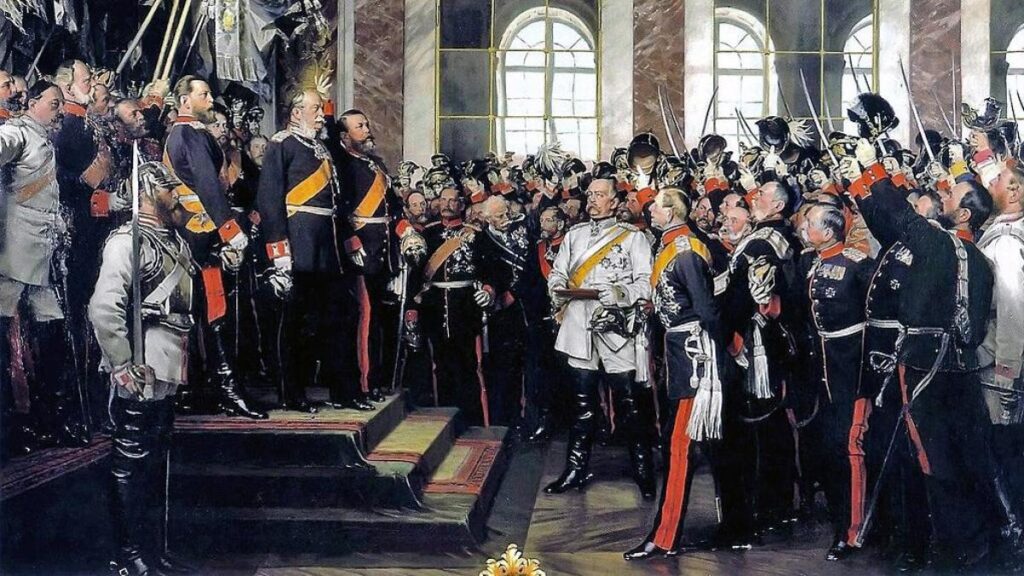
Its most famous early practitioner, Otto von Bismarck, turned this sensibility into statecraft by treating ideology as an instrument rather than a compass, using war sparingly but decisively, trading concessions when they bought time, and building legitimacy through victories that made a new political order feel inevitable. Bismarck’s achievement, German unification, became the template that later observers both admired and feared: admired because it demonstrated how a fragmented landscape could be reorganized by strategic sequencing, feared because it suggested that moral language could be subordinated to national consolidation. In that era, Realpolitik was tightly bound to the emergence of the modern nation-state and to the technological and administrative changes that allowed states to mobilize society, making power less a matter of royal intrigue and more a matter of industrial capacity, railways, finance, and mass conscription.
The twentieth century broadened the concept and darkened its reputation. The catastrophe of two world wars exposed the lethal potential of power politics, yet it also discredited the belief that law and goodwill alone could restrain revisionist ambition. Between the wars, idealism had institutional form in collective security and the hope that diplomacy could be juridified, but the inability to deter aggression revealed a recurring problem: rules without enforcement do not prevent conflict, they merely postpone the moment when force decides what the rules mean. After 1945, the term “realism” rose in Anglo-American scholarship as a systematic cousin of Realpolitik, and thinkers such as Hans Morgenthau insisted that foreign policy must begin with interest defined in terms of power because moral aspiration detached from capability produces self-deception and, eventually, disaster. The point was not that morality was irrelevant, but that a state that cannot protect itself cannot protect any moral project either.
The Cold War then became the great laboratory in which Realpolitik acquired its modern aura. Nuclear weapons imposed an unforgiving constraint: miscalculation could end civilization, which made restraint a strategic necessity rather than a sentimental preference. Containment, as practiced by George Kennan and adapted by successive administrations, was realist in its premise that adversaries cannot be wished away, and that time, alliances, and economic vitality can outlast ideological fervor. Yet it was also moral in its wager that preserving a free society’s strength would prove more attractive than coercive alternatives. Later, détente and triangular diplomacy, associated with Henry Kissinger, sharpened the Realpolitik style by treating rivalry as something to be managed through balance, bargaining, and calibrated pressure, even when publics demanded moral clarity. The criticism of this approach was immediate and persistent: it appeared to excuse repression abroad, to reduce human beings to variables, and to confuse stability with justice. The defense was equally blunt: in a world of armed great powers, purity can become a luxury that invites worse outcomes.
When the Soviet Union collapsed, many declared Realpolitik obsolete, as if the end of bipolar confrontation had replaced power with norms. The 1990s were marked by the confidence that markets, institutions, and liberal values could expand with relatively little resistance, and even when force was used, it was often framed as humanitarian enforcement rather than interest-driven competition. Yet the apparent triumph of a rules-based order contained an unresolved tension: rules were still underwritten by American power, and power is never neutral in how it interprets rules. The early post–Cold War period therefore produced a paradoxical blend of moral ambition and strategic dominance, with interventions justified in universal terms and criticized as selective, while enlargement projects were defended as voluntary and denounced as encirclement. Realpolitik did not disappear; it moved into the background, reappearing whenever the costs of moral projects exceeded public patience or when rival states treated liberal universalism as a mask for hierarchy.
The twenty-first century pulled Realpolitik back to the center, but in altered form. The return was not merely about tanks and borders, although those did return; it was also about interdependence becoming weaponized. Energy dependence, supply chains, technology standards, financial networks, and sanctions regimes turned economic relationships into strategic leverage, which meant that power politics began to operate through markets as much as through armies. The language of “geoeconomics” captured this shift, but the underlying logic was recognizably realist: states pursue security under uncertainty, and when the distribution of capabilities changes, the rules and expectations built on the old distribution become contested. The rise of China as a manufacturing and technological power, the reassertion of Russia’s revisionist posture, and the uneven performance of Western democracies after financial shocks and political polarization all contributed to a world in which status and autonomy again mattered as much as integration.
At the same time, Realpolitik faced an intellectual challenge that its caricatures often miss: ideology never vanished as a force, and leaders who reduce politics to material interest often misunderstand the motivations that drive both allies and adversaries. National identity, historical memory, regime legitimacy, and domestic coalition management shape what states are willing to risk and what compromises they can accept. A foreign policy that treats values as mere decoration may misread why populations endure hardship, why governments escalate despite costs, and why certain symbolic issues become non-negotiable. The more sophisticated strand of contemporary Realpolitik therefore does not deny ideology; it treats it as power, because beliefs mobilize societies, justify sacrifices, and harden red lines. In practice, this means that modern realist analysis must account for internal legitimacy and narrative control alongside traditional measures such as GDP, force structure, and geography.
Another transformation concerns the relationship between morality and prudence. Realpolitik is often accused of being amoral, yet in practice it frequently functions as a morality of responsibility rather than a morality of intention. It asks what policies will predictably produce, not what they proclaim. It forces decision-makers to confront trade-offs in which every option carries costs, including the cost of inaction. It also insists that moral language can become dangerous when it inflates objectives beyond feasible means, because states that promise maximal justice and deliver only chaos create cynicism that discredits the very values they claim to serve. This is why a realist approach, at its best, can support limited, achievable forms of moral action, such as protecting civilians through credible deterrence, sustaining alliances that prevent predation, and using leverage to constrain atrocities, while rejecting crusades that lack political end states.
Reaching “now,” Realpolitik is less a return to nineteenth-century balance-of-power rituals than an adaptation to a crowded, technologically saturated, and economically entangled environment. Great-power competition has reemerged, but it sits alongside problems that cannot be solved by coercion alone, including climate stress, demographic shifts, pandemics, and the diffusion of disruptive technologies. These issues do not abolish Realpolitik; they expand its terrain. Climate policy becomes a contest over industrial advantage and critical minerals, technology governance becomes a contest over surveillance, autonomy, and standards, and migration becomes a contest over social cohesion and labor power. A contemporary realist sensibility therefore requires states to think in terms of resilience as well as dominance, because a country that can absorb shocks, secure supply chains, and maintain social legitimacy holds a form of power that military inventories alone cannot guarantee.
The enduring lesson of Realpolitik’s parcours is that the world does not reward virtue detached from capability, but it also punishes power detached from legitimacy. States that ignore interests court strategic defeat, and states that ignore norms and identities court perpetual resistance and coalition collapse. The discipline that began as a critique of naïveté has, across its evolution, become a demand for mature statecraft: clear priorities, limited aims, credible means, and an honest accounting of the costs that every choice imposes on both a nation and the order it inhabits.