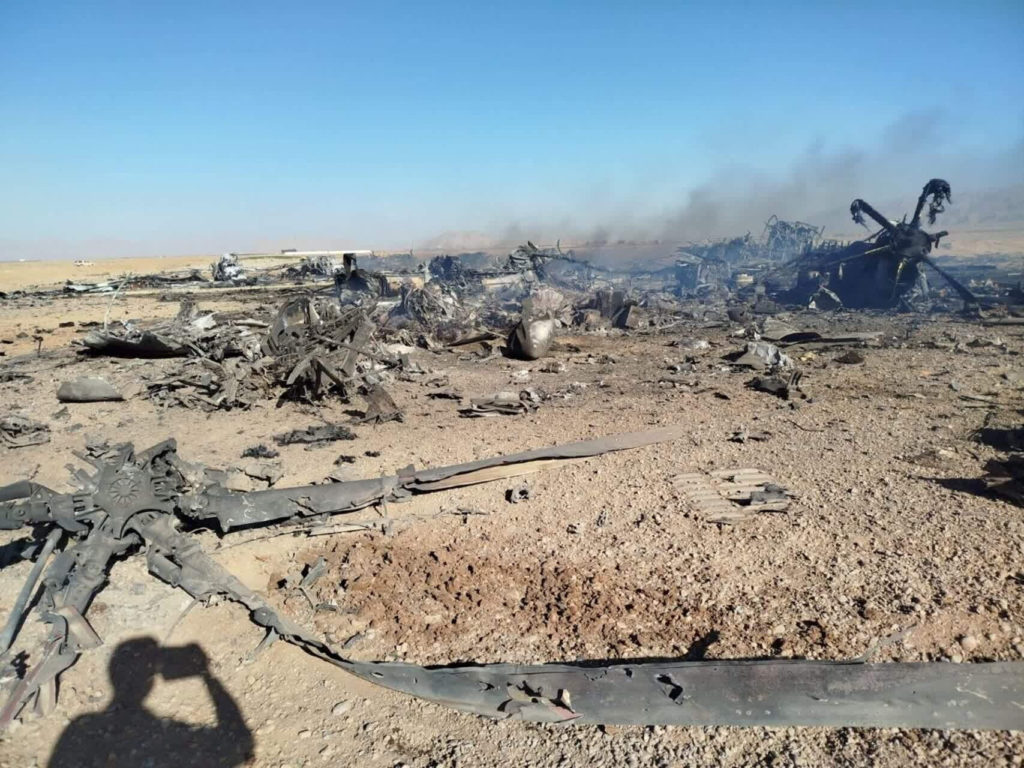
The right way to read this war is not as a running list of launches and interceptions. It is as a contest between three different military-industrial logics. Israel has fought as a short-cycle precision power that tries to compress intelligence, target generation, suppression of air defenses, and strike into one continuous loop. The United States has acted as the expeditionary overmatch layer that adds deep penetration bombing, carrier aviation, long-range naval strike, and high-end missile defense. Iran has fought as a missile and drone power whose main strength is not air superiority but the ability to generate repeated salvos from dispersed infrastructure and to force the defender into expensive interception. The public record is much richer for American and Israeli systems than for Iranian ones. Official U.S. and Israeli sources disclose aircraft, munitions, and procurement data in useful detail, while Iranian official disclosure is thin and the most reliable technical picture often comes from Defense Intelligence Agency assessments and Treasury sanctions actions against procurement networks. That matters because some systems can be priced and described precisely, while others can only be discussed by architecture and role.
The American section deserves the closest attention because it explains what outside intervention actually changes in a war like this. In June 2025, Operation Midnight Hammer used seven B-2 Spirit bombers, fourteen GBU-57 Massive Ordnance Penetrators, and more than two dozen Tomahawk land-attack cruise missiles against Iranian nuclear infrastructure, with the Pentagon calling it the first operational use of the GBU-57. In March 2026, public Central Command material on Operation Epic Fury showed a different but related architecture, B-1 bombers striking deep inside Iran to degrade ballistic missile capabilities, F-35 fighter operations, carrier flight operations by F/A-18E and F/A-18F Super Hornets from USS Abraham Lincoln and USS Gerald R. Ford, Tomahawk launches from Arleigh Burke-class destroyers, and B-52H support. The American contribution, then, is not a single platform. It is the ability to mix stealth penetration, theater airpower, naval fires, and missile defense into one integrated campaign design.
The B-2 Spirit sits at the top of that design because it is the only aircraft in this war that publicly demonstrated the combination of intercontinental reach, very low observability, and a payload tailored for hard and deeply buried targets. The Air Force still describes the B-2 as a bomber able to penetrate sophisticated defenses and hold heavily defended targets at risk, with an unrefueled range of about 6,000 nautical miles, a 40,000 pound payload, and an approximate unit cost of $1.157 billion in fiscal 1998 constant dollars. Official Air Force and museum descriptions make the material logic explicit enough to matter. The aircraft’s low observability is tied to composite materials, special coatings, and the flying-wing design, while Northrop Grumman says the company had to invent new composite materials and manufacturing processes to build it. That is why the B-2 is not simply an expensive bomber. It is a manufacturing solution to the problem of penetrating modern radar networks without needing to destroy every sensor first. In this war, that made it the natural delivery platform for the Massive Ordnance Penetrator.
The GBU-57 Massive Ordnance Penetrator matters because it is not just a larger bomb. It is a very specialized answer to underground targets. The Air Force describes it as a weapon system designed to reach and destroy weapons of mass destruction inside well-protected facilities. Air Force records also describe it as roughly 20.5 feet long, 31.5 inches in diameter, slightly under 30,000 pounds in total weight, carrying more than 5,300 pounds of explosive material, and designed to penetrate up to 200 feet underground before detonating. The public record does not give a clean current unit price, which is itself instructive. For very niche weapons, governments often disclose mission role and procurement lines without giving a fresh simple per-round number. The engineering logic is clear even without the alloy specification, which the Air Force does not publish. The weapon trades volume and carriage density for mass, structural strength, and penetration depth. Strategically, it exists because some targets can only be neutralized by physically driving destructive force through rock and reinforced overburden rather than by hitting entrances, vents, or surface infrastructure.
Tomahawk fills a different role. Where the Massive Ordnance Penetrator is a point solution for a handful of the hardest targets, Tomahawk is the long-range distributed strike weapon that lets submarines and surface combatants impose precision effects without exposing crewed aircraft to the first layer of risk. Raytheon describes Tomahawk as a precision weapon launched from ships, submarines, and ground launchers, able to strike from 1,000 miles away even in heavily defended airspace. The Block IV and Block V family adds data link enabled retargeting, loiter, and a modernized navigation and communications package. That combination explains why Tomahawk appeared both in Midnight Hammer and in Epic Fury. It is the ideal opening and shaping weapon for command nodes, fixed infrastructure, air defense sites, and other high-value targets where persistence and re-tasking matter almost as much as range. Public manufacturer material does not disclose the exact structural materials of the missile body in the way aircraft pages sometimes do, but in operational terms the important fact is that Tomahawk lets the United States convert maritime presence into inland strike power at distance.
Below the strategic bomber layer sits the U.S. tactical and theater aviation package. The F-35 in this war has functioned as the forward sensor-shooter and survivable fighter layer. Lockheed Martin’s official F-35 material describes an airframe built from aluminum, titanium, and carbon composites, while the company gives average flyaway costs for production lots 15 through 17 at $82.5 million for the F-35A, $109 million for the F-35B, and $102.1 million for the F-35C. Central Command publicly showed F-35s flying in support of Epic Fury. That makes the aircraft strategically valuable not only because it is stealthy, but because it can enter defended airspace, sense first, classify fast, and cue the larger strike system. The F/A-18E and F/A-18F Super Hornet, by contrast, are the carrier navy’s high-sortie multirole workhorses. The Navy lists a fiscal year 2021 unit cost of $67.4 million, two F414 engines with 22,000 pounds of thrust each, Mach 1.8 plus speed, and a combat radius profile well suited to carrier operations. In Epic Fury, the Super Hornet was the visible expression of sustained naval aviation, recover, refuel, relaunch, and keep pressure on the battlespace. The public U.S. record does not provide a clean official material breakdown for the Super Hornet on the same page, which is common for mature naval aircraft, but its strategic value is plain. It is cheaper than the F-35, easier to mass from the deck, and flexible across escort, strike, and fleet defense tasks.
The bomber layer beneath the B-2 shows the same American preference for specialization by mission. The B-1B Lancer is the fast conventional heavy bomber built for mass conventional delivery. The Air Force lists a payload of 75,000 pounds, a unit cost of $317 million, and a weapons menu that includes up to twenty-four GBU-31 Joint Direct Attack Munitions, fifteen GBU-38 Joint Direct Attack Munitions, up to twenty-four AGM-158A Joint Air-to-Surface Standoff Missiles, and fifteen GBU-54 Laser Joint Direct Attack Munitions. Central Command’s own wording says B-1 bombers in Epic Fury struck deep inside Iran to degrade ballistic missile capabilities. The B-52H Stratofortress is different again. The Air Force lists an approximately 70,000 pound mixed ordnance load, an 8,800 mile range, and a unit cost of $84 million in fiscal 2012 constant dollars. Central Command publicly confirmed B-52H support for Epic Fury, though its released material did not spell out a strike role as explicitly as it did for the B-1. The strategic distinction is important. The B-1 is the theater conventional hammer for massed precision attack once access has been opened. The B-52 is the long-range arsenal truck whose continuing utility lies in magazine depth, persistence, and the ability to sit behind a large enabling architecture.
American missile defense is the other half of the picture, because offense alone does not explain this war. On June 23, 2025, Central Command stated that U.S. and Qatari forces successfully defended Al Udeid Air Base against an Iranian ballistic missile attack, and Pentagon reporting later described it as the largest single Patriot engagement in U.S. military history. Raytheon describes Patriot as a family architecture of radars, command-and-control, and multiple interceptor types able to defeat tactical ballistic missiles, cruise missiles, drones, and advanced aircraft. Raytheon also says that since January 2015 Patriot has intercepted more than 150 ballistic missiles in combat, with more than 90 of those intercepts involving the Guidance Enhanced Missile family. For the more demanding exo-atmospheric layer, the Missile Defense Agency’s fiscal year 2025 procurement book lists the Standard Missile-3 Block IIA at a flyaway unit cost of $28.703 million and describes the missile as offering increased velocity and range from a 21-inch rocket motor stack, more than doubled seeker sensitivity, and more than tripled divert capability in its advanced kinetic warhead. The same budget book lists Terminal High Altitude Area Defense interceptor flyaway cost at $12.773 million in fiscal year 2025 and notes that gross weapon-system unit cost is higher because it includes other hardware. Raytheon’s AN/TPY-2 radar page explains why this defensive architecture works at all. The radar detects, tracks, and discriminates ballistic missiles in the X-band and guides interceptors in terminal mode. In military terms, the defender wins only when radar discrimination, battle management, and interceptor inventory survive longer than the attacker’s launch inventory.
What makes the American role decisive is not just that these systems exist, but that they sit on top of an industrial base that can produce across the whole kill chain. Lockheed Martin’s F-35 ecosystem claims more than 2,100 suppliers and more than $79 billion in annual economic impact. Boeing remains the prime on Joint Direct Attack Munitions and large parts of the Navy and bomber world. Raytheon sits inside Tomahawk, Patriot, AN/TPY-2, and Standard Missile work. Northrop Grumman owns the penetrating bomber niche and much of the composite manufacturing know-how that enabled it. Even the price structure tells the story. The Air Force’s fiscal year 2026 ammunition book shows Boeing Joint Direct Attack Munition tail kits planned at about $55,000 each in that budget year, while older Air Force fact sheets put a Small Diameter Bomb at about $40,000 and a Joint Direct Attack Munition tail kit at about $22,000 in fiscal 2007 dollars. The United States therefore fights with a layered cost ladder. It uses very expensive platforms and interceptors when the problem requires them, but it also uses relatively cheap precision guidance in large numbers to keep the cost per target destroyed far below the cost of losing access to the theater.
Israel’s system is different in scale but in some respects more compressed and more operationally intimate. The Israel Defense Forces state that Operation Roaring Lion had already generated more than 800 strike sorties, about 15,000 munitions, and more than 4,000 targets struck. The same official updates say Israeli aircraft targeted dozens of Iranian defense systems, struck a Ghadr missile storage and production facility in Isfahan, and used the F-35I Adir to shoot down an Iranian Yak-130 over Tehran in what the Israel Defense Forces called the first shootdown of a manned fighter by an F-35. That tells you how Israel fights. The first objective is not attrition for its own sake. It is the rapid opening of an air corridor, the erosion of Iran’s air-defense picture, and the reduction of mobile launcher survivability. Israel’s public war pages name the F-35I directly because it is the platform that embodies this concept most clearly.
The Israeli fighter fleet that matters most in this war is built around complementary roles. The F-35I gives stealth penetration, sensor fusion, and the first-mover advantage in contested airspace. The F-16I Sufa, in the Israel Defense Forces’ own description, is a heavily modified Israeli variant with a state-of-the-art weapons system, specially constructed radar, and a helmet system that lets the pilot cue weapons by sight. That tells you that Israel values not only platform performance but also national customization at the avionics and mission-systems level. Public Israeli pages do not enumerate every aircraft type used in each Roaring Lion wave, even though the overall force package was much larger than the publicly named F-35I component. In pricing terms, the closest transparent benchmark is the baseline F-35A flyaway cost disclosed by Lockheed Martin, since Israel-specific package and modification costs are not published as a simple per-aircraft number. In materials, the baseline F-35 family is officially described as a blend of aluminum, titanium, and carbon composites. For Israeli aircraft like the F-16I, official Israeli pages emphasize capability upgrades rather than the material stack, which is typical for countries modifying an existing Western platform rather than publishing a new clean-sheet airframe spec.
Israeli strike munitions are easier to study through procurement than through sortie-by-sortie disclosure. In February and June 2025, the Defense Security Cooperation Agency approved multiple large munitions packages for Israel, including 2,166 GBU-39/B Small Diameter Bombs, thousands of Joint Direct Attack Munition guidance kits for MK-84 and BLU-109 class warheads, 3,845 Joint Direct Attack Munition kits for BLU-109 bomb bodies, 3,280 Joint Direct Attack Munition kits for MK-82 bomb bodies, and a separate $675.7 million package of 1,000 pound bomb bodies and guidance kits. Boeing is the principal contractor on the guidance-kit side. The engineering logic here is central to how Israel sustains a long air campaign. The Small Diameter Bomb gives high carriage density and stand-off precision at relatively low per-round cost. The Joint Direct Attack Munition gives a cheap and reliable way to convert existing unguided bomb bodies into precision weapons, with the Air Force describing five-meter or better circular error probable when Global Positioning System data is available. The BLU-109 matters because it is the hard-target body in the Joint Direct Attack Munition family. The Air Force’s current budget book describes it as a 2,000 pound penetrator used against bunkers, aircraft shelters, and reinforced concrete structures, with fills including tritonal or insensitive-munitions-compliant variants. In other words, Israeli airpower combines very expensive delivery platforms with comparatively economical precision kits attached to bomb bodies that can be tailored to target hardness.
Israel’s defensive architecture is as important as its offensive one because the war with Iran is structurally a duel between launchers and interceptors. The Israeli Ministry of Defense describes a layered array composed of Iron Dome, David’s Sling, Arrow-2, and Arrow-3. Iron Dome sits at the lower layer and was developed with Rafael as main contractor, Elta of Israel Aerospace Industries, and mPrest. David’s Sling is the middle layer, with Rafael as primary contractor, Raytheon as subcontractor, Elta providing the Multi-Mission Radar, Elisra providing battle management, and a two-stage interceptor jointly produced by Rafael and Raytheon. Arrow-2 and Arrow-3 sit at the upper layer, with Israel Aerospace Industries as primary contractor, Elta on radar, Elbit subsidiaries on battle management, and Boeing, Tomer, and Rafael involved in the wider interceptor enterprise. The industrial consequences of this war are already visible. In 2025 and 2026 the ministry announced a major expansion of Iron Dome serial production and a new acceleration of Arrow interceptor production. That tells you that Israel does not see missile defense as a static shield. It sees it as a wartime industrial race that has to be won in factories as much as in the sky.
Israeli unmanned systems sit between surveillance and strike rather than existing as a separate category. The Israel Defense Forces’ own innovation pages describe the Eitan as a long-range drone with a 36-hour endurance and multiple sensor integration, which fits the requirement for persistent surveillance over launcher zones and lines of communication. Israel Aerospace Industries markets the Heron TP as a long-range, high-altitude medium-altitude long-endurance platform, and markets Harop as a loitering munition that combines characteristics of a missile and a UAV for hunting high-value targets. Elbit’s Hermes 900 is officially advertised with 36-hour endurance and persistent multi-payload capability. The strategic role of these systems in a war with Iran is obvious. Mobile launchers, air-defense nodes, and missile-support infrastructure are perishable targets. They require persistence, not just speed. The country that can keep sensors overhead, correlate movement quickly, and then pass a target from drone to aircraft or loitering munition without delay gains a disproportionate advantage.
Iran’s military logic is the opposite of the American and Israeli model. The Defense Intelligence Agency assessment states openly that Iran’s conventional military emphasizes niche capabilities and guerrilla-style tactics against technologically superior adversaries and that ballistic missiles are a primary component of its strategic deterrent. The same report says Iran lacks a modern air force and therefore embraced ballistic missiles as a long-range strike capability, building the largest missile force in the Middle East. That is the key to the Iranian side of the war. Iran does not need parity in crewed tactical aviation to remain dangerous. It needs enough launchers, enough magazine depth, enough dispersal, and enough industrial resilience to keep offensive pressure alive after the first wave of retaliation hits. Israeli official updates, in turn, show exactly what Israel thinks of that strategy, because they repeatedly emphasize strikes on missile launchers, missile production, air defenses, and Ghadr-related infrastructure.
The missile families that matter most in open-source official documentation are the solid-fuel short-range systems and the liquid-fuel medium-range systems. The Defense Intelligence Agency identifies the Zolfaghar as a 700 kilometer solid-propellant short-range ballistic missile and describes the liquid-propellant Shahab-3 as the mainstay of Iran’s medium-range ballistic missile force, with longer-range variants around 2,000 kilometers. It also notes that Iran can complicate missile defenses by launching large salvos. That sentence is more important than it looks. Iran’s strategy is not just to land warheads. It is to overload the defensive time-and-cost equation. The public record on this war also includes Israeli claims that Iran deliberately used cluster missiles against civilian areas. At the same time, Israeli updates about strikes on Ghadr production and storage sites show that Iran’s offensive capability is inseparable from a distributed missile-industrial network that has to be sustained under constant attack.
Iranian drone production is organized through a state arsenal structure rather than through transparent commercial prime contractors. Treasury states that the Iran Aviation Industries Organization is the parent of Iran Aircraft Manufacturing Industrial Company and Qods Aviation Industries, which manufacture the Mohajer, Ababil, and Shahed UAV families. Treasury also states that Mado produces engines used in the Shahed-131 and Shahed-136. What is especially revealing is the procurement evidence. Treasury actions in 2025 describe procurement networks supplying HESA with attitude indicators, magnetometers, alternator components, engines, sensors, and other aerospace materials, and even identify attempts to move computer numerical control machinery used to produce fiber-optic gyroscopes and guidance-and-control systems for missiles and UAVs. An earlier Treasury action also described a sanctions network procuring large amounts of aluminum alloy products for entities including the Iran Aviation Industries Organization. This is the clearest material picture the public record gives us. Iran’s systems are not simple because they are cheap. They are cheap at the finished-weapon level because complexity has been pushed into covert sourcing, import substitution, and sanctions evasion.
That is why precise public pricing is asymmetric across the three countries. American and Israeli official documents let you attach credible numbers to many aircraft, interceptors, guidance kits, and foreign military sales packages. Iran does not publish that kind of data, and the official U.S. record does not convert sanctions intelligence into tidy per-unit prices. The result is analytically useful in itself. It shows that Iran’s defense industry is not trying to behave like a transparent aerospace market. It is trying to preserve strike capacity under sanctions and attrition. The public record therefore supports a firm conclusion on roles and outcomes. The United States provides the systems that can crack the hardest nodes, sustain fleet and theater defense, and keep precision pressure on from the sea and the air. Israel provides the shortest and most agile kill chain, especially in the transition from air-defense suppression to mobile-target strike. Iran remains dangerous because ballistic missiles and one-way UAVs are faster to regenerate than high-end airpower and because even unsuccessful salvos can impose major interceptor expenditure. But the balance of military effect still favors the U.S.-Israeli side because their systems shorten Iranian launch cycles by destroying the infrastructure behind them, while Iran has no equivalent way to erase American carrier aviation, B-2 penetration, or Israel’s fused air-defense-and-strike architecture.