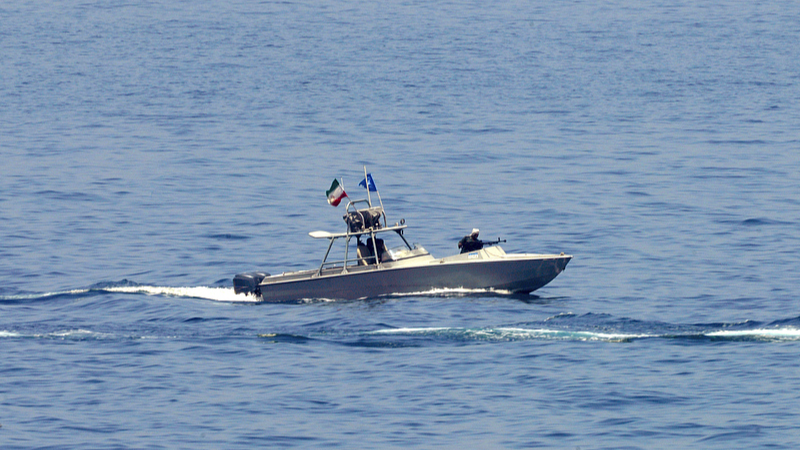
The war imposed on Iran after the 28 February 2026 attacks initiated by Israel and the United States is a direct strategic shock to ASEAN. The issue is larger than bilateral trade with Iran. The real problem is that a major external war has turned the Strait of Hormuz into a contested chokepoint while the ceasefire announced on 8 April remains shallow and unstable. As of 22 April, ship traffic through Hormuz is still severely restricted, with traffic far below normal levels, which means the crisis is still transmitting into Asian energy, shipping, insurance, aviation and food systems.
For ASEAN, this is a structural shock because the region is no longer in a comfortable position as a surplus energy bloc. ASEAN is already a net importer of crude oil and is expected to become a net importer of natural gas by 2027. At the same time, Hormuz carries around a quarter of global seaborne oil trade, significant LNG volumes, and about one third of global seaborne fertilizer trade. UN Trade and Development estimates that 84 percent of the crude oil and 83 percent of the LNG passing through Hormuz is destined for Asia. That means the war hits ASEAN through a corridor on which Asia remains heavily dependent.
The strategic conclusion is straightforward. This is not a temporary commodity story. It is a test of ASEAN’s energy security architecture, fiscal resilience, maritime doctrine, and political cohesion. ADB warns that prolonged disruption could cut growth in developing Asia and the Pacific by up to 1.3 percentage points over 2026 to 2027 and raise inflation by 3.2 percentage points. The IMF has also stressed that Asia is unusually exposed because oil and gas use is about 4 percent of GDP for the region and net oil and gas imports are about 2.5 percent of GDP, with some economies such as Singapore and Thailand far above that.
Why this matters strategically for ASEAN
The first transmission channel is energy. Higher crude and LNG prices move quickly into electricity, transport, chemicals, manufacturing and household costs. The second is logistics. War risk premiums, marine fuel costs and freight charges have surged, and insurers expect elevated pricing to persist even if the Strait reopens. The third is food and industrial inputs. Fertilizer, petrochemicals, sulfur and helium are all exposed. The fourth is macro-financial pressure. Currencies, bond markets and subsidy bills come under stress at the same time. The fifth is strategic. ASEAN states are being forced to defend maritime openness and strategic autonomy at once, which is a harder task than routine neutrality.
For Singapore and maritime ASEAN, there is also a legal and geostrategic dimension that is easy to miss. Singapore has argued that it cannot accept the idea that transit rights through Hormuz are negotiable because Hormuz, like the Straits of Malacca and Singapore, is a strait used for international navigation under UNCLOS. That is a serious point. If coercion around Hormuz becomes normalized, the long-term norm protecting Southeast Asia’s own sea lanes is weakened. CAAS has also warned about conflict-zone airspace risks including jamming and spoofing, which turns a Gulf war into a direct aviation risk for Asian carriers and hub strategies.
Country by country assessment
Brunei Darussalam
Brunei looks protected on paper because it is a hydrocarbon producer, and higher prices can support export earnings. In practice, the picture is less comfortable. ADB notes that Brunei entered 2026 with weakened economic activity amid disruptions to oil and gas production. Brunei’s own Department of Energy then introduced fuel control measures from 1 April to safeguard domestic petroleum supply in light of geopolitical developments in the Middle East. That tells you the real story. Exporter status helps fiscally, but small-system resilience remains limited when regional supply chains seize up.
Cambodia
Cambodia is a classic second-round casualty. It is vulnerable through imported fuel, transport costs, consumer inflation, and softer external demand. ADB has warned that higher-than-expected commodity prices from a prolonged Middle East conflict would add inflationary pressure and constrain activity. It also noted that arrivals from markets outside China and Thailand declined after the conflict, which matters for tourism and services. Cambodia therefore faces a familiar but dangerous combination of cost-push inflation and weaker external demand.
Indonesia
Indonesia is a mixed case and one of the most politically important. It still has upstream energy assets, but the dominant short-term effect is fiscal. ADB says growth can hold up on domestic demand, yet a prolonged Middle East conflict would weigh on the outlook through uncertainty and costs. Reuters reports that Jakarta may need up to 100 trillion rupiah in additional energy subsidies, and a weaker rupiah has already pushed debate toward subsidy containment and inflation management. This means Indonesia is exposed less through physical shortage than through the fiscal and monetary cost of shielding a large domestic market from imported inflation.
Lao PDR
Laos is highly vulnerable because even moderate oil shocks bleed quickly into transport, food and household prices. ADB says inflationary pressures have reemerged because of higher global oil prices and transport costs, and it forecasts inflation near double digits in 2026. Laos has fewer policy buffers than the larger ASEAN economies, so the war’s economic burden is likely to fall directly on consumers and small firms rather than being heavily absorbed by the state.
Malaysia
Malaysia is another mixed case. It can benefit from higher oil-related export revenues, and ADB explicitly notes that higher oil prices arising from the Middle East conflict may support commodity exports. But that is only half the picture. The same ADB assessment says persistently elevated prices can raise the fuel subsidy burden and broader costs. Malaysia’s recent efforts to deepen energy supply coordination with Australia show that even producer states are now thinking in security-of-supply terms rather than simple market terms. The war therefore improves some headline revenue numbers while worsening strategic exposure and fiscal management.
Myanmar
Myanmar is in no position to absorb an external energy shock cleanly. ADB says the economy contracted further in 2025 because of persistent security issues, macroeconomic instability and the March earthquake, and it expects inflation around 24 percent in 2026. In that context, the war’s impact is not primarily about refinery margins or exchange-rate fine tuning. It is about compounding an already severe political and humanitarian breakdown. Any imported fuel shock in Myanmar now becomes a social stability problem almost immediately.
The Philippines
The Philippines is one of the clearest import-vulnerability cases in ASEAN. ADB says the country is highly exposed because of its heavy reliance on imported crude oil and refined products. The government has already moved into emergency mode. President Marcos urged immediate activation and testing of the ASEAN Petroleum Security Agreement, declared a national emergency over rising fuel prices, suspended taxes on kerosene and LPG, and pushed for larger emergency reserves. This is a strong signal that Manila sees the war less as a market fluctuation and more as a security contingency.
Singapore
Singapore is strategically the most exposed ASEAN state even though it is not the poorest or the weakest. About 95 percent of its electricity is generated from imported natural gas. Around 90 percent of its container throughput is transshipment, and it remains the world’s largest bunkering port. Trade is about three times GDP. That means Singapore is hit simultaneously as an energy importer, a shipping hub, an aviation node and a price-taking open economy. Its vulnerability is systemic, not marginal. For Singapore, a Hormuz crisis is also a Malacca and Singapore Straits problem because it challenges the legal and operational logic of open maritime transit on which the city-state depends.
Thailand
Thailand is one of the region’s hardest-hit economies. Analyses reports that foreign investors have been pulling out of Thai equities and bonds as the energy shock worsens growth fears, with March outflows especially severe. ADB already places Thailand at the bottom of ASEAN’s 2026 growth ranking, and Thai officials have openly described the conflict’s economic hit as severe because the country is a net energy importer. Thailand’s problem is not only fuel costs. It is the interaction of weaker tourism, softer domestic demand, higher inflation risk, public debt constraints and limited policy room.
Vietnam
Vietnam is still growing fast, but the war is beginning to bite in visible ways. Reuters reports that Q1 growth slowed as heavy exposure to Middle Eastern oil imports boosted inflation. ADB says Vietnam has responded with time-bound fiscal measures, tax relief and use of a stabilization fund to cushion rising fuel costs. Reuters also reports that Vietnam sought alternative jet fuel supplies from Brunei, India, Japan and South Korea because regional aviation supply chains were tightening. This shows a broader pattern. Vietnam remains resilient in headline growth terms, but the war is now shaping its inflation path, trade balance, aviation sector and supply diversification strategy.
The broader geopolitical effect on ASEAN
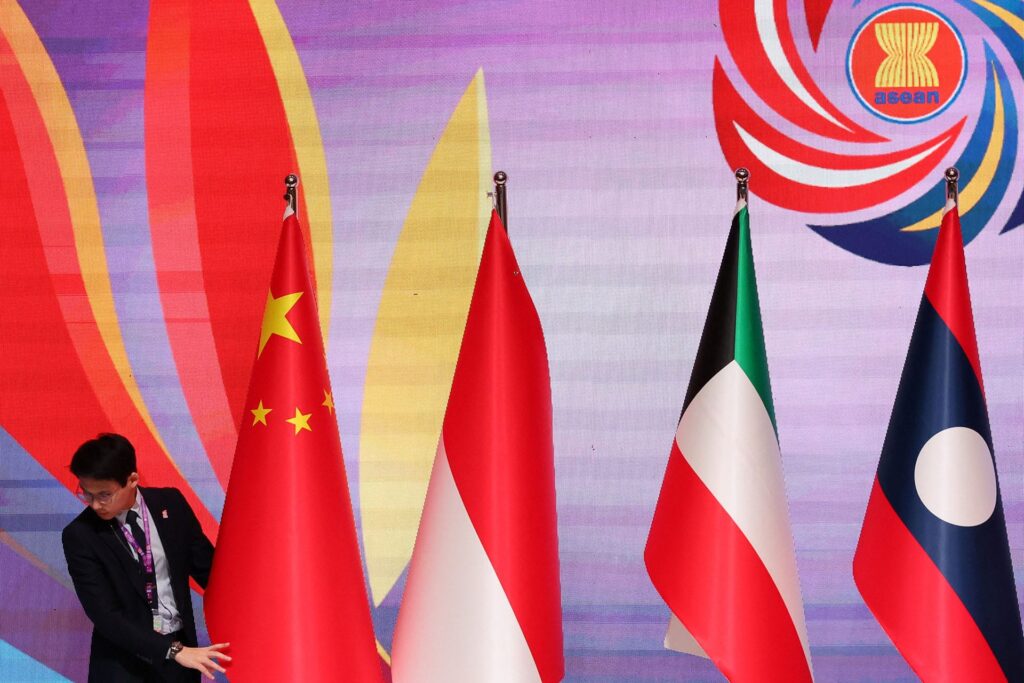
ASEAN’s formal political line already shows how serious the crisis is. Its 4 March statement explicitly referred to the attacks initiated by Israel and the United States against Iran on 28 February. Its later March and April statements then shifted toward managing consequences for energy, food security, transport routes, and ASEAN nationals while reaffirming maritime safety, freedom of navigation and overflight, and the need for diplomacy. That progression matters. ASEAN is trying to do two things at once. It is refusing to legitimize the original escalation, and it is also refusing a regional order in which international straits can be militarized without lasting cost to Asian commerce.
This is also pushing ASEAN toward stronger crisis coordination than usual. Vietnam’s initiative for a common ASEAN response strategy was welcomed at the second special foreign ministers’ meeting. The same process has encouraged closer coordination between foreign and economic ministers. That is a sign that ASEAN now understands the war as a cross-sector crisis rather than a distant diplomatic dispute. The center of gravity is shifting from declaratory diplomacy to economic-security coordination.
The war is also narrowing ASEAN’s room for strategic maneuver. Washington will continue to seek practical cooperation from Asian partners in areas such as access, logistics and sanctions compliance. Indonesia’s caution over a U.S. overflight proposal is an early warning of how sensitive these requests will become. ASEAN states do not want to be drawn into an anti-Iran operational architecture, but they also cannot tolerate maritime coercion that destabilizes Asian energy lifelines. The result will be tighter hedging, more legalistic language, and greater insistence on sovereignty and strategic autonomy.
At the same time, the war is likely to deepen ASEAN’s practical energy diplomacy with non-Middle Eastern suppliers and with middle powers such as Australia, India, Japan and South Korea. Malaysia’s supply coordination with Australia and Vietnam’s search for alternative jet fuel are early examples. The strategic direction is clear. ASEAN will diversify suppliers, shipping routes and emergency stock arrangements wherever it can.
What ASEAN governments should do
The first priority is to stop treating this as a short-lived price spike. The region should test the ASEAN Petroleum Security Agreement in live conditions, not on paper. Manila’s call for immediate activation is correct. ASEAN already has the legal base, and Singapore has called for expeditious ratification and operationalization alongside stronger supply-chain coordination.
The second priority is fiscal discipline with targeted social protection. Broad fuel subsidies are politically attractive and strategically lazy. The IMF and AMRO have both warned against general price caps and blanket subsidies because they distort demand and drain fiscal space. ASEAN governments should shift toward time-bound cash support for vulnerable households, support for public transport and logistics, and transparent rules for any temporary tariff smoothing.
The third priority is to accelerate regional energy interconnection. The ASEAN Power Grid, the Trans-ASEAN Gas Pipeline agenda and region-wide efficiency measures have been discussed for years. This war has turned them into hard security requirements. The ASEAN Centre for Energy has argued that efficiency and implementation gaps now matter as much as new supply, and ASEAN leaders have already connected energy resilience to wider crisis readiness.
The fourth priority is fertilizer and food security. One third of global seaborne fertilizer trade passes through Hormuz. That means the war can travel from oil to farm inputs and then into food inflation across Indonesia, the Philippines, Thailand and Vietnam. ASEAN should coordinate fertilizer procurement, keep internal markets open, and prepare temporary support for food production rather than waiting for inflation to arrive in consumer baskets.
The fifth priority is a dedicated maritime and aviation contingency cell. Shipping, insurance, bunkering, port management and airspace risk are now part of one crisis picture. ASEAN should coordinate with shipping insurers, major ports, airlines and dialogue partners on rerouting, emergency fuel access, GNSS interference reporting and crew safety. CAAS and UNCTAD have already made clear that the risk environment is wider than oil alone.
The sixth priority is political and legal clarity. ASEAN should continue to oppose attacks on sovereignty, defend freedom of navigation and overflight, and resist being drawn into coercive maritime precedents that could later damage Southeast Asia’s own chokepoints. This is not rhetorical balancing. It is a direct defense of ASEAN’s own strategic environment.
Bottom line
The war imposed on Iran is reshaping ASEAN’s strategic landscape in four ways at once. It is exposing the region’s energy import dependence. It is turning shipping and aviation risk into macroeconomic risk. It is forcing governments to choose between fiscal protection and fiscal exhaustion. And it is pushing ASEAN from passive market integration toward active security-of-supply statecraft. Exporters inside ASEAN can cushion some of the pain, but they cannot offset the regional picture. ASEAN as a whole remains structurally vulnerable because the shock comes through Hormuz, insurance, fertilizer, freight and inflation, not only through direct crude purchases.
The strongest strategic reading is this. The war has made ASEAN’s old habit of treating energy, trade, foreign policy and maritime security as separate files impossible to sustain. From this point forward, the region will have to think like a bloc whose prosperity depends on securing sea lanes, diversifying energy, protecting fiscal space, and keeping strategic autonomy intact during great-power conflict. That is the real policy meaning of the war for Singapore and ASEAN.